PULLMAN, Wash. — Sometimes a hidden gem can be found right next door.
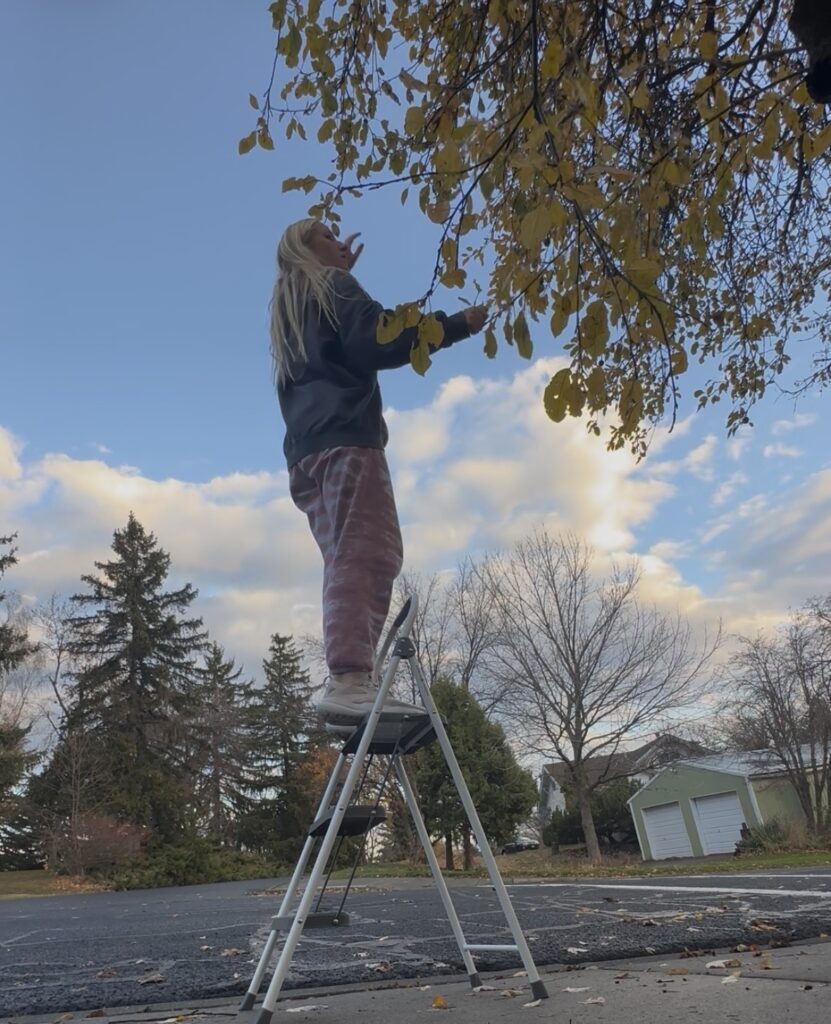
Photo courtesy Tayettin Brodzinski.
One day last fall, Washington State University student Tayettin Brodzinski needed a study break. An unanticipated result of her break was the discovery of an heirloom apple thought to be extinct that was once the prize variety of the early 1900s.
Brodzinski, who graduated from WSU in May with a bachelor’s degree in landscape, nursery, and greenhouse management and a minor in horticulture, wasn’t looking for an exotic fruit. She just needed a walk at her normal stress-relief location.
“I lived near Lawson Gardens and it’s a great place to take a relaxing walk,” said Brodzinski, who will start work on a master’s degree in horticulture at WSU this fall.
During the walk, an assignment from her horticulture genetics class was also on Brodzinski’s mind: finding a leaf sample from an apple tree she didn’t already know the variety of. Approaching the garden entrance, she happened to notice an apple tree in a nearby lawn.
“I had been walking to the garden for over a year and never noticed that tree was an apple tree,” Brodzinski said. “They looked like Golden Delicious apples, but I wasn’t sure, so I grabbed a leaf and took it to class.”
Professor Cameron Peace had each student place their sample in a special tube so it wouldn’t dry out and could be genetically tested. Brodzinski’s couldn’t be identified, making her and Peace curious.
The genetics matched other samples found by apple sleuths and scientists in other states, which turned out to be Walbridge apples.
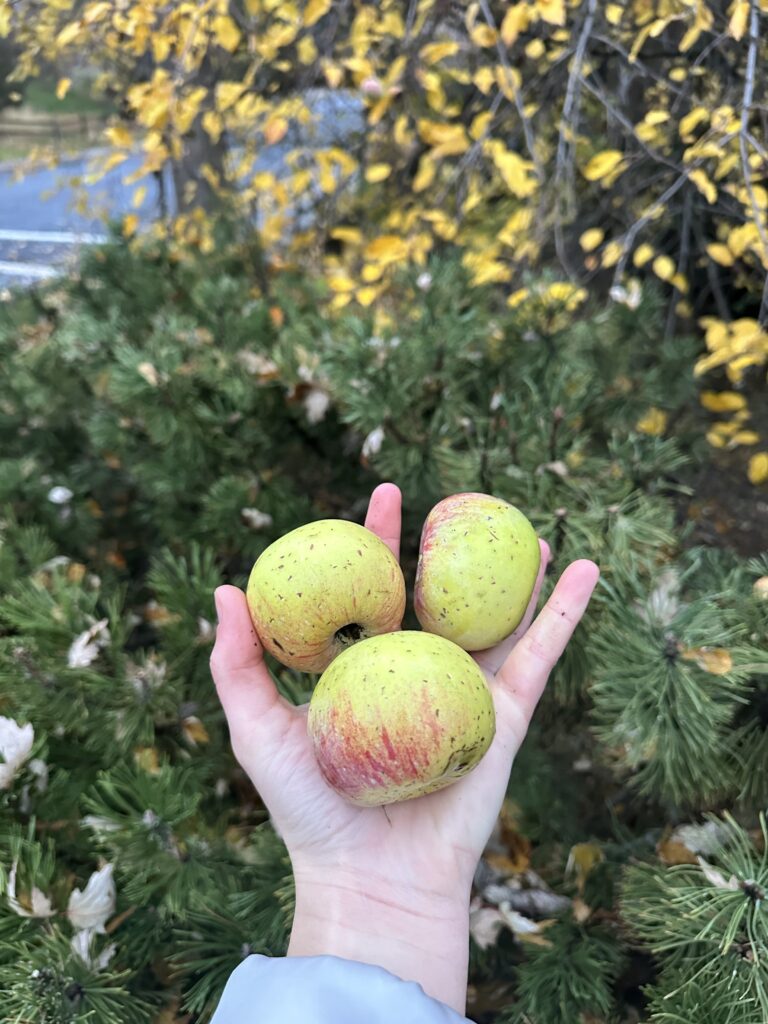
Photo courtesy Tayettin Brodzinski.
“Dr. Peace said, ‘Do you know what you’ve found?’” Brodzinski said. “I said I thought it was just a Golden Delicious, but he was really excited.”
Her discovery shows the importance of hands-on investigations by WSU students, said Raj Khosla, Cashup Davis Family Endowed Dean of WSU’s College of Agricultural, Human, and Natural Resource Sciences (CAHNRS).
“This is a fantastic find for a student to make, especially in a course about genetics,” he said. “I’m excited that CAHNRS faculty such as Dr. Peace are challenging our students and creating opportunities that encourages students to make their own discoveries in the field. I’m also excited to try a Walbridge apple!”
Walbridge was once renowned throughout the intermountain west and the Pacific Northwest, winning numerous awards at county fairs. Originating in Illinois in the early 1800s, the variety was very popular in the Midwest before moving west with settlers. It thrived in the western states, from Colorado to Washington, where it was planted in the thousands and praised for its cold hardiness, resilience, reliability, and shelf stability.
Over time, Walbridge fell into obscurity and was eventually forgotten. Industrial-scale production of limited apple varieties took over markets nationally, replacing Walbridge and many other popular heirloom varieties.
For over a decade, Peace and other apple preservationists with the Lost Apple Project and the Montezuma Orchard Restoration Project actively sought to find the lost Walbridge apple.
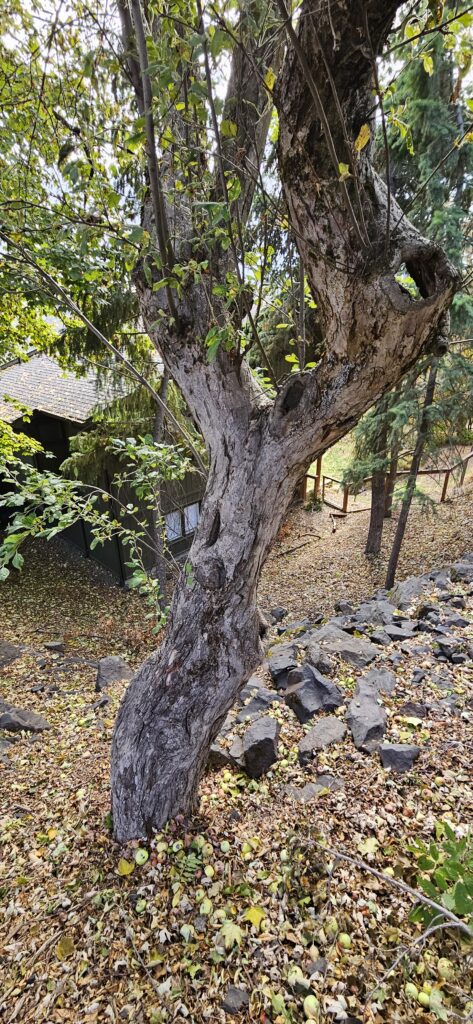
Photo courtesy Cameron Peace/WSU.
“We assumed that, due to its historical popularity, it must still exist, waiting to be rediscovered,” Peace said.
Most historic fruit tree varieties in North America have gone extinct. To prevent further loss of history and diversity, the Historic Fruit Tree Working Group of North America (HFTWG) was formed. The group’s goal is to find, verify, document, preserve, and support the recovery of genetically diverse heirloom varieties. The HFTWG coordinates collaborative efforts to DNA-test thousands of apple trees in old orchards, backyards, collections, and National Parks.
Recently, a specific DNA profile captured the group’s attention.
“This unknown profile wasn’t associated with any known variety but was found in regions where Walbridge was extensively cultivated in the early 1900s,” Peace said. “This profile was first detected in 2015 by the Montezuma Orchard Restoration Project for two historic trees near Colorado Springs.”
Over time, as thousands of trees across the country were submitted to WSU’s MyFruitTree project for DNA testing, this profile was also detected in different parts of Colorado and other western states.
In the fall of 2025, two additional old trees with this DNA profile were discovered, and both had fruit. One was the lone, aged, hollowed tree that Brodzinski found in a suburban front yard near Lawson Gardens. The second was in New Mexico, where the owner of a remnant orchard was tending the tree among a few rows of some known heirlooms.
Fruit from these trees were sent to two apple identification experts. All the distinctive features lined up, Peace said.
The next step was to systematically assemble all available evidence on provenance, genetic relatedness, and fruit characteristics for the historical variety Walbridge and for 13 trees that share its genetic profile. The group met in February to formally discuss the case.
They concluded Walbridge is a “very likely match.” The case remains open as they search for additional evidence, but the HFTWG feels confident in declaring that Walbridge is back.
The apple is now being propagated to safely preserve it, enabling its renewed cultivation and enjoyment while providing useful genetics for future new varieties.
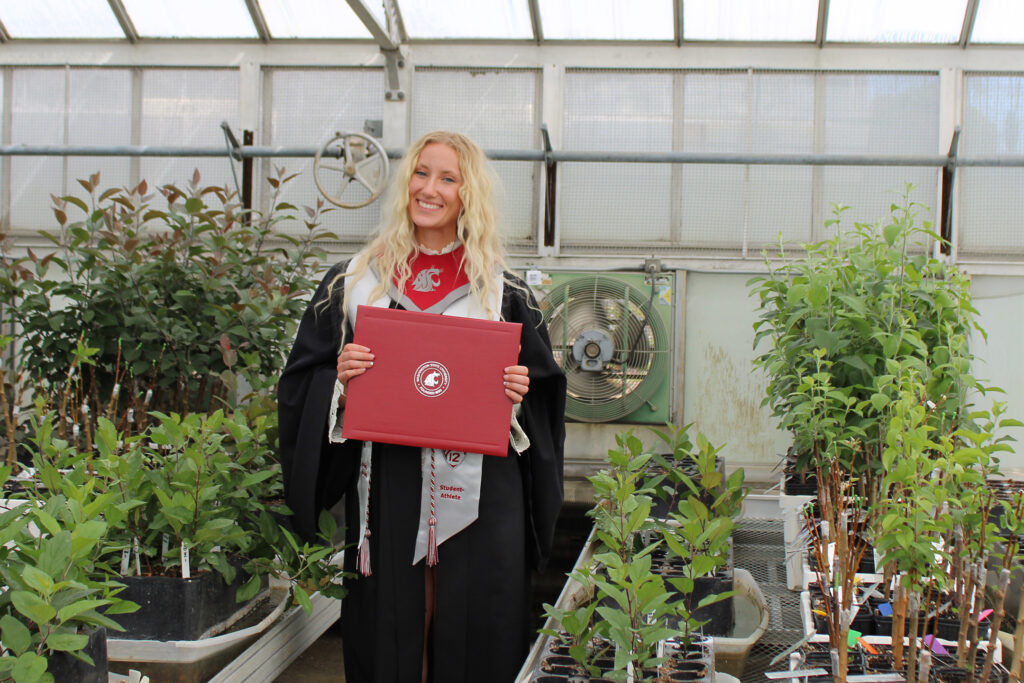
The lucky few who have eaten the fruit this past season agree it is quite tasty and makes a rich cider. That includes Brodzinski, who said it tastes like a combination of Granny Smith and Cosmic Crisp® apples.
“Those are two of my favorite apples. I enjoyed it quite a bit, even though I’m not really a big apple eater,” she said.
To learn more about Walbridge apples, including the possibility of obtaining trees and scionwood, contact the Historic Fruit Tree Working Group of North America.
CONTACT:
Cameron Peace, WSU Department of Horticulture, cpeace@wsu.edu