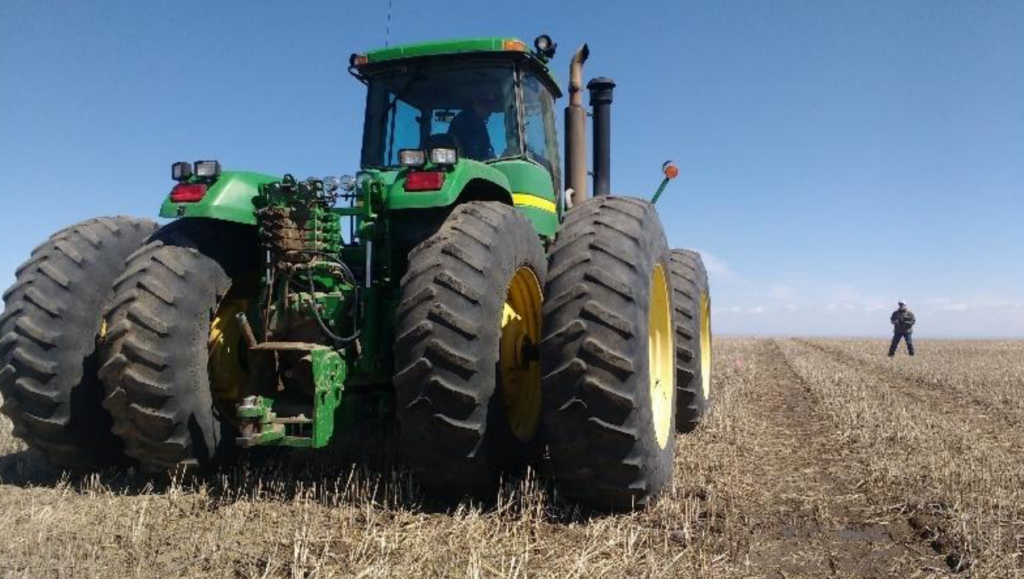
Six new free guides from WSU Extension can help Washington growers understand and repair soil compaction in their fields, gauge the feasibility of planting several popular apple varieties, and learn how flower biology can affect future harvests of WSU’s Cosmic Crisp®.
Plus, a revised guide updates grain growers on how to manage a pesky weed that escaped into winter wheat fields: feral rye. Learn about these new releases below.
Find more guides
The WSU Extension Publications website offers a wide range of resources, from agricultural and natural resource guides to materials on 4-H, economic development, energy and more, as well as Spanish-language guides. Find the latest releases at the site’s New Products page.
Soil Compaction in Annual Crop Production Causes, Impacts, and Solutions (FS396E)
Commonly recognized as a serious concern for agricultural production and environmental health, soil compaction leads to poor soil structure, restricted water movement, and reduced biological activity. Explore the causes, impacts, and practical solutions for healthier, resilient soils in this guide by Justin Maltry, adjunct faculty, Puyallup Research and Extension Center; Douglas Collins, WSU professor and Extension specialist; Gabriel LaHue, assistant professor of soil science, WSU Department of Crop and Soil Sciences; and Anand Jayakaran, WSU professor and green stormwater infrastructure specialist.
WA 38 Flower Biology, Fruit Set and Crop Load Management (EM129E)
Part of the WA 38: Best Management Practices Series: learn about the flower biology, management of fruit set, and effects of crop load on fruit quality for WA 38, WSU’s popular, recently released apple variety, marketed as Cosmic Crisp®. Authors include Sara Serra, research associate professor, Department of Horticulture; Ryan Sheick, research technologist at the WSU Tree Fruit Research and Extension Center; Bernardita Sallato, associate professor and tree fruit extension specialist; Tory Schmidt, research associate with the Washington Tree Fruit Research Commission; and Stefano Musacchi, professor and endowed chair of Tree Fruit Physiology and Management.
Integrated Management of Feral Rye in Winter Wheat (PNW660)
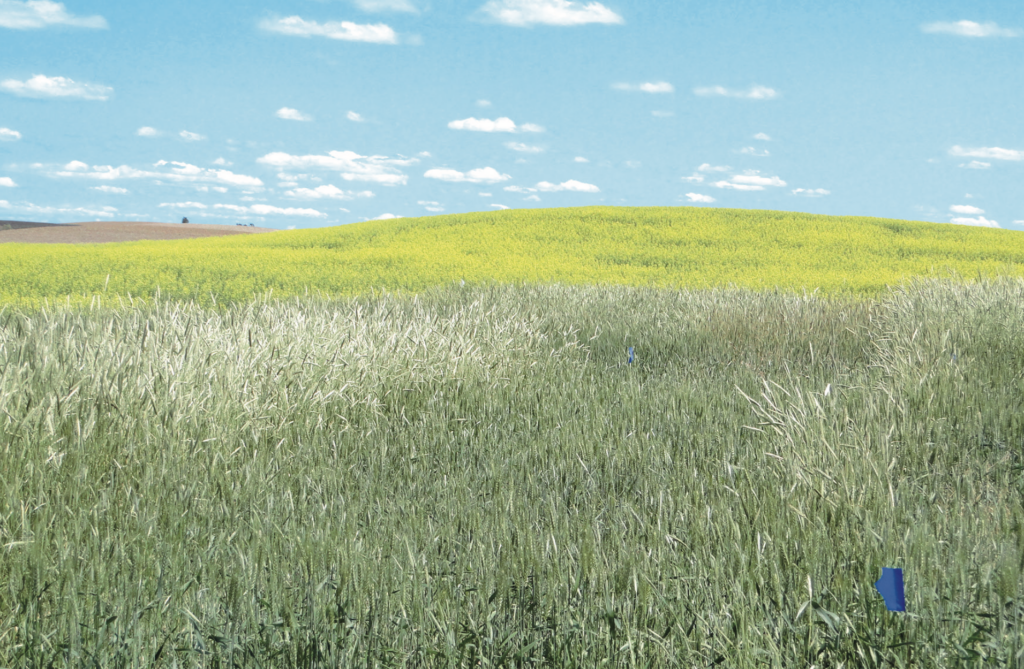
Feral rye is a troublesome weed for winter wheat growers in eastern Washington, eastern Oregon, and southern Idaho, causing losses in grain price and quality. This revised guide helps growers identify, understand, and manage the weed. Authors include Drew Lyon, endowed chair for small grains Extension and research; Judit Barroso, weed scientist at Oregon State University; and Joan Campbell, weed science principle researcher at the University of Idaho.
2024 Cost Estimates of Establishing, Producing, and Packing Granny Smith Apples in Washington (TB105E)
This guide helps Washington growers check the feasibility of producing Granny Smith apples grown on two different training systems. Use typical inputs, costs, and yields to determine whether Granny Smith is economically feasible for orchard operations. Authors include Associate Professor and Tree Fruit Extension Specialist Bernardita Sallato; Professor and Extension Economist Karina Gallardo; and Assistant Professor and Extension Specialist Suzette Galinato.
2024 Cost Estimates of Establishing, Producing, and Packing Cosmic Crisp® Apples in Washington (TB104E)
Sallato, Gallardo, and Galinato examine the feasibility of growing the Cosmic Crisp® apple, WSU’s WA 38. Costs and returns depend on many factors, including capital, labor, crop yields, and apple prices, among others.
2024 Cost Estimates of Establishing, Producing, and Packing Honeycrisp Apples in Washington State (TB106E)
For growers thinking about Honeycrisp apple production, this publication offers insights into the costs, requirements, and economic feasibility of establishing new orchards using the latest data from 2024. Like the above guides, this publication was authored by WSU experts Sallato, Gallardo, and Galinato.
2024 Cost Estimates of Establishing, Producing, and Packing Gala Apples in Washington State (TB107E)
This guide explores feasibility in a Gala apple operation, using the latest data and covering two different training systems: angled V and vertical spindle. Authored by Sallato, Gallardo, and Galinato.