Washington State University’s College of Agricultural, Human, and Natural Resource Sciences (CAHNRS) has three faculty this year whose contributions were honored during Showcase, the university’s celebration of academic excellence.
The university-wide awards recognize outstanding members of the WSU community for their scholarly achievements and professional acumen.
The three CAHNRS awardees are:
- Ken Casavant, emeritus professor, School of Economic Sciences
- Tarah Sullivan, associate professor, Department of Crop and Soil Sciences
- Lisa Wasko Devetter, associate professor, Department of Horticulture, WSU Mount Vernon Northwestern Washington Research & Extension Center
Emeritus Society Legacy of Excellence Award
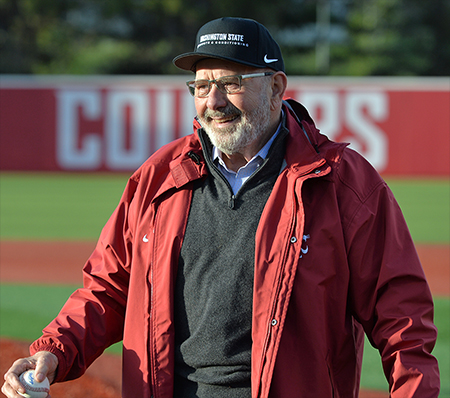
Ken Casavant’s distinguished career officially ended when he retired eight years ago from WSU’s School of Economic Sciences after a 50-year career as an economist. But easing into emeritus status didn’t mean he was slowing down in other ways.
He has served on the board of directors for five Pullman-area organizations, including the Pullman Regional Hospital Foundation, given guest lectures, and been a co-author on published academic papers. He said the volunteer efforts are especially rewarding.
“They are a way to continue the outreach component of WSU’s land grant mission,” said Casavant, who directed WSU’s Freight Policy Transportation Institute for several years. “I was very active volunteering during my career and it seemed natural to continue those valuable outreach activities.”
Casavant received numerous awards during his career, including the WSU President’s Distinguished Lifetime Service Award in 2015 and multiple other Showcase awards. But the Emeritus Society Legacy of Excellence Award is as special as any other he’s gotten.
“I’m realizing this is kind of the end of awards for me,” he said. “The fact that it reflects on what I’m doing now and that people think I’m adding value to WSU means a lot. It’s truly an honor to be chosen for this award.”
Faculty Diversity Award
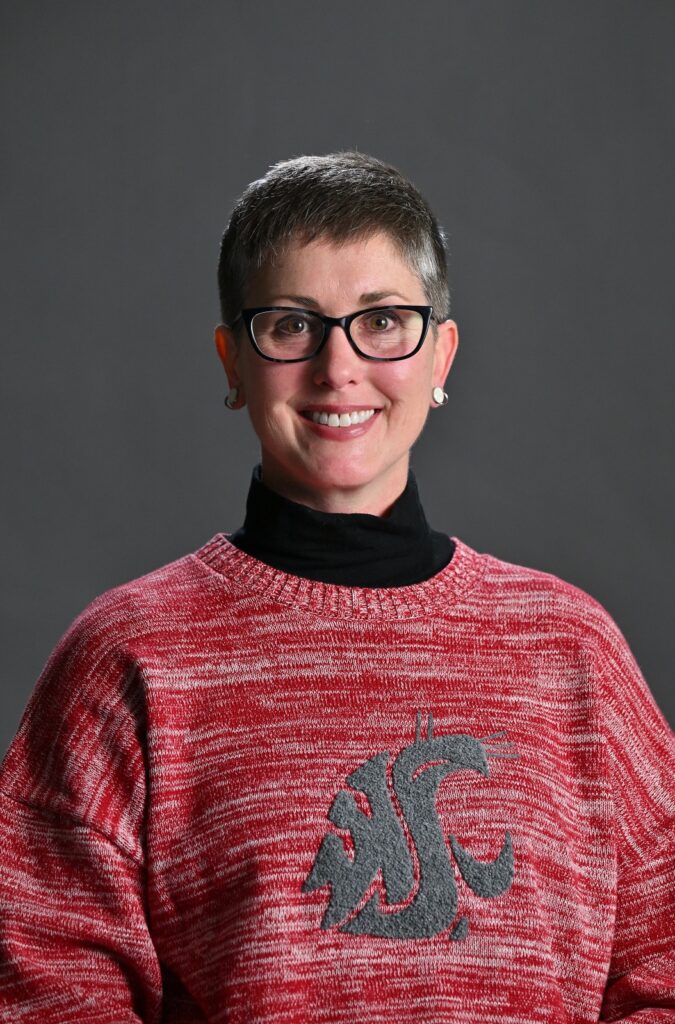
Years ago, Tarah Sullivan became concerned with the pay gap between male and female professors in her Department of Crop and Soil Sciences (CSS). Her questions regarding gender equity were largely met with silence. She started inviting speakers to the CSS seminar series to speak on equity and diversity issues and she set out to learn as much as she could. She eventually distributed a survey regarding “work climate” to all faculty, staff and student members of the departments from around the state.
After analyzing the data from that first survey, she gathered a group of staff and faculty to initiate the first CSS DEI Committee. They put together a presentation of the results of that survey, which revealed vastly different experiences based on gender and racial background across the department. After showing the data to CAHNRS leadership, Sullivan was asked to become a founding member of the college DEI committee.
She had also been serving on the “Women in Science” Committee for some years, within the American Society of Agronomy, the Crop Science Society of America, and the Soil Science Society of America, collectively known as the Tri-Societies. So as Dr. Sullivan learned more and became more involved at many levels, she was also nominated for and joined the Tri-Societies DEI committee.
A soil scientist by training, Sullivan has a few reasons why she got involved in DEI work, but one primary reason.
“I think about my daughters,” Sullivan said. “I want them to grow up in a more equitable world, to receive equal pay for equal work. And I want them to have compassion, and stand up for those struggling who don’t have a voice. I hope to lead by example.”
For all of her work on these committees, along with a mentorship program she is running to work with indigenous students, WSU awarded her with the Faculty Diversity Award.
“I’m a soil microbiologist,” Sullivan said. “We know in soil ecosystems that biodiversity is key to long-term function of those systems. Every living thing has a role to play. I’ve been fortunate enough to be able to always include outreach aspects to my projects to work with youth and marginalized groups. I see an undeniable parallel between the health and function of our soils to the health and function of our human ecosystems and science in general. The more different groups that we can get interested and contributing in science, the better it will be for everyone.”
Faculty Mid-Career Award

Lisa DeVetter was drawn to science from an early age, but growing up frequently visiting her grandmother’s farm in Iowa led to her desire for her work to have a direct impact. Her focus on small fruits, like blueberries, raspberries, and strawberries, provides that chance to do science that helps growers and consumers directly.
“I’m from the Midwest, so working on small fruits still seems a bit exotic,” said DeVetter, an associate professor recently promoted to full professor in the Department of Horticulture. “With these fruits, you can take it directly from the plant and eat it. Helping improve them, or make them more accessible to people, is very gratifying work to do.”
DeVetter, who is based at WSU’s Mount Vernon Northwest Washington Research and Extension Center, earned the Faculty Mid-Career Award for 2025. The award “recognizes faculty systemwide in the early to middle stage of their career who have demonstrated a strong commitment to WSU’s land-grant mission and its scholarship, teaching and engagement elements. Recipients of this award will have demonstrated outstanding performance and the potential to build on their achievements,” according to the provost’s website.
She credited her team and colleagues for being able to do such impactful research and outreach.
“I’m so grateful to work with this team, and also the growers and stakeholders in this industry,” DeVetter said. “”I love gaining the respect of farmers and observing them adopting our research-driven recommendations with downstream benefits to their farms. That makes all the time and work worthwhile.”