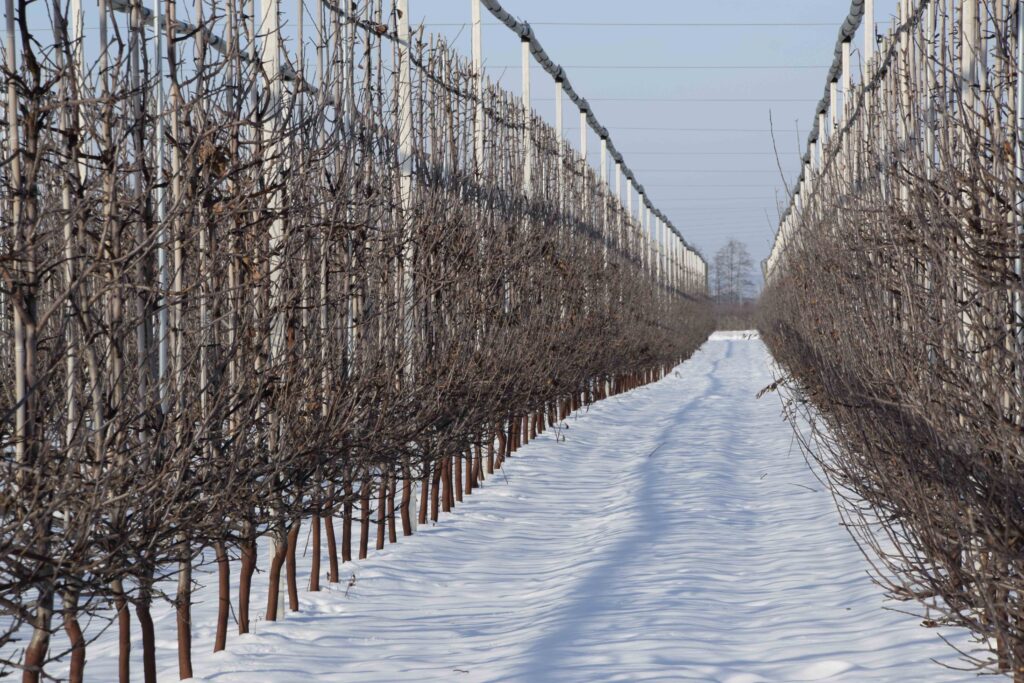
WENATCHEE, Wash. — New research launched this fall at Washington State University will help apple growers better understand how their trees respond to increasingly unpredictable cold snaps that freeze buds and destroy harvests.
Funded by an $850,000 grant from the U.S. Department of Agriculture’s Specialty Crop Multi-State Grant Program, the four-state study led by Stefano Musacchi, WSU Endowed Chair of Tree Fruit Physiology and Management, gathers new data on dormancy in Gala, Honeycrisp, and Fuji varieties.
Over the past decade, climate shifts have disrupted apple trees’ dormancy cycle, putting them at greater risk of freezes that damage tree health and productivity.
“Our current models and traditional methods for predicting and managing freeze threats are limited and often fall short,” Musacchi said.
Joined by researchers Todd Einhorn at Michigan State University, Sherif Sherif of Virginia Tech, and Tom Kon at North Carolina State University, the team will ultimately develop new predictive models and tools for growers.
Making in-depth studies of apple traits across diverse climate zones in Washington, Michigan, Virginia, and North Carolina, the team will also test plant growth regulators used to promote early cold acclimation.
Updated models could provide temperature thresholds during critical fall and spring periods, capture the interaction between temperature and bud hardiness during dormancy, and cover modern cultivars.
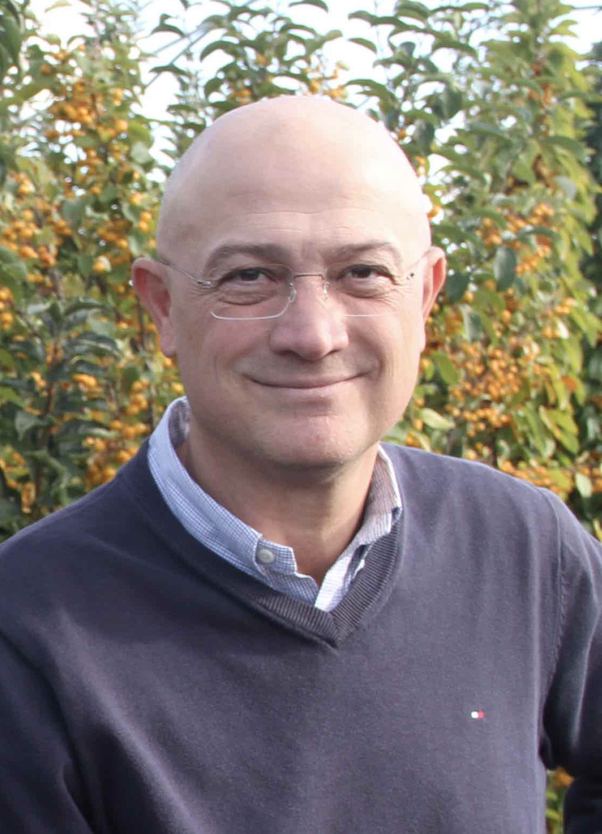
“We’re using cultivars with different harvest times—early (Gala), mid-season, (Honeycrisp), and late (Fuji)—which will give us a broad range of variation in the onset of dormancy,” Musacchi stated. “This helps us estimate the frost risk for each variety.”
Scientists will work in orchards during spring and fall, collecting shoots and branches to learn when varieties enter and exit dormancy. The team will also cultivate cuttings in growth chambers to study their physiology.
Through grower meetings, the team plans to share new models and improved orchard management practices. Titled “Enhancing Low Temperature Resilience of Apple: A Study on Dormancy Dynamics, Phenology, and PGRs,” the project runs through September 2027.
Requiring special equipment like growth and freezing chambers to mimic what happens in an orchard, the study offers an interesting challenge, Musacchi said.
“Dormancy is one of the less investigated and more fascinating areas of tree physiology,” he said. “Sometimes, people underestimate what happens after harvest, but many physiological activities remain ongoing.”
Who: Stefano Musacchi, Endowed Chair of Tree Fruit Physiology and Management
What: Leading national research on low temperature resilience in apples
When: Fall 2024 through Sept. 28, 2027
Where: Washington state, Michigan, Virginia, and North Carolina
Contact: Stefano Musacchi, Endowed Chair of Tree Fruit Physiology and Management, stefano.musacchi@wsu.edu, 509-293-8787