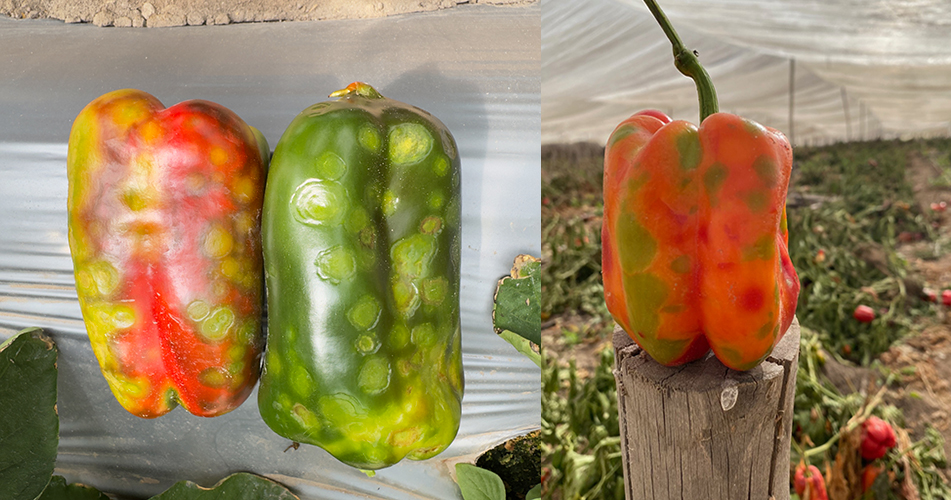
An international team of scientists recently collaborated to identify a mysterious viral disease damaging pepper and tomato crops in Chile.
Publishing their results in Plant Disease, virologists at Washington State University and the Pontifical Catholic University (PCU) of Chile confirmed the presence of pepper necrotic spot virus, an insect-spread pathogen discovered in Peru but previously unknown in its southern neighbor.
“Viruses never respect borders,” said Hanu Pappu, the Chuey Endowed Chair and Samuel H. Smith Distinguished Professor in Plant Virology in WSU’s Department of Plant Pathology. “This is just one of many plant viruses that can pass from country to country through infected plant material or migrating insects.”

Pepper necrotic spot virus is part of a group of insect-borne pathogens that infect more than a thousand plant species. Called tospoviruses, they cause billions of dollars’ worth of damage to important crops like beans, peanuts, peppers, soybeans, tomatoes, and many ornamental plants.
Marlene Rosales, associate professor and virologist at PCU, revealed the virus’ presence after encountering tomatoes and peppers with rings of dying tissue, bronze discoloration, and other deformations in local farmers markets in Santiago, Chile.
Rosales investigated the fruits’ supply chain, surveying growing areas in the northern province of Arica near the Peruvian border. Arica’s Azapa and Lluta Valleys are Chile’s main out-of-season suppliers of winter tomatoes and peppers.
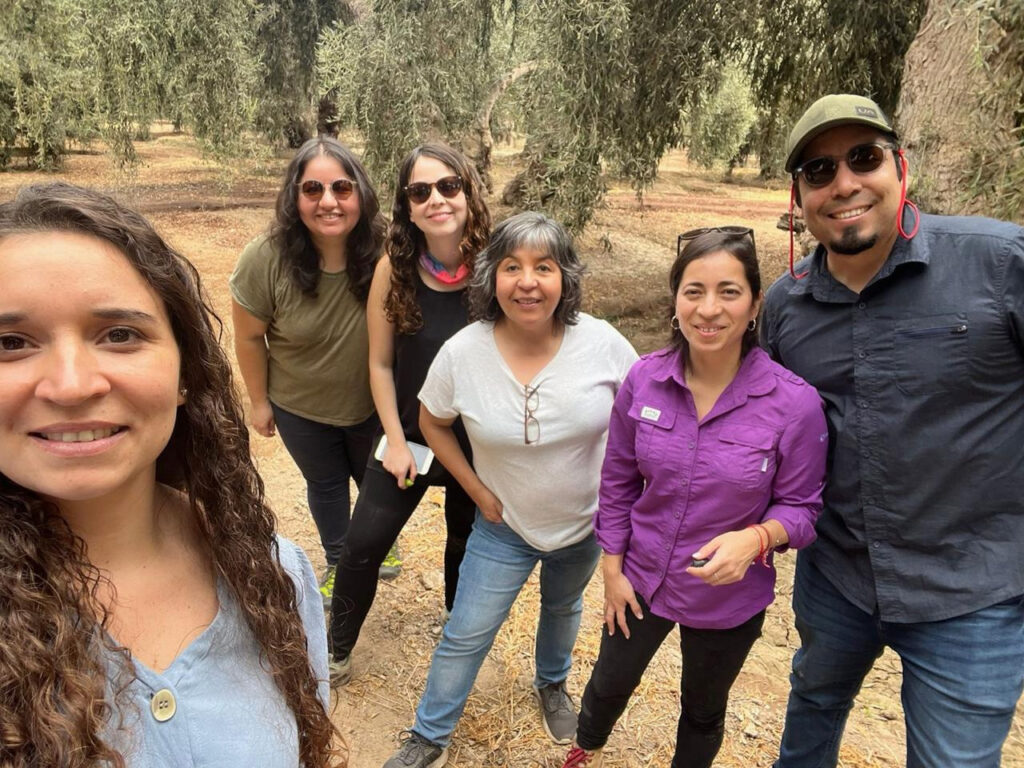
“This region acts as Chile’s agricultural lifeline during winter — May to September — shipping fresh produce south when central regions drop their output,” Rosales said.
In Arica, she found fields containing signs of viral infection, with symptoms particularly severe in peppers.
Back in Rosales’ lab, doctoral student Fernanda Rodriguez tested samples to reveal a viral presence. To confirm its novelty, Rosales reached out to Pappu, who has worked on tospoviruses for over 30 years and is experienced in genetically identifying them.
“I know how to get Hanu’s attention,” said Rosales, who spent a sabbatical in Pappu’s lab over a decade ago. “I emailed him that we were potentially looking at a new tospovirus in tomatoes and peppers, and almost instantly got a response asking for details.”
Collaborating virtually across 6,000 miles, Rosales’ research group generated new information on the biological properties of the virus and verified it was spread by thrips, a tiny insect pest that can fly for miles and damages many important crops.
“It’s an ongoing battle between scientists and viruses,” Pappu said. “While many destructive viral diseases are successfully managed, new viruses continue to emerge and expand their geographical reach. As Jeff Goldblum’s character iconically explains in the movie Jurassic Park: ‘Life finds a way.’”
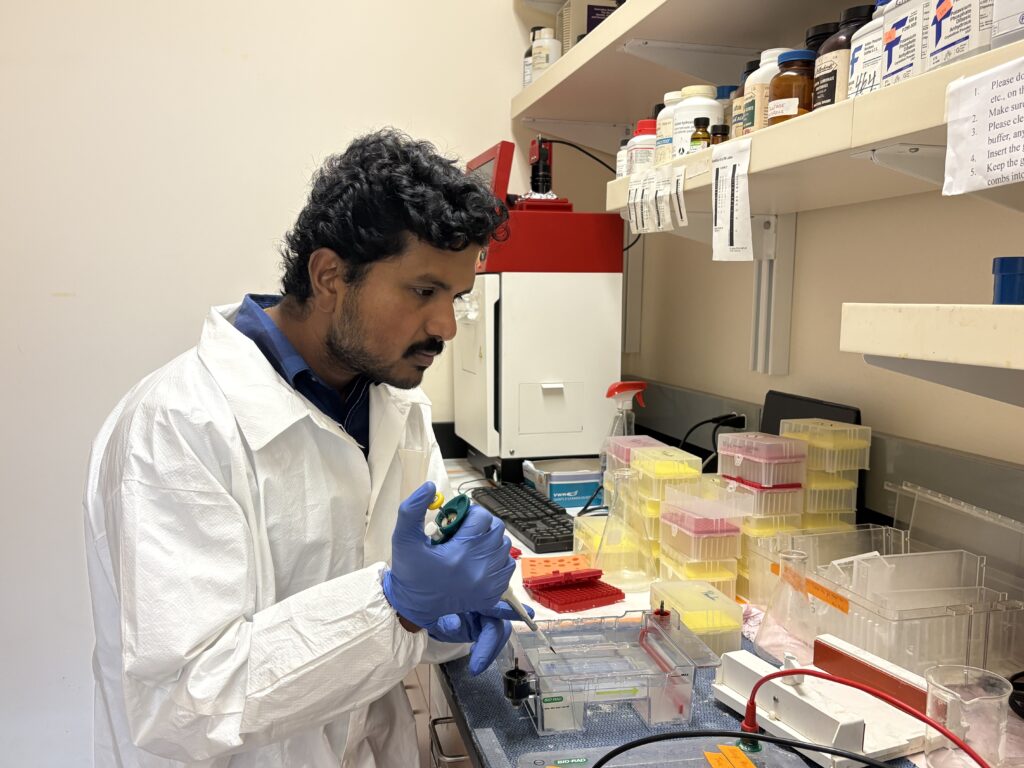
Prabu Gnanasekaran, a research associate in Pappu’s lab, sequenced and analyzed viral RNA to confirm that the virus previously confined to Peru had now moved into Chile.
Plant viruses like pepper necrotic spot virus have no known cure, so the best defense is to identify incursions as early as possible, manage the insect carrier, and develop varieties that resist infection.
“This finding helped us move quickly to understand the potential pathway of this virus into Chile and its future spread within the country,” Rosales said. “Training first responders to identify this new virus now becomes a priority.”
The research could also inform management tactics to protect Chile’s pepper and tomato crops.
“Land-grant expertise has a global role to play in checking the spread of diseases that impact farmers and consumers,” said Raj Khosla, Cashup Davis Family Endowed Dean of the College of Agricultural, Human, and Natural Resource Sciences. “It takes international collaboration by public and private scientists, exemplified by Dr. Pappu’s successful partnership with Chilean colleagues, to find solutions to agricultural threats that respect no border.”
• Contact: Hanu Pappu, Samuel H. Smith Distinguished Professor and Chuey Endowed Chair, Department of Plant Pathology, hrp@wsu.edu