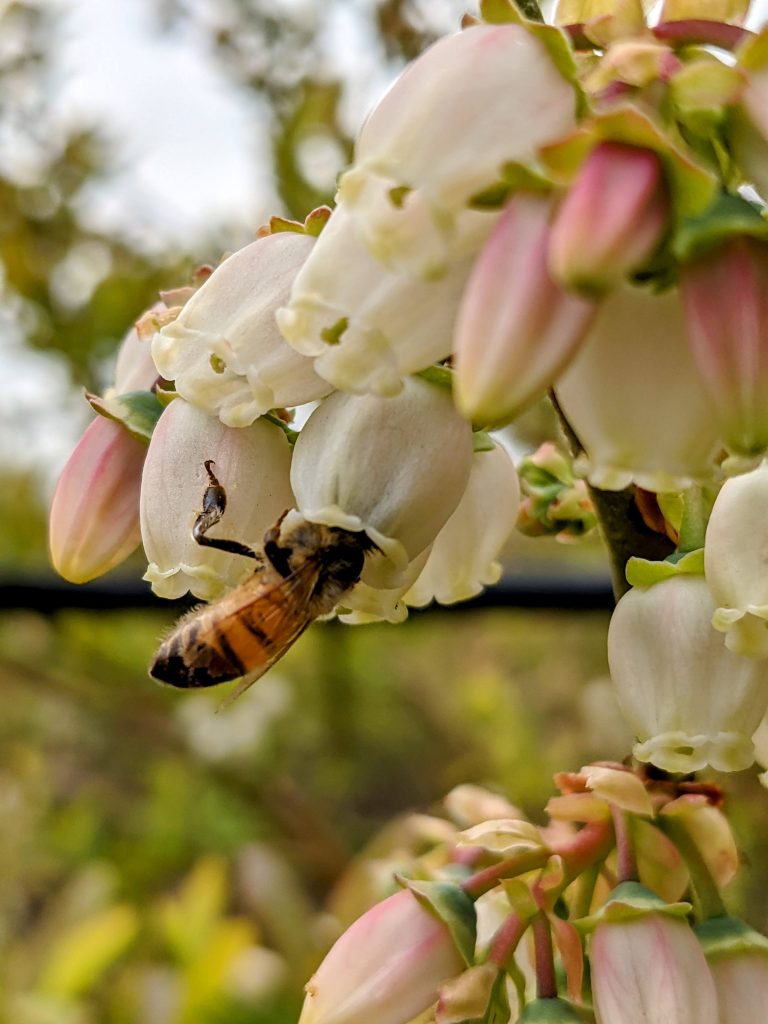
MOUNT VERNON, Wash. — Washington produces more blueberries than any other U.S. state, but farmers sometimes struggle to obtain honey bees to pollinate the plants and produce bountiful, delicious fruit.
That’s in part because beekeepers are reluctant to provide bees to blueberry farms, given that there have been increased — and mysterious — bee colony losses after blueberry pollination.
Researchers, however, may have found a solution: a feed that shows promise for boosting the size of bee colonies.
“We don’t know exactly why the losses happen, but fear has led some beekeepers to avoid blueberry pollination season entirely,” said Lisa DeVetter, a professor of small fruit horticulture at Washington State University’s Northwestern Washington Research and Extension Center. “We want to help beekeepers maintain the health of their colonies while also helping blueberry growers produce the best crop.”
In a recent study published in the journal Entomological Communications, DeVetter and colleagues with a company called H4Bees found that feeding the pollinators a product called Nano-B-Feed™ resulted in increased honey bee colony size.
“The colonies that received the special feed had a statistically significant increase in the number of bees over the control group,” DeVetter said. “Increased population is often a strong characteristic of colony health.”
Even though her specialty is small fruits, the importance of pollination in those crops has led DeVetter to study the beneficial insects so she can help growers.
“The industry wants to improve pollination, so that has led me to do a lot of research on the topic,” DeVetter said. “Wild pollinators do contribute, but not enough in large commercial settings. Without renting honey bee colonies, berries are smaller and the yield and quality is reduced as well.”
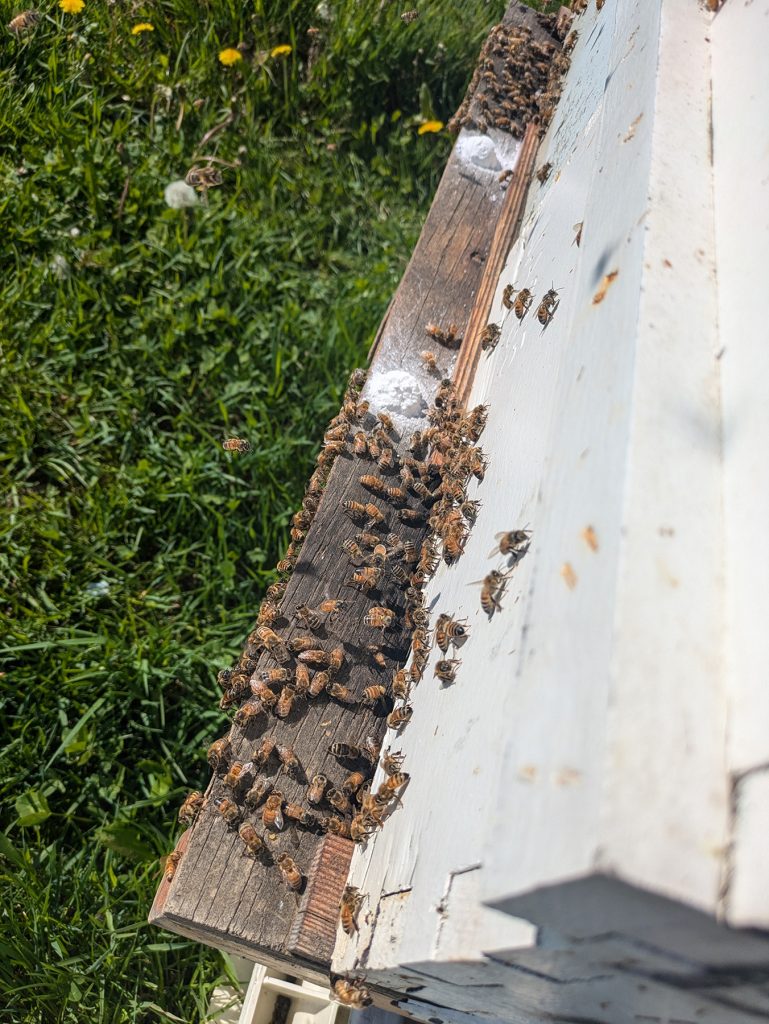
The feed is a powdered supplement that is placed at a colony entrance for bees to consume. It’s a combination of minerals and organic compounds mixed with powdered sugar. Each ingredient is listed as Generally Recognized as Safe by the U.S. Food and Drug Administration.
“I’ve tested many other products to see if we can stimulate increased foraging or induce other colony growth indices,” DeVetter said. “This is one of the few times when I’ve seen a positive response. And since we don’t have to open up the hives to provide the supplement, it’s less invasive and easier to provide to the bees.”
Additional studies are needed to understand precisely how Nano-B-Feed™ works, but DeVetter and her H4Bees colleagues believe it may help bees detoxify pesticide and fungicide residues. Blueberry growers rely on fungicides to protect their crops from disease, DeVetter said, and bees can also pick up insecticides while foraging in nearby fields of other crops.
“You can’t keep bees on one farm; they fly around,” DeVetter said. “Detoxifying pesticides that bees encounter in crop fields adjacent to blueberries is likely to provide meaningful benefits. Pesticide exposure from blueberry fields during bloom is typically low because growers aim to minimize risks to bees.”

H4Bees, an Israel-based company, developed the powder by testing different ingredient combinations and selecting those that had better performance.
“This involved nearly a decade of field trials and collaboration with researchers, growers, and beekeepers,” said Yuval Eshed, a co-author on the paper and chief technology officer at H4Bees. “Our development work began in Israel, where the product is now used commercially across crops including apples, blueberries, cherries, plums, kiwifruit, almonds, and seed-production crops such as onions, cotton, and herbs.”
Eshed added that the company is also testing its product on coffee in Vietnam, avocados and blueberries in Peru, and crops in several African countries.
DeVetter and H4Bees are in discussions about conducting a larger study, hopefully adding honey bee scientists, in the 2027 growing season. They hope to learn more about the product and how it can help blueberry producers and beekeepers.
“International collaborations like this study are vital to producing food for the entire world,” said Raj Khosla, Cashup Davis Family Endowed Dean of WSU’s College of Agricultural, Human, and Natural Resource Sciences. “I’m excited about this initial study and look forward to seeing the impact of more research in the future to help berry growers.”
Media Contacts
Lisa DeVetter, WSU professor of small fruit horticulture, lisa.devetter@wsu.edu
Scott Weybright, Public Relations/Communications Coordinator, 509-335-2967, scott.weybright@wsu.edu