Washington State University researchers are wrapping up a five-year study that will help veterinarians and dairy producers quantify how much milk-production time is lost due to disease or injury.
Insights from the study are helping researchers adapt a human health metric to livestock to account for production lost.
“We’re rethinking how we approach outcomes beyond just disease frequency and milk production,” said Craig McConnel, associate professor of WSU Veterinary Medicine Extension and study lead. “This research provides a unique framework for speaking about cattle well-being and production in combination, which is difficult to do.”
It’s a first step toward developing a metric similar to the disability-adjusted life year (DALY) used by medical professionals to describe human quality of life in numerical terms. In people-based health care, one DALY unit is equal to one year of healthy life lost. Sickness or early death affects an individual’s DALY totals.
To adapt this human-health concept to livestock, the research team previously described a new unit called a “DALact,” short for disease-adjusted lactation. The unit describes how many productive, healthy days lactating cows lose to illness or injury, rather than just counting cases of disease within a herd.
Their most recent research is expanding that concept into a DairyLifetime metric.
“A long life in good health is the obvious ideal for humans,” said McConnel. “A productive life in good health is the equivalent target for dairy cattle, and a metric such as the DairyLifetime can help identify opportunities for improvement.”
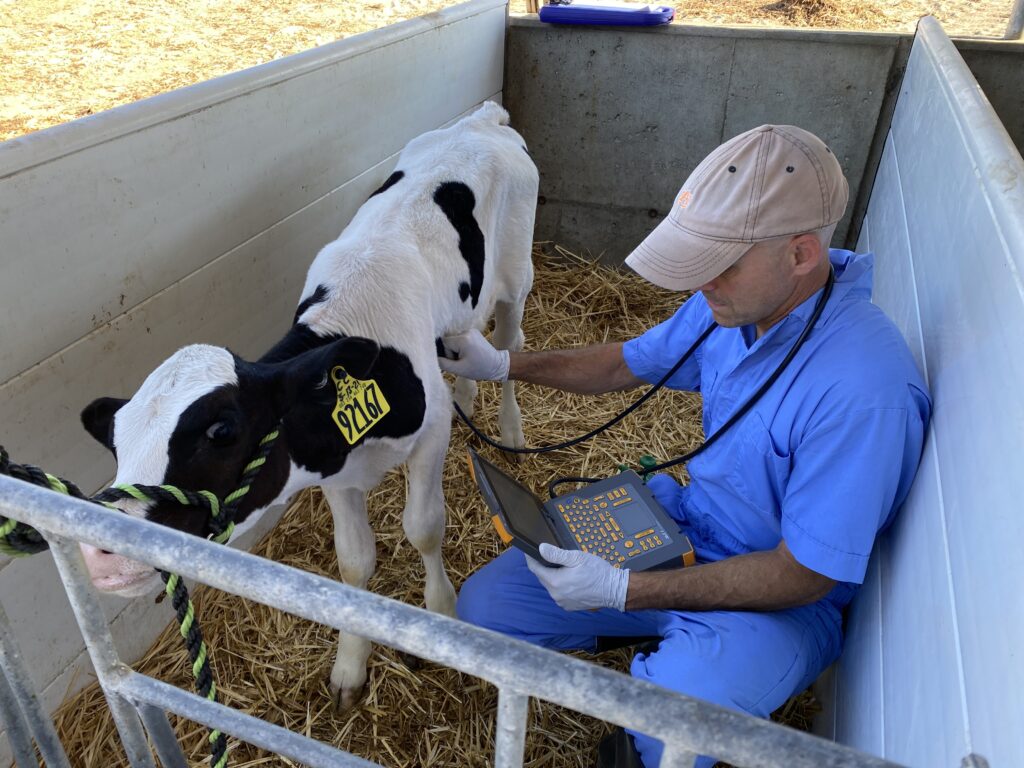
Sampling for the project began in 2020 with around 250 dairy cows on two central Washington farms. Though initial funding for the research project concluded in 2025, researchers plan to continue following the cows through more milk-producing cycles. These long-term, real-time observations are creating a rare data set capable of showing how diseases unfold over a dairy cow’s lifetime.
To expand the data analysis, McConnel tapped colleagues in WSU’s Departments of Biological Systems Engineering and Horticulture to fill in knowledge gaps.
“We were able to bring our machine learning and data analytics expertise to aid in this research,” said Sindhuja Sankaran, an associate professor who studies agricultural automation engineering. “Whether plants or dairy cattle, both fields have data limitations.”
Sankaran developed a machine learning-guided metric called the cumulative health measure that uses data to evaluate the disease burden in cattle.
The project involved WSU undergraduate and graduate students from the various fields of study, engaging them in data collection and providing hands-on experience integrating research methods with on-farm realities. Their work supported everything from sampling calves and adult cows to interpreting early statistical models.
According to McConnel, part of the challenge with dairy industry data collection is that sickness and mortality causes may be recorded inconsistently or not at all. He appreciated the farmers’ willingness to let them gather this information from their herds.
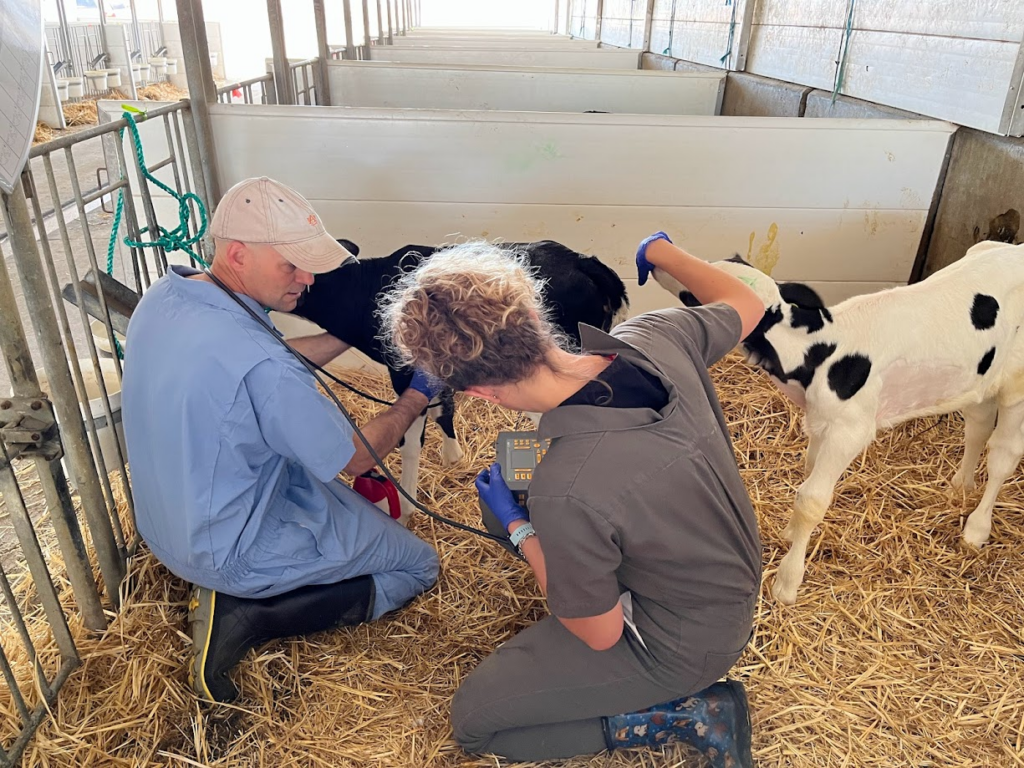
“We don’t take that access for granted,” McConnel said. “These collaborations make our work possible, and they ensure the research stays relevant to the producers and veterinarians we serve.”
The project highlights the role of WSU Veterinary Medicine Extension, which is connecting scientific tools with the day-to-day decisions facing livestock producers and veterinarians. It is hoped that this research will provide both with a novel means for evaluating the impacts of acute and chronic disease.
“Two people can react very differently to the same illness — while some are stoic, others are miserable,” Sankaran said. “Quantifying that difference helps us understand dairy cattle well-being more deeply.”
McConnel added that summary measures of disease such as DALact or DairyLifetime will put a time value to common conditions such as respiratory disease, lameness, or other disorders. The new approach promises to offer a clearer picture of the true cost of disease to animal well-being and milk production.
“Ultimately, this will help veterinarians evaluate animals individually and help guide producers toward management practices that offer the biggest gains in herd health,” McConnel said.
For more information
Visit WSU Veterinary Medicine Extension’s From the Lab to the Field website to learn more about the ways researchers are helping producers and veterinarians address pressing issues statewide.