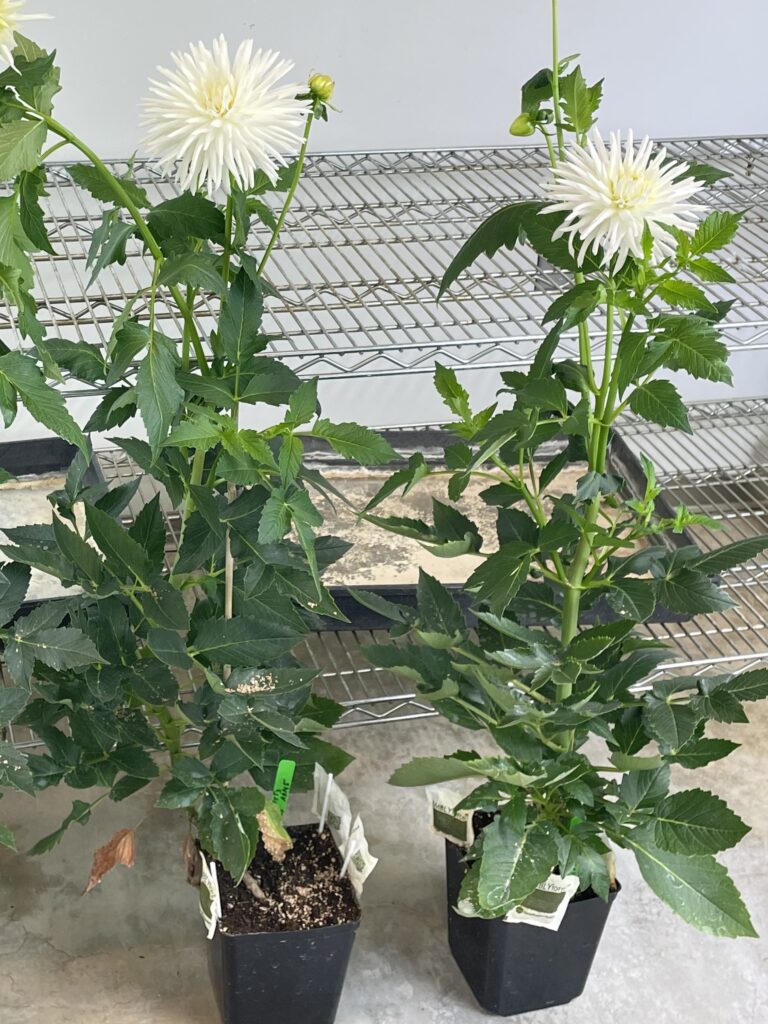
For decades, two different viruses were believed to be responsible for a common, untreatable disease in dahlias, a colorful, high-value flower grown worldwide.
Virologists at Washington State University have now learned that the two viruses, known as dahlia mosaic virus and the dahlia common mosaic virus, are variants of the same viral species. Based on the sequencing and comparison of the viruses’ genomes, the discovery was published this winter in the journal Archives of Virology.
“Shakespeare’s Juliet famously asked, ‘What’s in a name? That which we call a rose by any other name would smell as sweet,’” said Hanu Pappu, Chuey Endowed Chair and Samuel H. Smith Professor in the Department of Plant Pathology. “But when it comes to diseases, names matter. Accurate identification of a pathogen is central to diagnosing a disease, managing an outbreak, or safeguarding crops from infection —be it COVID-19, avian flu, or a crop pathogen.”
The state of Washington is home to a multibillion-dollar nursery and ornamental plant industry, boasting large-scale commercial operations as well as small family-owned farms that sell cut flowers at local farmer’s markets.

“Anyone who has visited Seattle’s Pike Place Market on a weekend must have seen the diversity of cut flowers sold,” Pappu said. “These include a high-value specialty flower: the dahlia.”
Pappu’s dahlia research program, which is exclusively supported by the Carl F., and James J. Chuey Endowment and the American Dahlia Society, specializes in studying, identifying, and finding ways to manage viruses that impact crops of the ornamental flower.
“Professor Pappu’s grower-supported work has revealed novel pathogens, developed new tools, and promoted access to clean plants,” said Raj Khosla, Cashup Davis Family Endowed Dean of the College of Agricultural, Human, and Natural Resource Sciences. “His program is a unique resource for commercial flower growers and everyone who appreciates the beauty of dahlias.”
Named for the unsightly patches left on foliage, mosaic disease causes costly production losses for growers. Severe cases stunt growth and can prevent the valuable blooms from developing at all.
Grown from long-living bulbs or tubers, or from cuttings from other plants, ornamental plants like dahlias can quickly become perpetual reservoirs for viruses.
“That’s because the mother plant, once infected, passes on the virus through any cuttings, bulbs, or tubers taken from them,” Pappu said. “The chance that further propagation carries that virus forward is very high.”
New viral diseases arise from time to time, making accurate identification a must. Identification lays the foundation for virus-detecting tests and helps researchers understand how viruses spread.
“We use that information to come up with strategies to mitigate the diseases,” Pappu said.
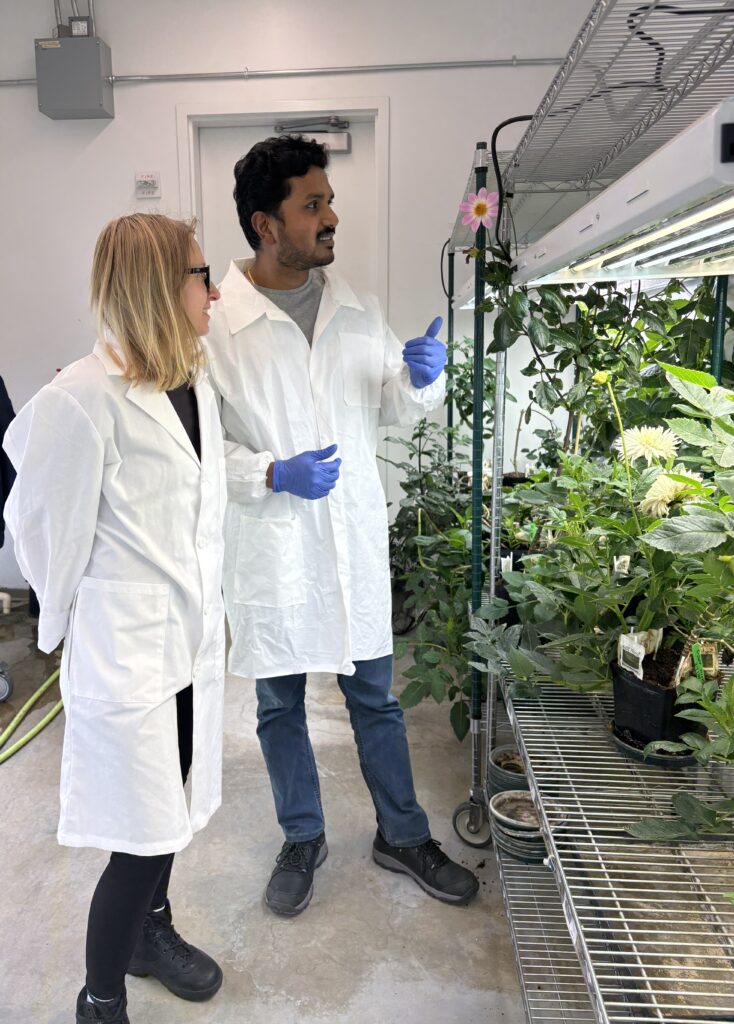
One of the two viral variants was first reported in the 1980s. Pappu’s team identified the other nearly 20 years later and began to question where it fit as part of the broader virus family.
Prabu Gnanasekaran, a postdoctoral researcher in Pappu’s lab, and Ying Zhai, a former lab member now at the USDA Agricultural Research Service’s San Joaquin Valley Agricultural Sciences Center, set out to clarify the relationship. They approached dahlia growers across the country, who provided thousands of samples from infected plants. The researchers sequenced and compared the genomes, finding some significant genetic differences. However, the genetic code in the key regions used for international virus classification are 80% identical.
“Based on the internationally accepted criteria for virus classification and naming, these two meet the criteria for being variants of the same virus,” Gnanasekaran said.
The discovery also showed the breadth of divergence across the viral genome, he added.
“By resolving the ambiguity about these viruses, we’re improving the scientific foundation for reliable testing, clean-plant certification, and the safe movement of dahlia planting material across state and national borders,” Pappu said.
View the article, “Genome sequence of dahlia mosaic virus revisited: molecular characterization and genetic diversity of DMV and dahlia common mosaic virus,” online at Springer Nature.