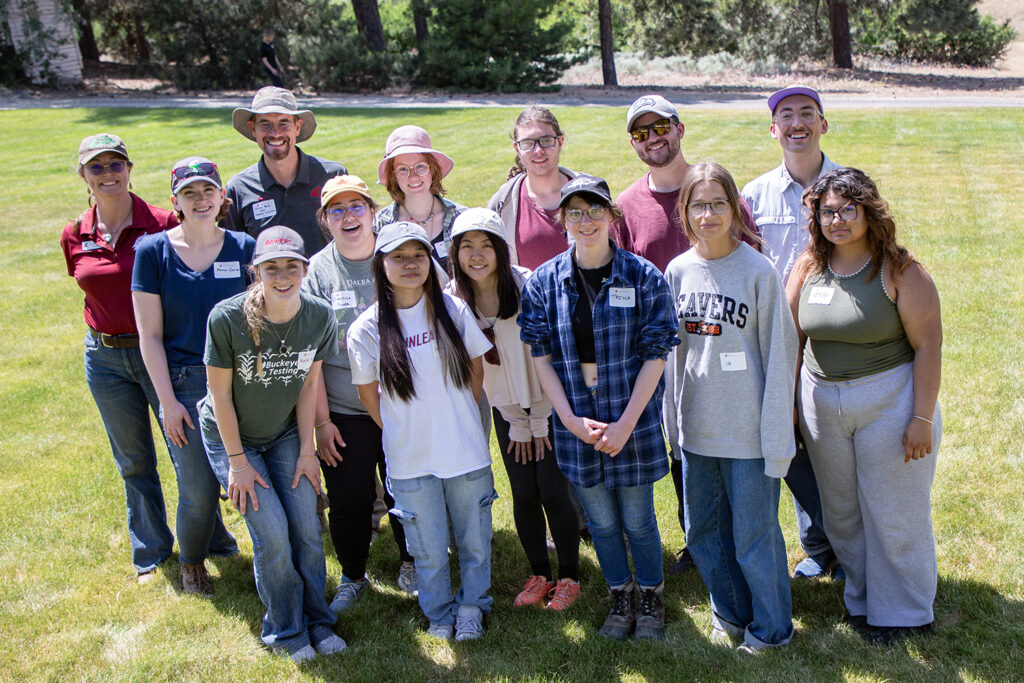
Scholars from Washington State University and eight other U.S. colleges and universities spent their summer embedded in WSU agricultural research and outreach.
The thirteen students met with growers, toured farms and businesses, and launched their own experiments as the latest cohort of a five-year summer internship program that bridges academics, sustainability, and agriculture. They will share their stories at the upcoming Summer Undergraduate Research Symposium, Friday, Aug. 1, in the CUE Atrium at WSU Pullman.
“This program has been incredibly rewarding, and I truly believe it’s worth it for any student considering research,” said participant Tianyi Chen, a Pullman native and biometry and statistics major at Cornell University.
Funded by the USDA National Institute for Food and Agriculture’s Research and Extension Experiences for Undergraduates program and the Washington Research Foundation, the 10-week program covers varied and complex crop systems and climates of eastern Washington. It’s just one part of a broader internship program that drew more than 70 students from 51 institutions to WSU’s Pullman and Vancouver campuses to explore agriculture, physics, criminology, fish biology, and other disciplines.
“We show them what we do here and deepen their understanding of the complex ecosystems we serve as part of our land-grant mission,” said facilitator Carol McFarland, a WSU research associate and coordinator of the USDA Northwest Sustainable Agroecosystems Research Unit-supported Pacific Northwest Farmers’ Network.
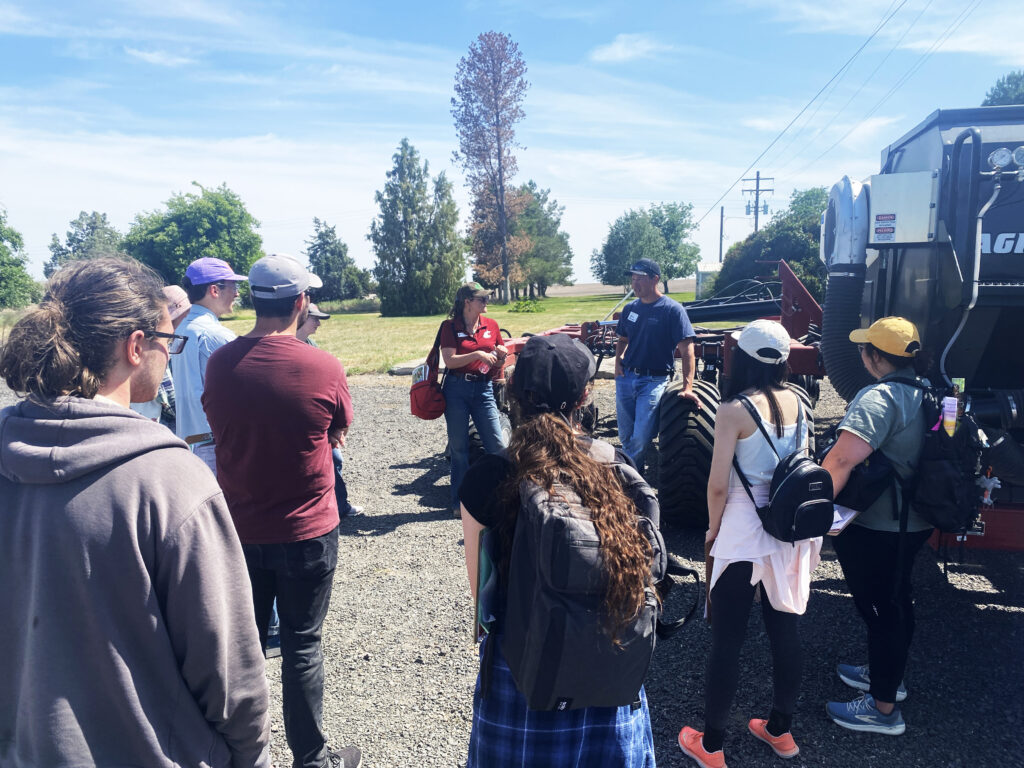
She led student visits to WSU’s Lind Field Day and Wilke Farm Field Day, the Palouse Conservation District and University of Idaho Extension Soil Health Tour, and the Pullman lab of flour and ingredients company Ardent Mills.
“We try to represent the many ways you can be a professional in Extension,” McFarland said. “We show what it looks like to get out into the community and understand what matters to growers as a way to inform our science.”
Visiting scholars live in dorms and receive a living stipend, allowing them to focus on learning.
“Paid support is an incredibly valuable part of this program,” McFarland said. “That really equalizes the opportunity for under-resourced students.”
The heart of the experience is hands-on research. Students joined eight different labs in WSU’s Institute of Biological Chemistry and Department of Crop and Soil Sciences as well as USDA’s Agricultural Research Service (ARS).
There, they gathered data on beneficial microorganisms, structural compounds, and enzymes, and other vital components of crop biology.
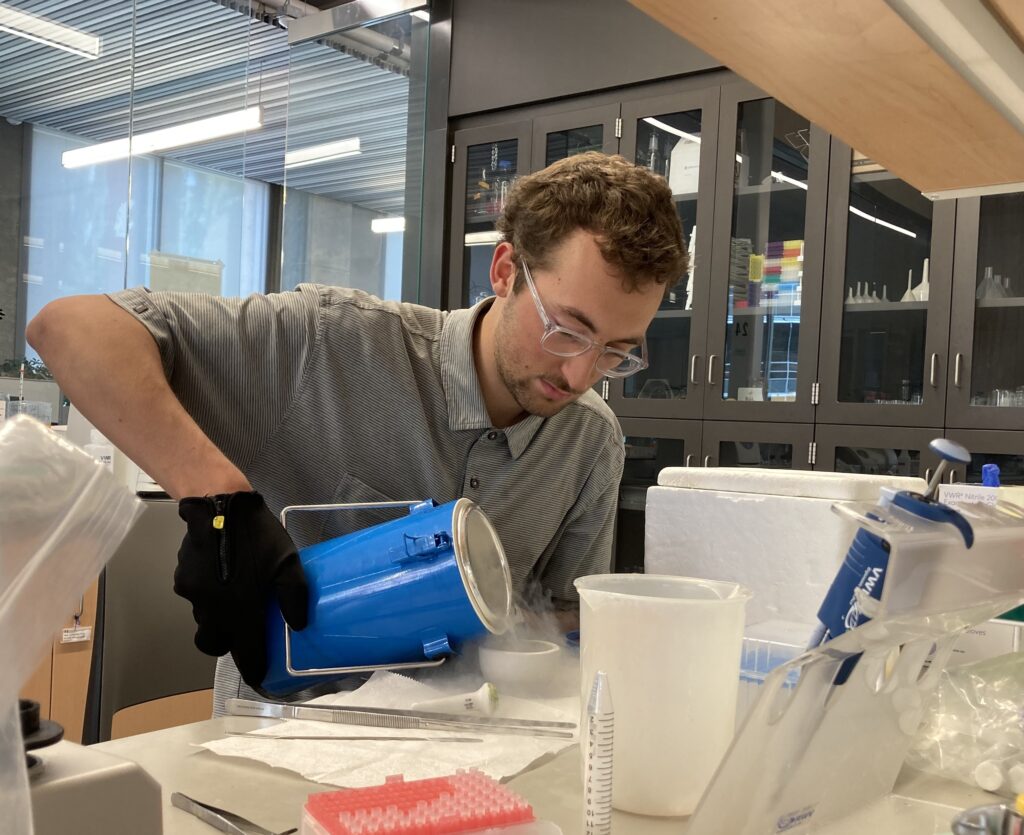
Interest in regenerative agriculture led Jackson Schroeder, a senior at Whitman College from Portland, Oregon, to Professor Andrei Smertenko’s lab. There, he studied wheat antioxidant enzymes, which improve drought and heat resilience, while building fundamental research skills.
“This is going to inform breeding trials and help make a better seed,” Schroeder said.
Fellow Whitman College student Sarah Adams entered USDA-ARS molecular geneticist Camille Steber’s lab, investigating dormancy in wheat seeds, work that could lead to improved seed germination and reduced starch damage. The experience helped her consider future career paths.
“Working with a cohort of other students and staff has been great for sharing knowledge and experiences,” Adams said. “They have definitely been my favorite part of this program.”
Christina Fisher, a recent biochemistry graduate from Lenoir-Rhyne University in Hickory, North Carolina, joined the USDA Wheat Health, Genetics, and Quality Research Unit, exploring how root-living bacteria suppress soilborne fungal pathogens. Handling large sets of bacterial data, she enjoyed learning how to use data tools to analyze bacterial genomes.
“I quickly learned how crucial it is to stay organized and plan ahead to work efficiently, especially as part of a research team,” she said.
As part of Associate Professor Laura Bartley’s biological chemistry lab, Cornell student Chen worked on developing computer vision to analyze plant tissue. Her project was largely self-directed, pushing her to grow as a problem solver.
“The technical challenges were deeply rewarding, but what impacted me most was connecting with growers, conservationists, and researchers supporting the sustainable agricultural economy of eastern Washington,” Chen said. “They reminded me that research is really about serving our communities, and that communicating science is just as important as doing the research.”
• The Summer Research Symposium is 9 a.m. to 1 p.m. Friday, Aug. 1, at the WSU Center for Undergraduate Education (CUE 203 and Atrium). Students will be available to show posters and discuss their research.