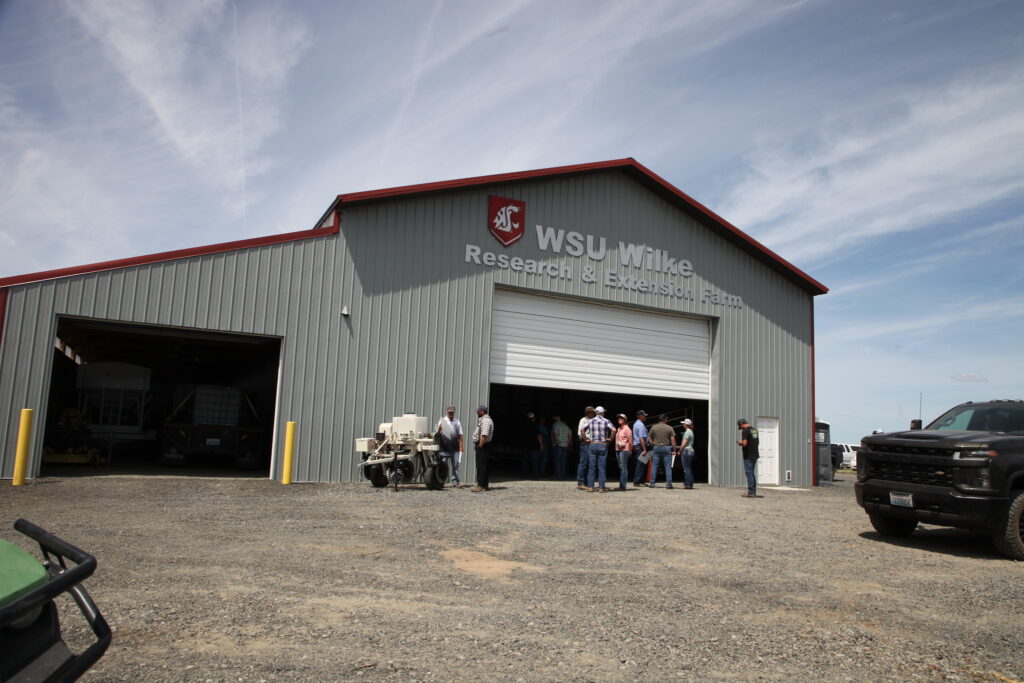
DAVENPORT, Wash. — Nearly two decades of research at Washington State University’s Wilke Research and Extension Farm is providing new insights into traditional crop rotations in eastern Washington.
Those research findings convinced Aaron Esser, longtime manager of the Wilke Farm, that growers could benefit from changing their approach. Yet doing so would mean shifting away from farming practices that have been common in the region for nearly 100 years.
“I feel very confident telling growers they can take a chance on extending their crop rotations by reducing summer fallow and incorporating more broadleaf crops,” said Esser, a regional Extension agronomist at WSU. “Our research shows that this kind of crop intensification can be economically beneficial over time.”
A typical three-year crop rotation in eastern Washington involves summer fallow, a practice that leaves the field unplanted for a year to conserve moisture. Winter wheat is planted into the fallow fields in the fall and harvested the following summer. During the third year, farmers traditionally grow a spring cereal like wheat or barley.
Research on the Wilke Farm suggests that diversifying crop rotations, planting crops more frequently, and reducing fallow periods offer benefits beyond increased profitability.
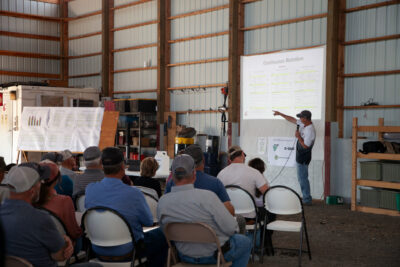
“By stretching the growing rotations out, it can mean less potential for erosion, since roots are actively growing,” Esser said. “It means more active and beneficial soil biology.”
Each year, Esser publishes a WSU report for growers detailing the farm’s performance. Farmers can evaluate the results of extended crop rotations at Wilke Farm and consider how similar practices might work in their own fields.
“This is a very specific dataset from Wilke Farm that applies to dryland wheat cropping in eastern Washington that you can’t replicate anywhere else,” Esser said. “That’s why grower support is tremendous for the work we’re doing. Our research is designed to be relevant and responsive to the needs of our farmers.”
As with other farms in the region, planting schedules and management decisions at Wilke Farm depend on markets and weather. The farm receives only about 13 inches of rain annually, placing it within an intermediate rainfall zone.
Despite Wilke Farm’s success with extended crop rotations, Esser cautions that the approach may not work everywhere.
“Because rainfall totals vary widely from Lind to Pullman, that means that some farmers will be able to grow chickpeas or canola in their rotations, and others won’t,” he said. “Even certain microclimates in an area could mean that continuous cropping will not work for every farmer in eastern Washington.”
Esser sees potential for incorporating more diverse crops into rotations if market conditions allow.
“If the price of barley was up high enough, we would be incorporating barley. I try to make these decisions much like a farmer would have to make decisions on their farm,” he said.
For Esser, one of the most rewarding aspects of managing Wilke Farm is sharing research findings with local growers.
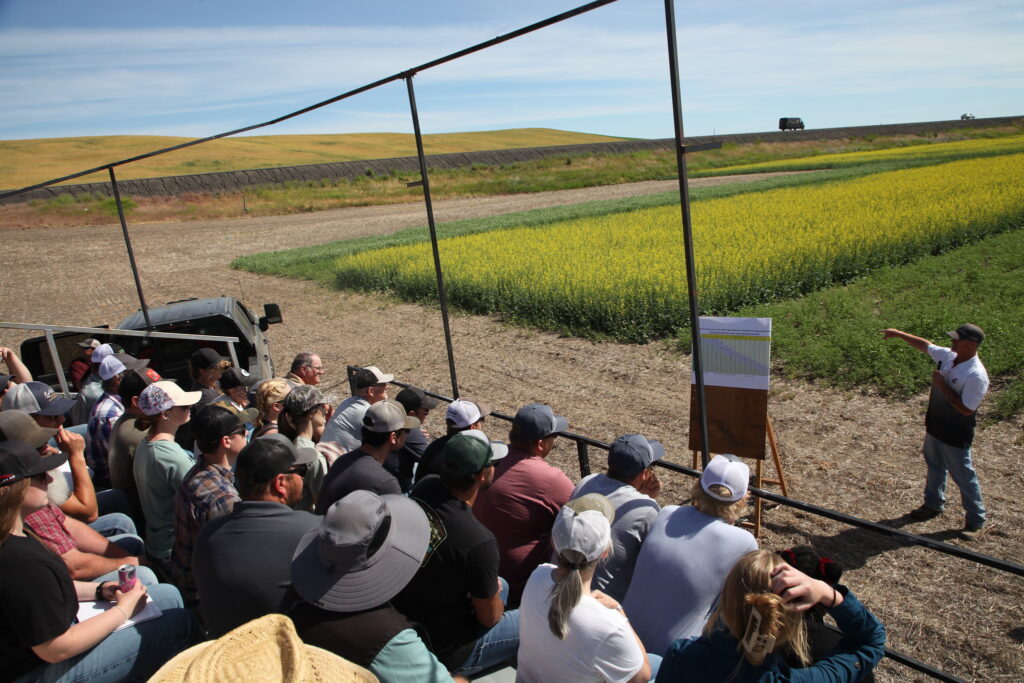
“I sometimes get pulled aside at conferences by farmers who want to express gratitude for a certain research finding that boosted production or streamlined their business,” he said. “I especially like working on my farmers’ goals and am so grateful for their support.”
In addition to research on dryland wheat production and crop rotation, Wilke Farm conducts a variety of other trials, including studies on long-term soil health, cover cropping, and herbicide-resistant weeds.
Vicki McCracken, director of WSU Extension, said the research and outreach provided by Esser and his team exemplify the importance of Extension’s land-grant mission in Washington.
“One of the things I value about Extension is working alongside producers on the questions that matter to them,” she said. “Wilke Farm gives us a place to explore those questions together and put what we learn to work for eastern Washington growers.”
Raj Khosla, dean of WSU’s College of Agricultural, Human, and Natural Resource Sciences, said the nearly two decades of research at Wilke Farm demonstrate the value of sustained investment.
“These findings are easily accessible to farmers and provide them with the information they need to make informed decisions and evaluate new practices that can improve profitability and soil health,” Khosla said. “This research helps make agriculture in eastern Washington more adaptable and resilient in the face of pressing challenges.”
Media contact
Aaron Esser, Regional Extension Agronomist, email: aarons@wsu.edu, phone: 509-659-3210