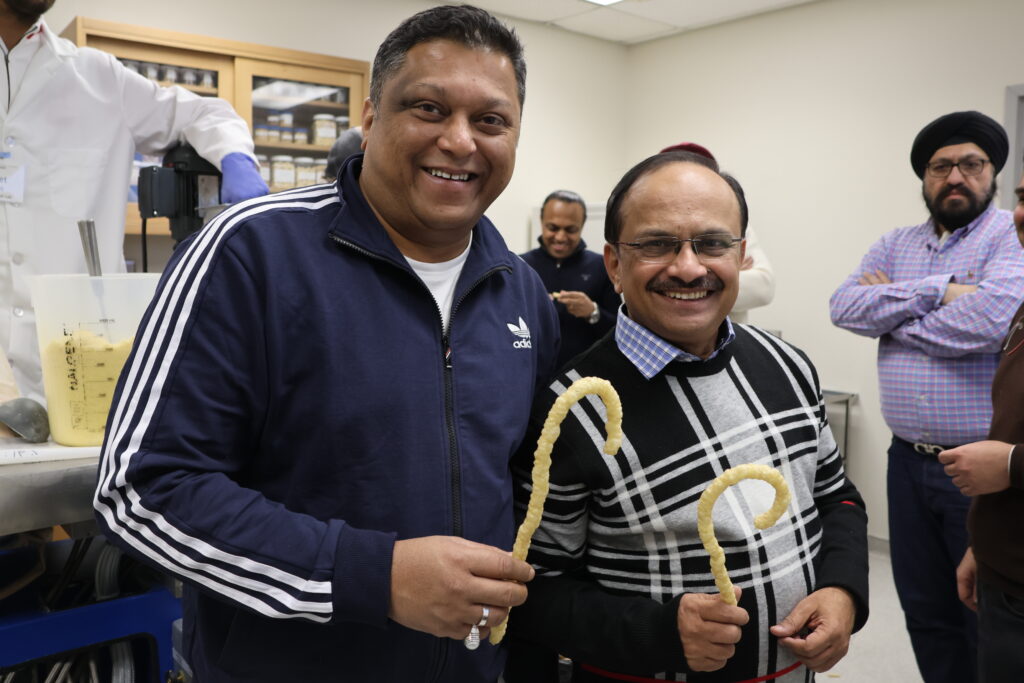
Faculty and students in WSU’s School of Food Science recently welcomed visiting food industry leaders from India for a week-long deep dive into the properties and potential of pulses like peas, chickpeas, and lentils.
Professor and Extension Food Processing Specialist Girish Ganjyal led training sessions from Jan. 27-31 at Pullman, Washington, taking participants on a journey from raw materials, through how foods are made, to the final products on consumers’ tables.
“It completes the whole chain,” said participant Rouble Kataria, senior vice president for innovation and training at Haldiram’s, an India-based multinational restaurant chain and snack food manufacturer.
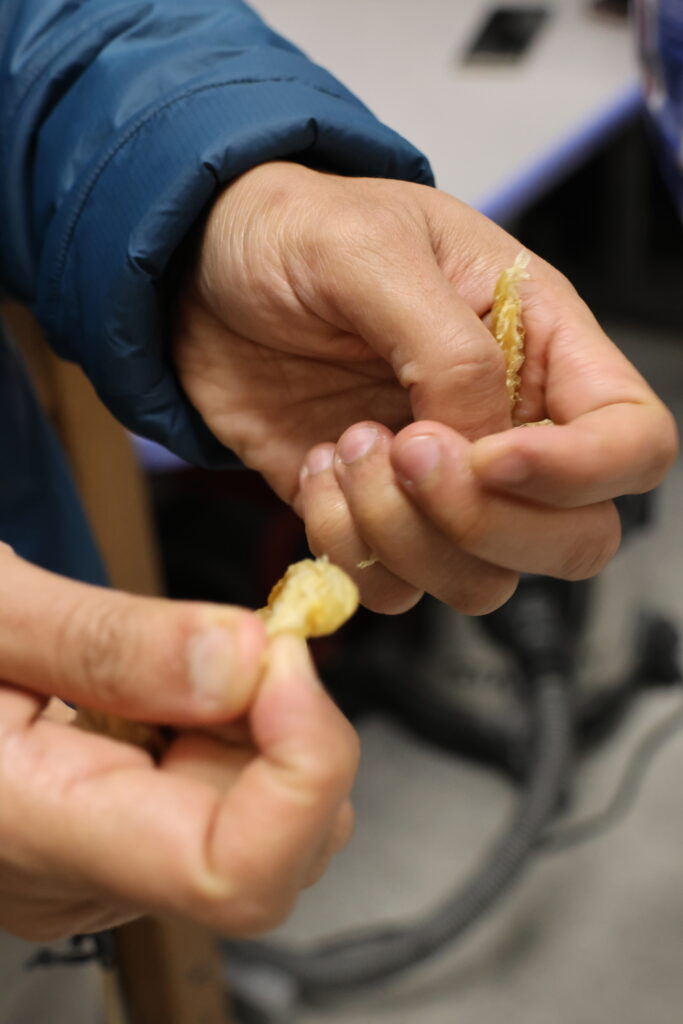
At WSU, Ganjyal and his research team are studying new ways to make snacks and products from pulses, protein-rich crops that are becoming a popular, nutritious ingredient. They handed out raw ingredients, doughs, and packaged snacks for visitors to handle and taste, then welcomed them to the lab to see how food scientists are formulating and putting pulses to work.
“High-quality food ingredients are critical to developing consistently excellent snacks and other food products,” Ganjyal said. “Both nutrition and functionality matter a lot in this process.”
Pulses grown in the U.S. provide consistent quality for food product manufacturers, he added.
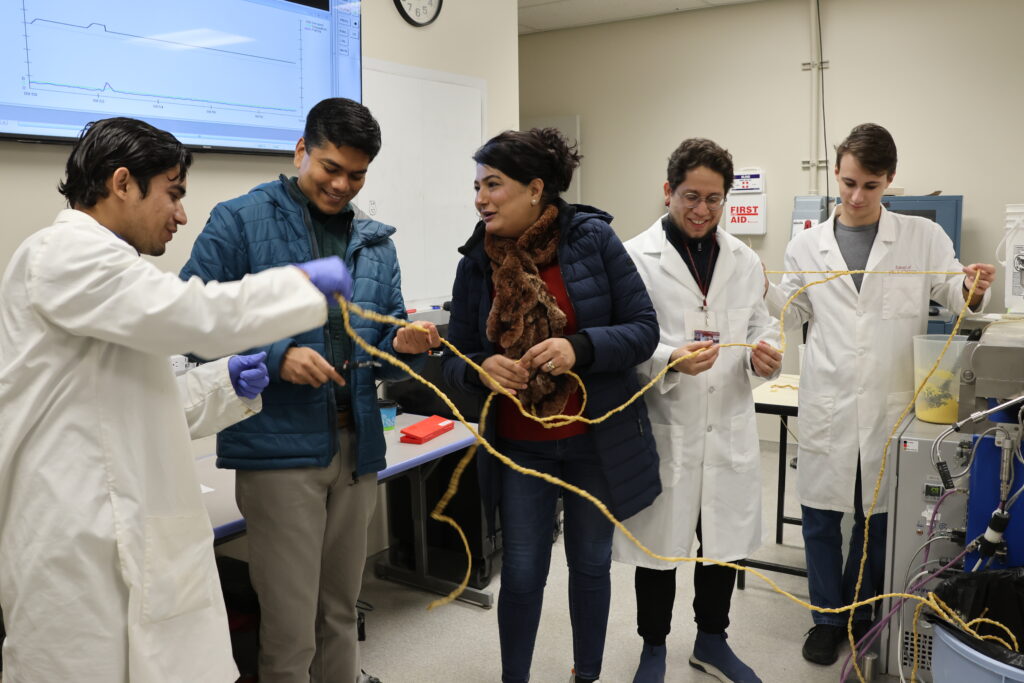
WSU’s Extension and research program provides technical information on how to process these ingredients. Ganjyal’s team also teaches training session participants how to best incorporate them into products that consumers like.
“This ultimately helps U.S. growers and ingredient manufacturers expand their markets, while helping fulfill the university’s land-grant mission,” he said.
Ganjyal’s team has trained food processing companies from countries around the world, including Thailand, Indonesia, Malaysia, the Philippines, India, Turkey, Mexico, and Brazil.
“Our students get outstanding opportunities to participate in these trainings, interact with industry experts, and build amazing networks,” he added.
During the training, experts from the USA Dry Pea & Lentil Council and pulse ingredient companies offered industry perspectives, and the group toured USDA’s Western Wheat Quality Lab to learn how flours are tested in baked goods and other foods.
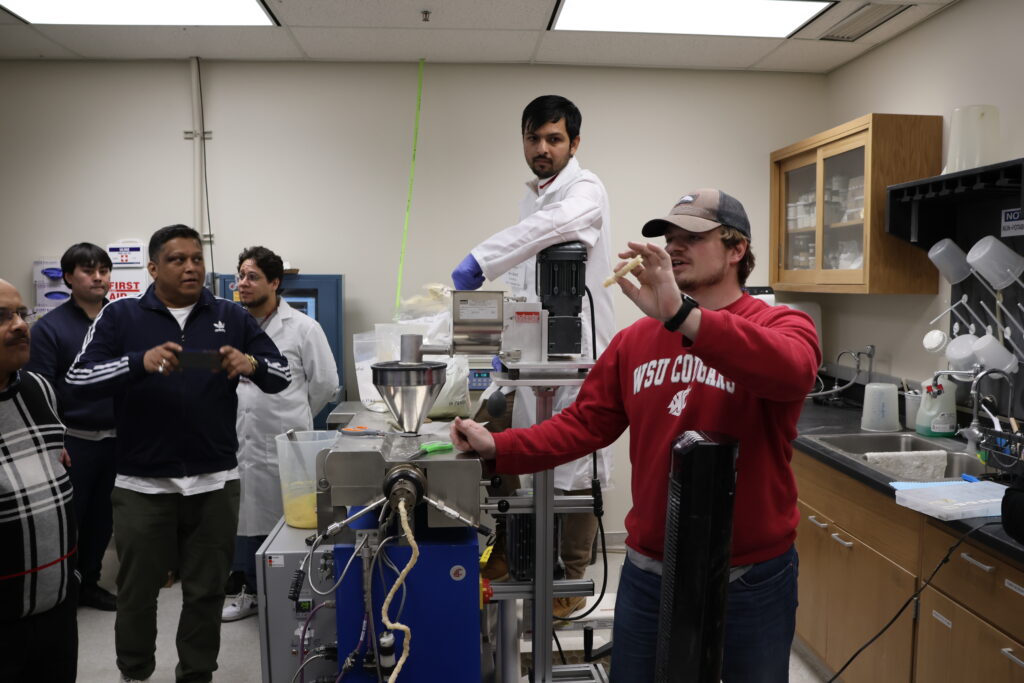
For Viraj Shah, Mumbai-based director of Vichi Agro Products, the highlight of the visit was seeing pulse extrusion technology in action as WSU scientists cooked pulse flours into snacks and plant protein ingredients under high pressure and temperature. That experience was very different than learning about extrusion in theory, Shah added.
“We’ve used pulses in snacks for ages,” he said. “We’re exploring how we can make new products from pulses and bring them into our product lines in India. We’re keen to observe what is happening in the industry and replicate it back home.”
The training was supported by the Dry Pea & Lentil Council through funding from USDA.
• The WSU School of Food Science offers training, education, research, and product evaluation that supports the global food industry, consumer safety and health, and our economy. Learn more about our mission at sfs.wsu.edu and foodprocessing.wsu.edu.