Spurred by innate curiosity and the collaborative minds around him, Tim Murray studied diseases affecting grain crops in Washington and around the world for over 40 years.
The plant pathologist and professor emeritus at Washington State University reflected on decades of impactful research and teaching after receiving the 2025 Lifetime Achievement Award from the Pacific Division of the American Phytopathological Society this spring.
“Plant pathology is very much a problem-solving career,” said Murray, who retired this February. “My goal has been to provide solutions to the problems that growers face.”
The lifetime achievement award recognizes senior scientists distinguished by their contribution to science and service to the organization. The 2024 award went to Murray’s colleague Tim Paulitz, a longtime USDA-Agricultural Research Service scientist and WSU adjunct plant pathologist.
“Coming from my colleagues, this award is very meaningful for me,” Murray said.
Born in Los Angeles, California, Murray earned both his master’s and doctoral degree at WSU. After graduation, he was headed for a postdoctoral USDA research job when a full-time faculty position opened at WSU. Murray joined the Department of Plant Pathology that autumn of 1983, ultimately spending the rest of his career as a WSU researcher, teacher, Extension faculty member, and two-time department chair.
Murray specialized in fungal diseases that routinely struck at Pacific Northwest wheat crops, while also studying bacterial, virus, and nematode threats. His work on strawbreaker foot rot, a fungus attacking winter wheat, led to a 90% reduction in fungicide used to control the disease on Washington acreage.
“When I began, growers here were spraying up to a million acres of winter wheat for strawbreaker,” said Murray, who worked to identify effective, multi-modal sprays. His program also aided wheat breeders working to introduce new varieties that could resist strawbreaker and other fungal diseases like snow mold and Cephalosporium stripe.
“Cephalosporium had become a big problem around the time I started, largely because of some highly susceptible wheat varieties,” Murray said. “My goal was always to find sustainable solutions that didn’t involve extra costs for farmers. New varieties don’t require any additional cost beyond buying seed, which the grower’s going to have to do anyway.”
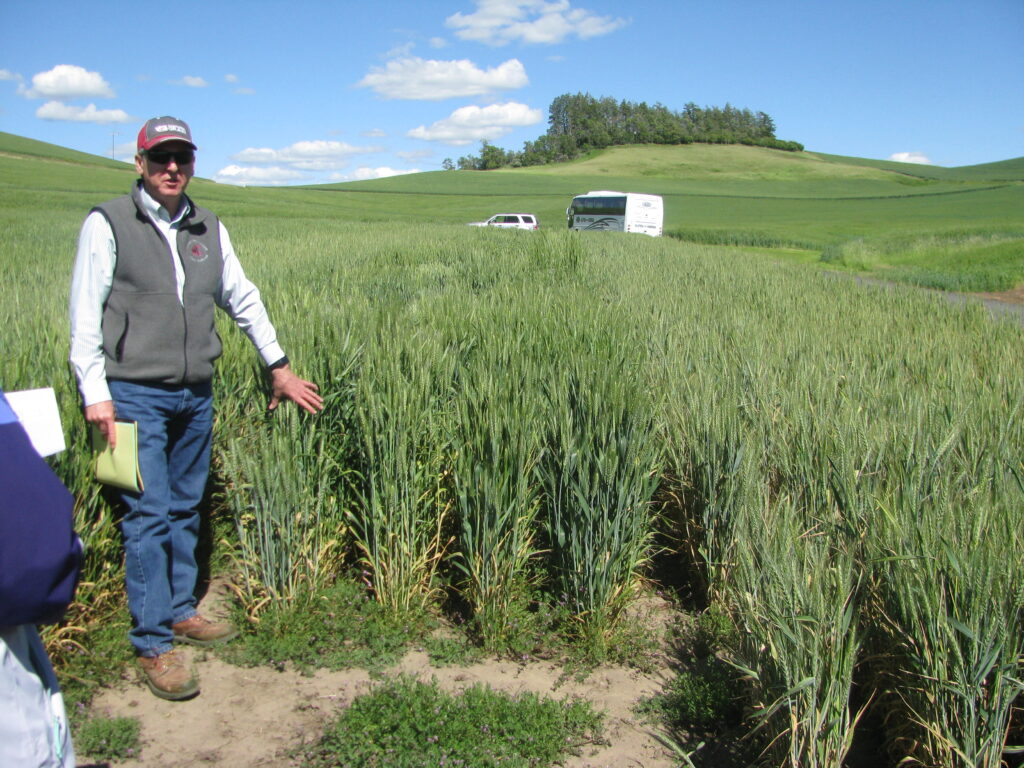
Globally, wheat is more widely grown than any other crop. Murray’s professional and personal interests took him to grain fields on four continents, from Mexico and Morocco to China and Bhutan.
“I’ve seen wheat grown in a lot of different areas of the world,” Murray said. “Most people worldwide still live an agrarian life and use traditional agricultural methods. It gives you a different perspective and a much greater appreciation for our food supply here in the U.S.”
Murray began teaching the department’s introductory plant pathology course as a doctoral student. He went on to lead that course for 30 years.
“When you teach a class, you learn more about the material than the students do,” Murray said. “It made me a better plant pathologist.”
A prolific author, Murray penned over 200 journal and Extension articles and wrote or contributed to several important handbooks and compendiums. Other accomplishments included collaborative work at WSU developing perennial wheat, a chair’s role on a national committee studying Ug99 wheat stem rust recovery, and service on the National Academies’ Forum on Microbial Threats.
He became a Fellow of the American Phytopathological Society in 2010 and served as its president from 2014-2018. Following in the footsteps of fellow WSU scientists as society president, Murray sees personal involvement and encouragement of the next generation as vital to the profession.
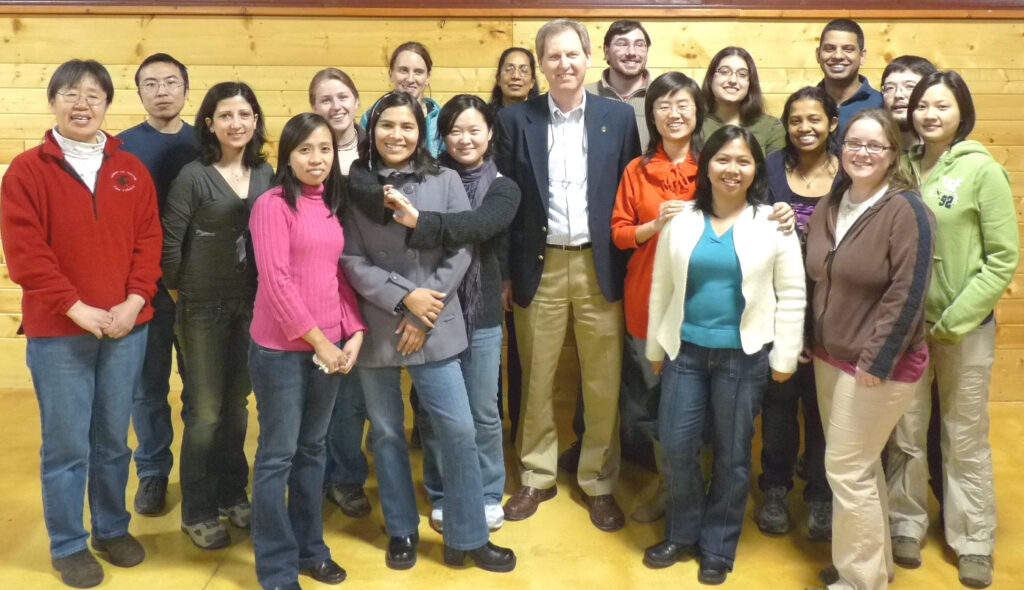
“I’ve always tried to instill in my students the need to network,” said Murray, who taught more than 40 master’s and doctoral students over his career. “Be curious. Take time to really think about what you’re doing.”
In the final dozen years of his career, Murray traded his teaching role for a WSU Extension appointment. That role put him in closer contact with growers.
“It was still teaching, just for a different audience that didn’t mind listening to me at 8 in the morning,” he said.
As emeritus, Murray is now winding down several research projects and helping his final master’s student complete her degree.
He never planned to spend his entire career at WSU. But the support Murray found at Pullman helped his research thrive and made the college town home for his family.
“Visiting experts, support scientists, and graduate students made a huge difference in my program over the years,” he said.
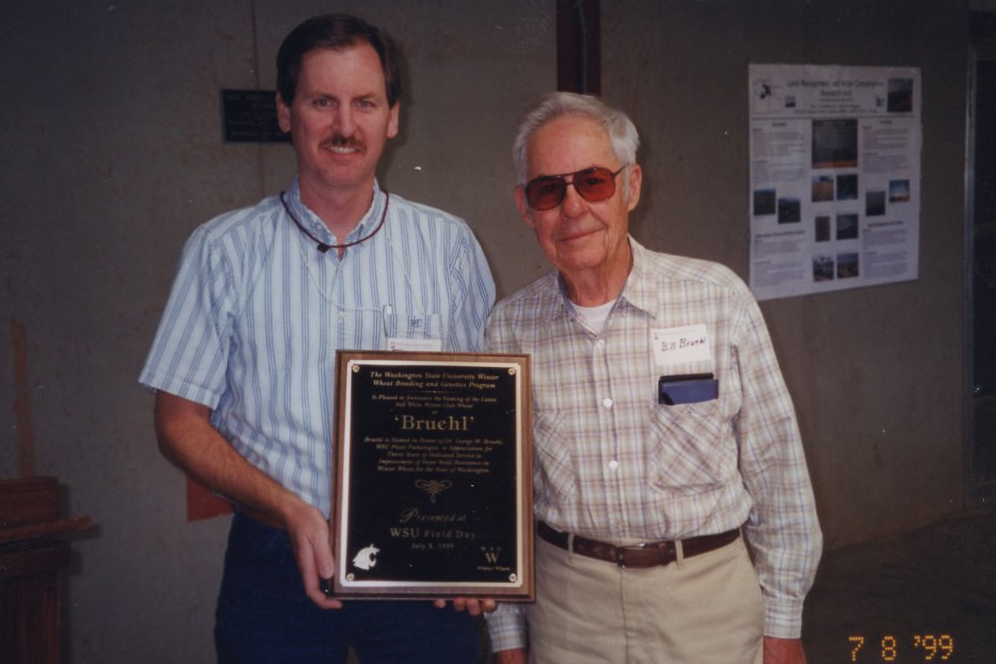
Appreciative of WSU’s close working relationship with U.S. Department of Agriculture scientists, Murray recalls his fruitful partnership with USDA crop breeder Robert Allan for fungus-resistant wheat. He also sees a 70-year through-line connecting his work with WSU predecessors George “Bill” Bruehl and Walter Hendricks, who began work on fungal wheat diseases that he continued.
“Science is incremental,” Murray said. “We’re all standing on the shoulders of those who came before us.”