EVERETT, Wash. – Urban areas can produce food for their growing populations; it just takes a little planning and creativity.
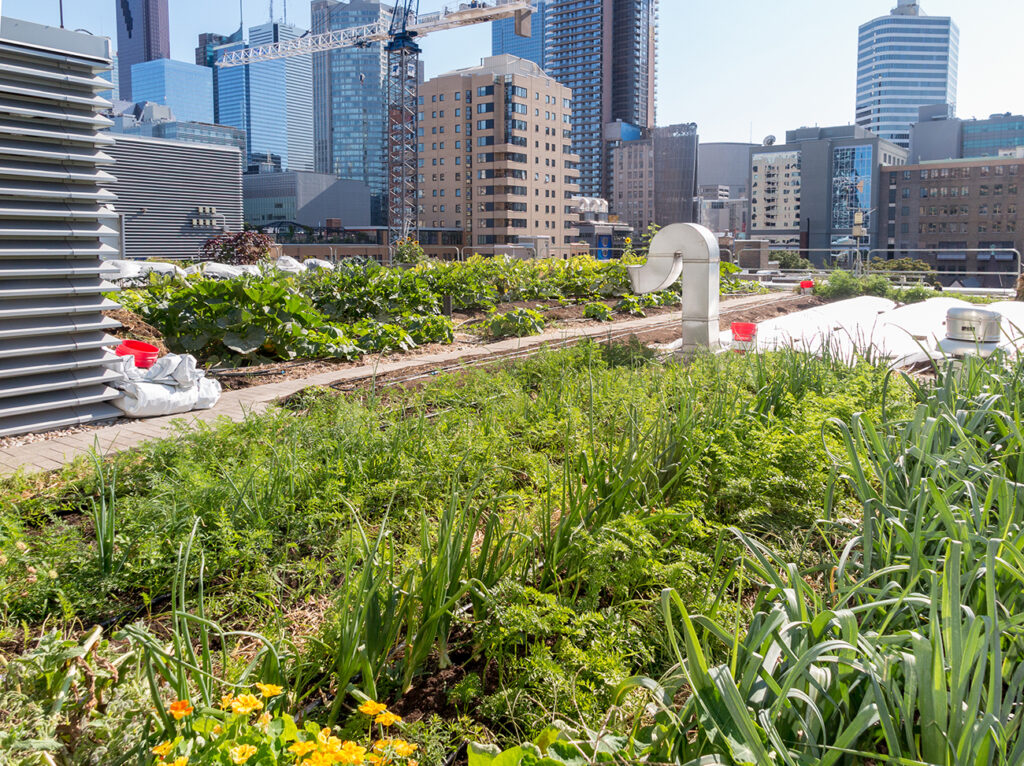
Photo from AdobeStock by alisonhancock
To boost that planning, the National Urban Research and Extension Center (NUREC), administered by Washington State University Extension, is partnering with the National League of Cities to launch the Building Integrated Agriculture (BIA) Academy.
Aimed at elected officials and civic leaders, the academy is a nine-module course that starts in November and features topics including environmental resilience, sustainability, and food access.
The deadline to apply is Oct. 5, 2026.
The academy will emphasize the benefits of connecting cities with university research and Extension partners.
“We can help cities develop policy positions that support the integration of food production into building infrastructure,” said Brad Gaolach, director of NUREC and WSU Extension’s Metropolitan Center for Applied Research and Extension. “Are there public benefit opportunities that can be incorporated into new building design? Can cities provide funding to work with builders and developers to put in things like rooftop gardens? The academy will help urban areas answer those questions.”
Some cities, for example, already have stormwater management standards for new buildings, Gaolach said. NUREC can provide technical details to help those programs expand to green roofs that still capture stormwater but use it for food production in a garden.
The program can also help cities tackle the problem of food deserts in some communities.
“If you build new affordable housing, it’s possible to provide fresh food bodegas on the ground floor with produce grown on the roof,” Gaolach said. “We’re excited to talk with elected and city officials to help them bring more agriculture into their cities.”
This is NUREC’s first academy, but the group has existed for 10 years, working on new ways to bring applied research and Extension services into urban areas.
“100 years ago, 80% of the population lived in rural areas,” Gaolach said. “Now, 80% of people live in urban areas and most people don’t know about Extension or their state’s land-grant universities because it traditionally has not done much work in cities.”
NUREC aims to bridge that gap with cities.
“The Building Integrated Agriculture Academy is a powerful example of the land-grant mission in action,” said Raj Khosla, Cashup Davis Family Endowed Dean of WSU’s College of Agricultural, Human, and Natural Resource Sciences. “By connecting university expertise with local decision-makers, we can help cities create innovative food systems that improve access to fresh food, strengthen community resilience, and support a more sustainable future.”
NUREC started with WSU, Oregon State University, and other western land-grant institutions and has now grown to include 17 universities. It has hosted several events and workshops to connect civic leaders, developers, architects, and others with the latest science from universities.
“We’re looking at projects that are successful at the county or local level to see if we can help scale them nationally,” Gaolach said. “How can we use our network to scale up effective, impactful programs to help as many cities as possible? That’s the goal and why we’re here.”
MEDIA CONTACT
Brad Gaolach, WSU Metropolitan Center for Applied Research and Extension, 425-405-1734
gaolach@wsu.edu