PUYALLUP, Wash. — Washington State University horticulturist Jeffrey Wall partnered with members of the Mi’kmaq First Nations people of Canada to create a new, Indigenous-centered model of the culture-supporting connections between humans, plants, animals, and the environment.
Wall interviewed over a dozen traditional knowledge keepers in Unama’ki, the Cape Breton Island homeland of the Eskasoni Mi’kmaq. He asked Tribal elders and allies to describe biocultural connectivity — the relationship between human cultures and local ecosystems — as they see it. The findings were published in the July issue of Environmental Science & Policy.
“I wanted to show the connective forces that the Mi’kmaq prioritize,” Wall said. “The goal was to be in tune with their deep cultural heritage, traditions, and the indigenization of the future that they want to promote.”
With over 66,000 registered members, the Mi’kmaq are a numerous, resilient people native to the U.S. Northeast and Canada’s Atlantic provinces who are revitalizing their language and growing their land holdings. Wall’s work was funded by the Unama’ki Institute of Natural Resources to guide future mapping and inform the Institute’s land acquisition strategy.
The project reflects the concept of “two-eyed seeing” — understanding the world from both Indigenous and Western approaches — introduced by Mi’kmaq elders Albert and Murdena Marshall.
“There is a growing understanding that environmental conditions can improve if we bring more Indigenous ways of knowing and being into the conversation,” said Lisa Young, executive director of the Unama’ki Institute of Natural Resources. “Maintaining a reciprocal relationship with the land is in itself a way to protect and preserve it.”
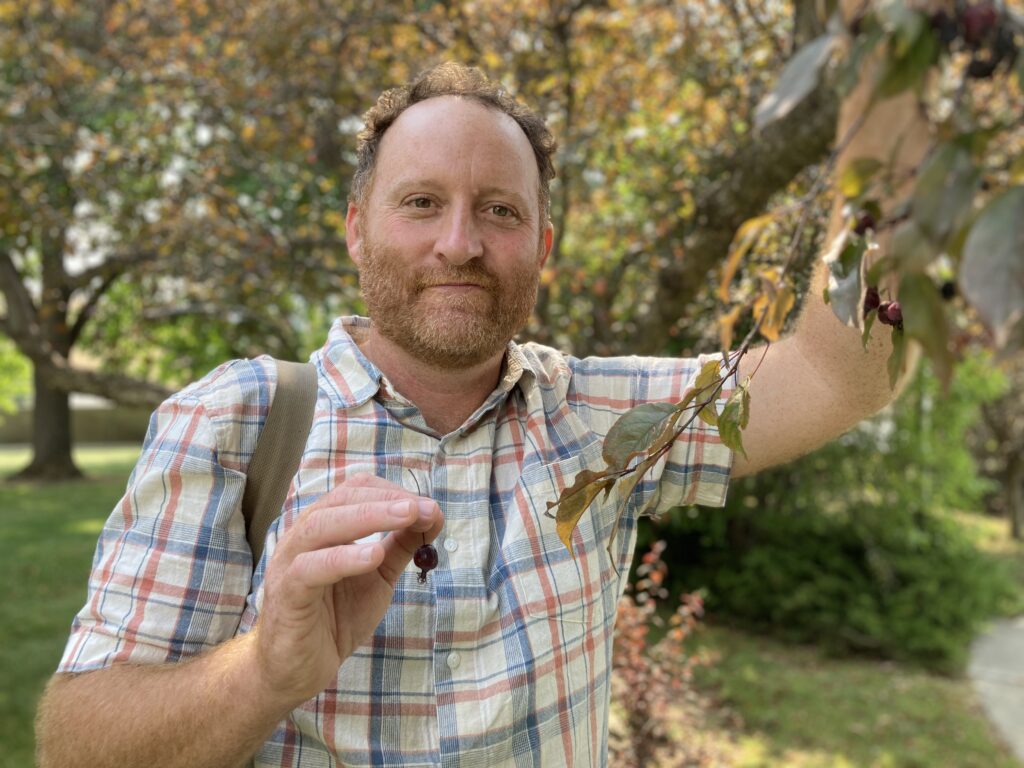
Collaborating with the Unama’ki Institute, Dalhousie University, the University of Guelph, and other Canadian institutions, Wall surveyed roughly a dozen local, mainly Mi’kmaq knowledge keepers—respected community members who keep and pass on wisdom.
“There was an enormous willingness to go deep on what the concept of connection means to them,” Wall said.
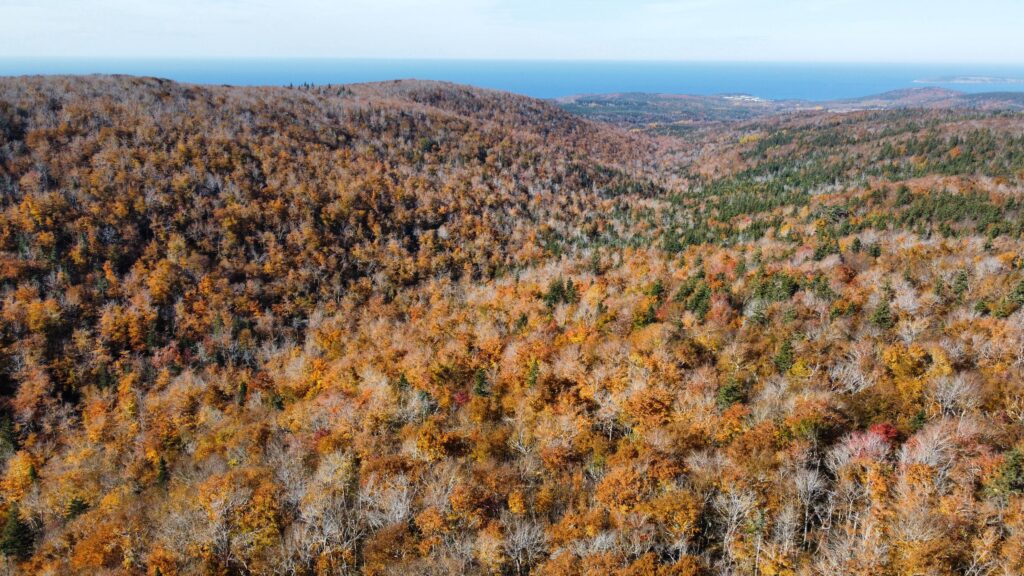
Using Mi’kmaw placenames, oral teachings, workshop transcripts, and Indigenous-led biological surveys to indicate significance, Wall’s team chose four living things as “biocultural leaders,” or best representatives of Mi’kmaq connection with the environment: beaver, spruce trees, berries, and waterfowl. These groups of species represented seasons as well as common landscapes in Unama’ki, such as forests, coastal wetlands, clearings, and riparian spaces.
“What we call species —what the Mi’kmaq call their relatives — and what we call plants and ecosystems are some of the essential forces that the Mi’kmaq want to talk about and connect with,” Wall said.
The human element is also key. The Mi’kmaw phrase “weji-sqalia’tiek,” or “We sprout from here,” reflects their own place in the environment.
“From the Mi’kmaq’s perspective, there is no connectivity without them in the web,” Wall said.
Connections between generations, including elders and youth, to environmental healing, and to the concept of Kepmej, or taking action that maintains the Mi’kmaw way of life, were also common themes.
“If the land is healthy enough for Indigenous communities to maintain cultural continuity, that’s an indication of its health,” Young said. “That’s the idea behind the biocultural indicators.”
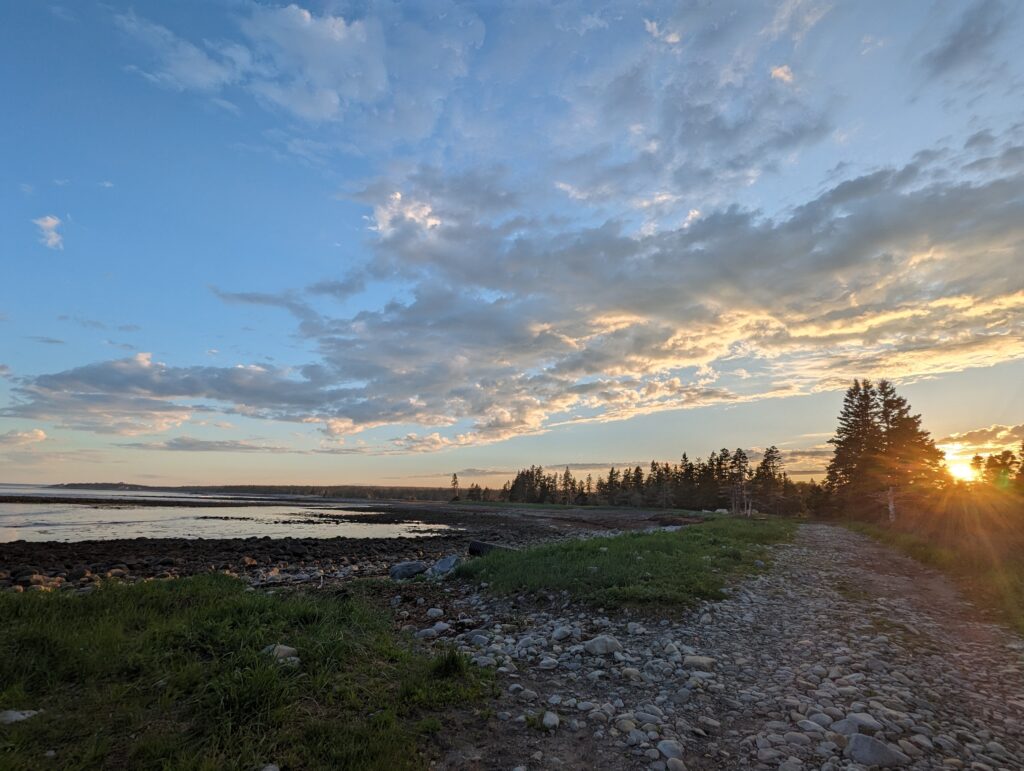
Unama’ki foresters, biologists, and earth keepers — indigenous guardians who monitor and care for the land and cultural significant species — study biocultural leaders like beaver and spruce trees as part of their work.
“We have been exploring how biocultural indicators can improve our understanding of our environment and our place in it, and how it can enrich the knowledge we obtain through scientific research” Young said.
While Wall is lead author, the creators of the study chose to name the first author “Msit No’kmaq,” or “All our Relations” in Mi’kmaq language, out of respect. Interviewees who wished to be credited are also named as co-authors of the paper.
Hired in 2025 as professor of Indigenous-focused horticulture, Wall bridges ecological science with partnerships with Indigenous peoples around the world. Past projects have brought him in touch with farming and foraging communities in Turkey, Morocco, the Caucasus, the Mediterranean Basin, and Uzbekistan. Today, he is developing research collaborations with Indigenous-led organizations in Washington.
“Jeffrey’s partnership-based approach provides us a real understanding of the life-giving links between generations of people, our food, and the land that sustains us,” said Raj Khosla, Cashup Davis Family Endowed Dean of WSU’s College of Agricultural, Human, and Natural Resource Sciences. “It’s a great example of how the land-grant mission reaches all communities.”
• Contact: Jeffrey Wall, Assistant Professor, Indigenous Horticulture, jeffrey.wall@wsu.edu