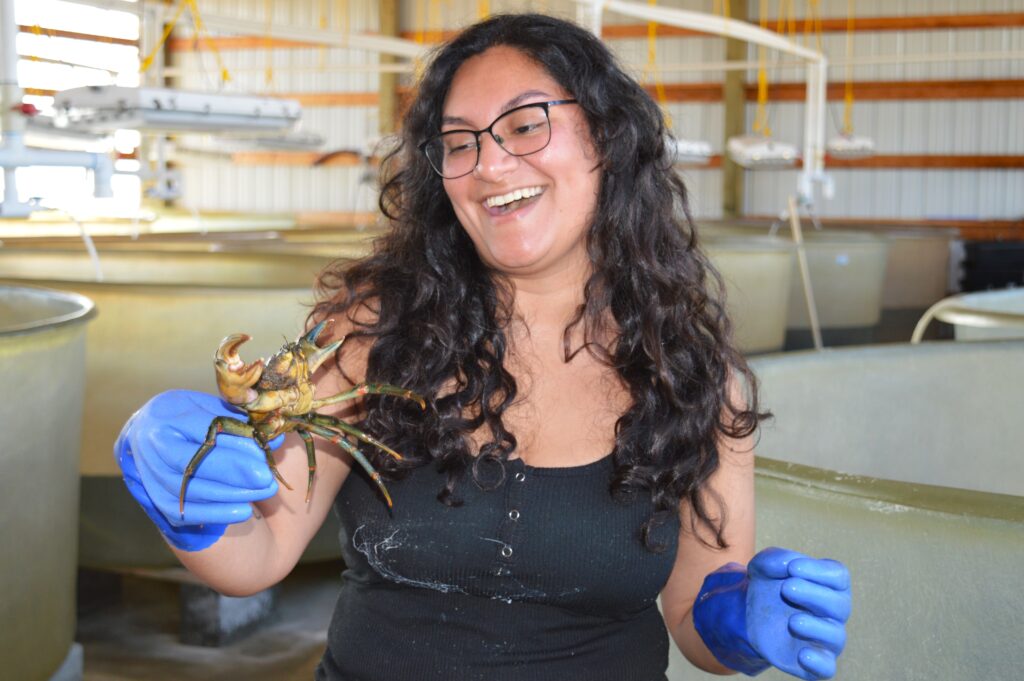
LONG BEACH, Wash. — Scientists at Washington State University have found that juvenile European green crabs can do as much damage as adults to shellfish and native sea plants, calling into question current methods to eradicate the invasive crustaceans.
Green crabs are a massive threat to Washington state’s shellfish industry as well as its native eelgrass, a plant vital to local seawater ecology.
For several years, shellfish growers have been trapping green crabs in huge numbers. Trappers traditionally target adult crabs because they are easier to catch and remove. More than 1.2 million were caught in Willapa Bay and Grays Harbor alone last year. But the new study shows that current removal techniques may not be enough.
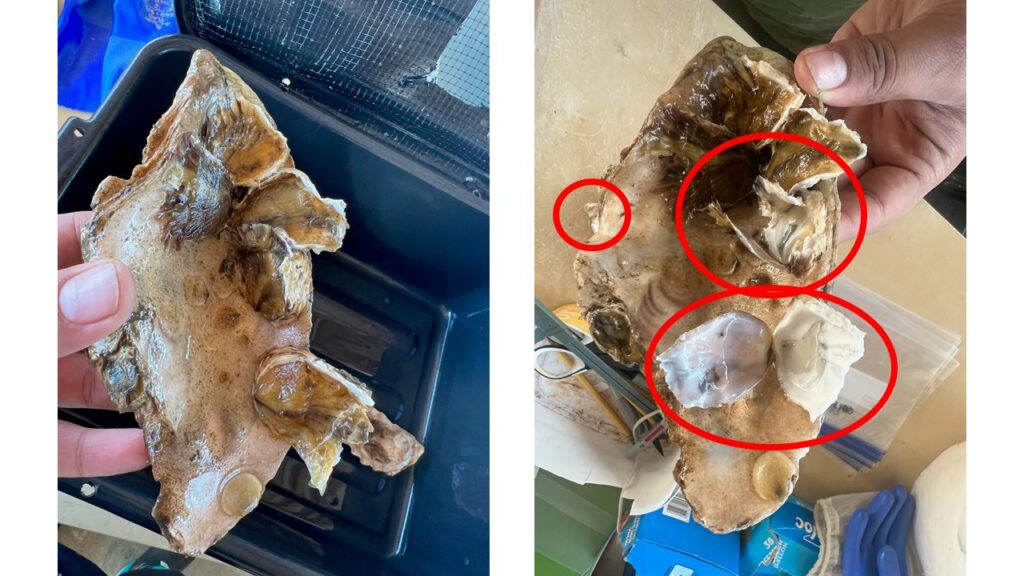
WSU Extension scientists found that juvenile crabs can crack into immature shellfish, grown for humans to eat, just as easily as the larger-clawed adults, according to a paper recently published in NOAA Fishery Bulletin.
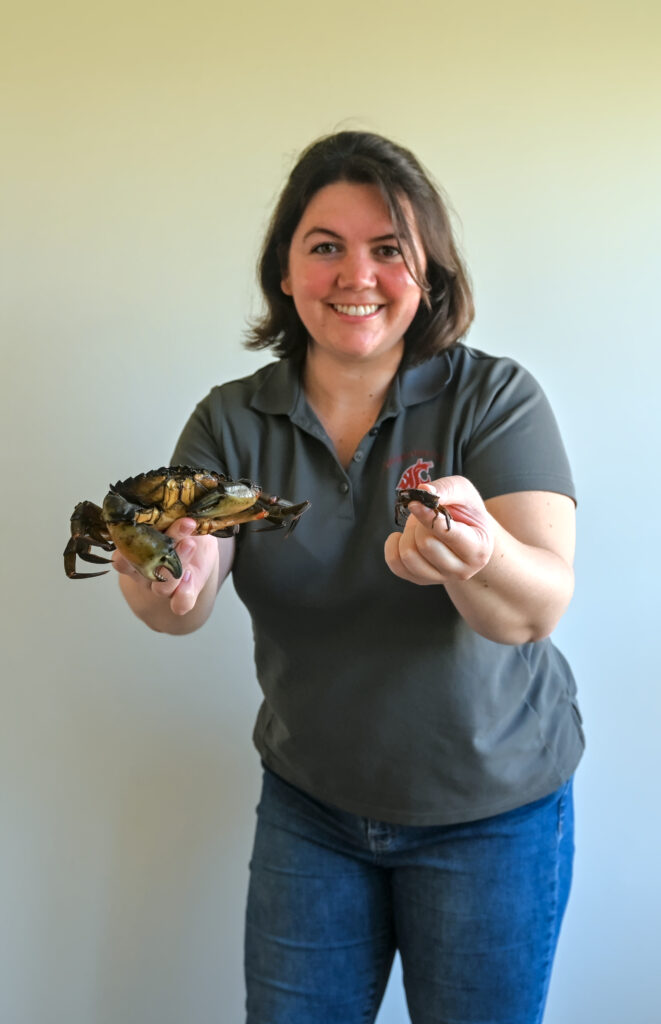
“We looked at claw size, thinking that bigger crabs would feed on more prey,” said Laura Kraft, a WSU shellfish Extension specialist based in Long Beach, Wash. “But we found that even little crabs fed on almost the same proportion of juvenile Pacific oysters as bigger crabs.”
Kraft and her colleagues compared young crabs to fully mature crabs, with both given different food items such as Manila clams and Pacific oysters. They found that the juveniles were just as capable of feeding on the immature shellfish provided. The finding may require a shift in mindset for the green crab invasion.
“We need to start thinking about long-term pest management,” Kraft said. “I don’t think eradication is possible on the southwest Washington coast. If that’s the case, we need to look at how we use our limited resources to manage the impact of these invasive crabs.”
Kraft and other scientists have launched new studies that could aid that approach.
“We are just starting to get a better picture of the impact these crabs are having along the coast,” she said. “We know that they will impact commercial shellfish in different ways, so how do we best protect that industry?”
Washington state is the top producer of shellfish aquaculture in the country, with production estimated in excess of $200 million annually.
In the paper, the scientists also confirmed that the crabs have the potential to do more damage to native eelgrass than feeding alone. In lab-based experiments, the green crabs arbitrarily clipped the eelgrass, killing the plants for no known reason.
“Eelgrass beds are an important part of the local ecology,” Kraft said. “The crabs are disrupting the whole ecological system because eelgrass is a habitat for lots of native species, especially juvenile salmon and other fish.”
Kraft hopes to work with groups around Willapa Bay and Grays Harbor, which both have huge green crab populations and important shellfish industries, to figure out how to fight adult and juvenile crabs.
“The smaller crabs are eating very high amounts of juvenile Pacific oysters relative to their size,” Kraft said. “We need to find solutions to reduce their impact along the coast as much as possible.”
MEDIA CONTACT:
Laura Kraft, WSU Extension, laura.kraft@wsu.edu
About CAHNRS
The land-grant mission of WSU’s College of Agricultural, Human, and Natural Resource Sciences is made possible through the U.S. Hatch Act of 1887 and the U.S. Smith-Lever Act of 1914. Respectively, these Acts fund experiment stations and cooperative Extension efforts that aid Northwest growers, provide nutrition and health education, support rural businesses, enhance our environment, and much more. Hatch and Smith-Lever capacity funds drive our work for a more resilient, prosperous, and sustainable Washington and are matched by state and local funds.