WALLA WALLA, Wash. — A spring field trip helped undergraduates in Washington State University’s Department of Viticulture & Enology (V&E) learn more about the intricacies of Merlot while visiting a thriving winemaking region in southeast Washington state.
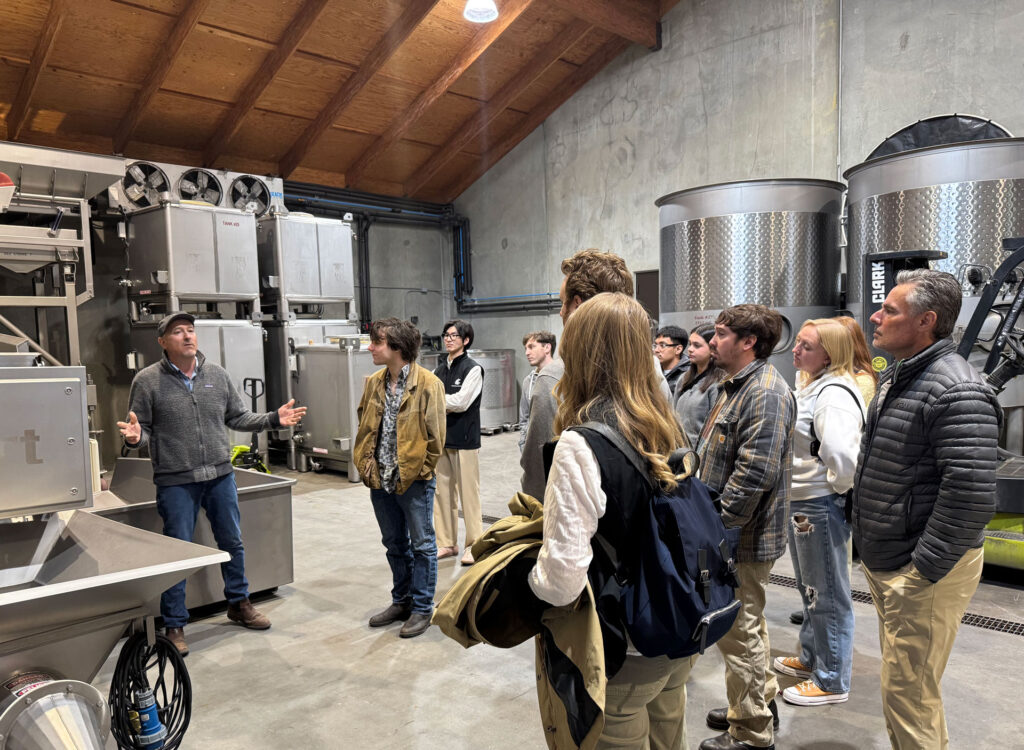
While it was still too early to visit the area’s vineyards, the students spent the day touring a handful of Walla Walla wineries for a firsthand look at how they use Merlot, an oft-overlooked grape cultivar, to craft their wines.
“The students met some of Washington state’s finest Merlot producers and saw how the wineries make those wines,” said V&E Professor Jim Harbertson, who organized the trip. “Each winemaker on our tour utilizes different equipment that varies by scale and sophistication, and each discussed how their approach impacts the wines stylistically.”
The outing was part of VE Connects, a department initiative designed to foster community, encourage student retention and recruitment, and build relationships between academia and industry. The WSU group was joined by several students from Walla Walla Community College and Yakima Valley Community College.
Grace Dammen, a WSU V&E transfer student who plans to pursue a career as a vineyard manager or viticulturist, found the Walla Walla expedition beneficial for a variety of reasons.
“These trips help students see what the industry is like right now,” said Dammen, who attended the VE Connects trip to Woodinville, Washington, last fall. “It was fun to try different wines, learn about new winemaking techniques, and see equipment we don’t normally work with.”
The group’s itinerary included three stops. At Pepper Bridge Winery, the students learned about natural fermentation, a process that involves using native yeasts that naturally occur in the vineyard. The group also participated in an instructional tasting of Merlot vintages from 2007, 2013, and 2022.
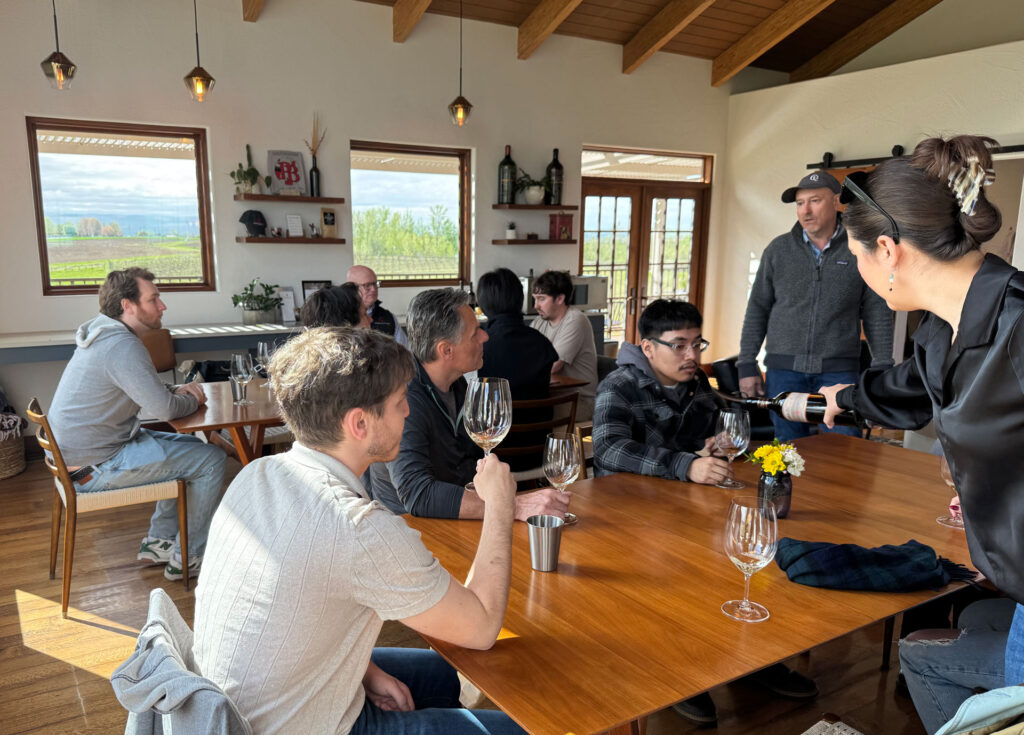
“The students were able to discover how Merlot wines change over time and appreciate which wine sensorial elements are prized by experienced winemakers,” Harbertson said.
During their stop at Abeja Winery, the group toured the company’s facilities and learned about its business model. Assistant winemaker and WSU alumnus Ken Jones spoke about the property’s history, Abeja’s winemaking approach, and the importance of developing a palate. He also discussed his experience with the V&E program, which he said prepared him well for his current role.
“Winemaking is a subjective and complex job,” Jones said. “Having a firm grounding in science, from soil to the bottle, has helped shape how I make decisions on everything from dealing with fruit grown in extreme weather to more subtle stylistic choices.”
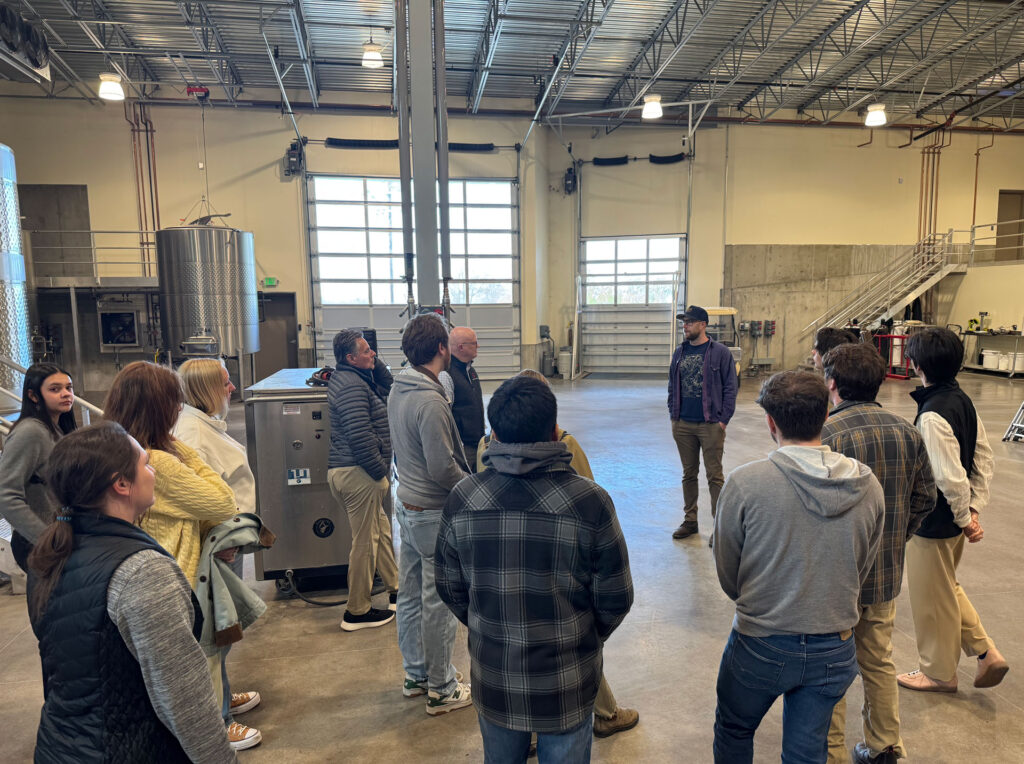
He sees a lot of value in experiential learning trips like this one.
“There are so many philosophical and stylistic divides between wineries,” Jones said. “It’s really important for students to see different approaches while networking with companies they may want to intern or work for in the future.”
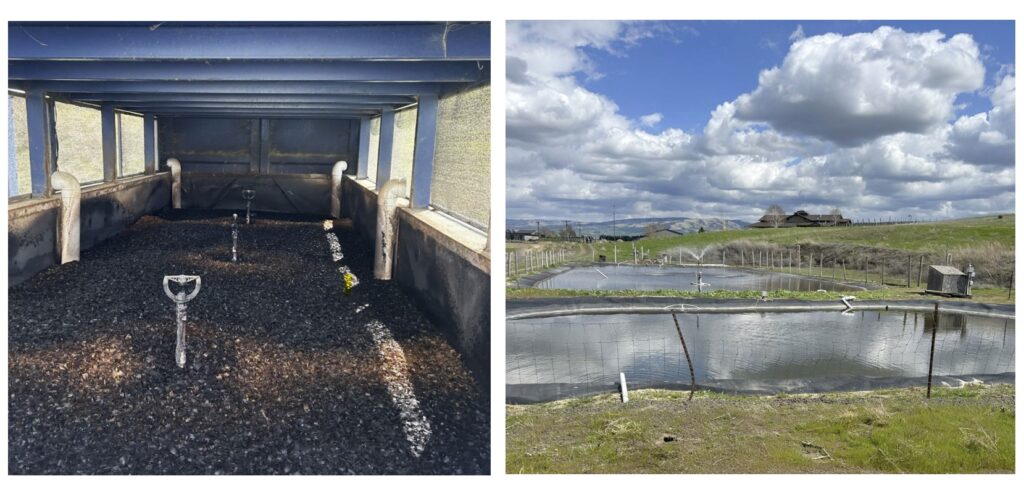
At Northstar Winery, the group did another tasting and tour. One highlight was the winery’s biodynamic worm farm, where the small, wriggly creatures help clean and filter wastewater so it can be recycled for vineyard irrigation.
“That was something I hadn’t seen before, and I’m still thinking about it!” Dammen said. “I’m really interested in biodynamic wineries and vineyards, so it was fun to see it in person.”
Sustainability was also on display during the group’s tour of Pepper Bridge, which is run on 70% solar power. Seeing those examples helped Dammen envision how she might utilize eco-friendly practices in an industry that is increasingly prioritizing sustainability.
“One of our WSU capstone courses involves planning a vineyard and a winery,” she said. “Seeing it in action is critical because it gets the wheels turning in our heads for how we might someday run our own vineyards or wineries.”
Reflecting on her experience, Dammen encourages all V&E students to attend as many VE Connects trips as possible.
“Making industry connections is so important,” Dammen said. “The Walla Walla trip also allowed us to see a variety of business models and winery dynamics, the type of equipment we’d be working with, and what daily life in the industry is like. It’s so valuable to understand the needs of different types of businesses and where we could fit into that.”
Help support WSU V&E students:
Travel expenses for this trip were made possible in part by donated funds. You can help WSU wine science students attend future trips by donating to the V&E Experiential Learning Fund.

Voice of the Vine
Subscribe to the Voice of the Vine newsletter for stories about the latest emerging research from WSU’s Department of Viticulture and Enology, profiles of students, alumni, and researchers working in Washington’s world-class wine industry, info on upcoming events, and much more.