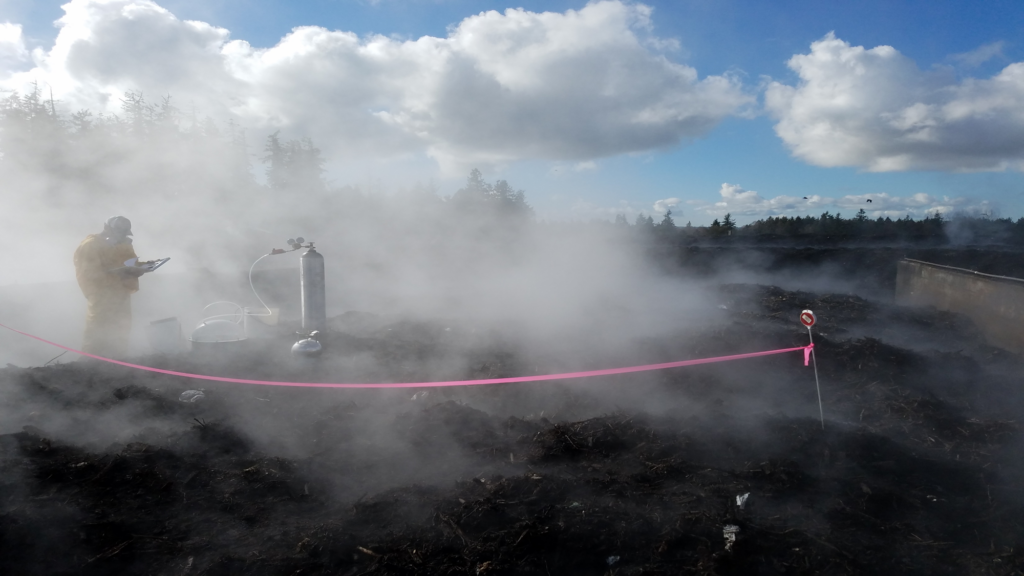
Turning waste from food, yard trimmings, and other living organisms into usable nutrients, energy, and fuels is an evolving necessity, one that Washington state has been tackling head-on for nearly 20 years.
The Waste to Fuels Technology partnership was initially funded by the state legislature in 2006 and led by the Washington State Department of Ecology. It brought multiple state and federal agencies together with scientists from Washington State University to work on diverse projects that reduce waste in landfills while creating economic marketplaces for energy and other products.
“Humans are responsible for a tremendous amount of organic waste, from food to farm to yard waste and more,” said Mark Fuchs, an Ecology scientist who led the partnership from its start until his retirement in 2020. “When waste goes into places like landfills or lagoons, it creates methane. We thought: Why not separate organic waste, process it, and harvest the energy? Then we can also recover the rest as soil amendments, fertilizers, and more.”
Fuchs enlisted specialists on a variety of topics to work together. The state funded WSU studies on how to create biochar, harvest farm waste into energy, and more. The Center for Sustaining Agriculture and Natural Resources(CSANR) was one of the key WSU partners.
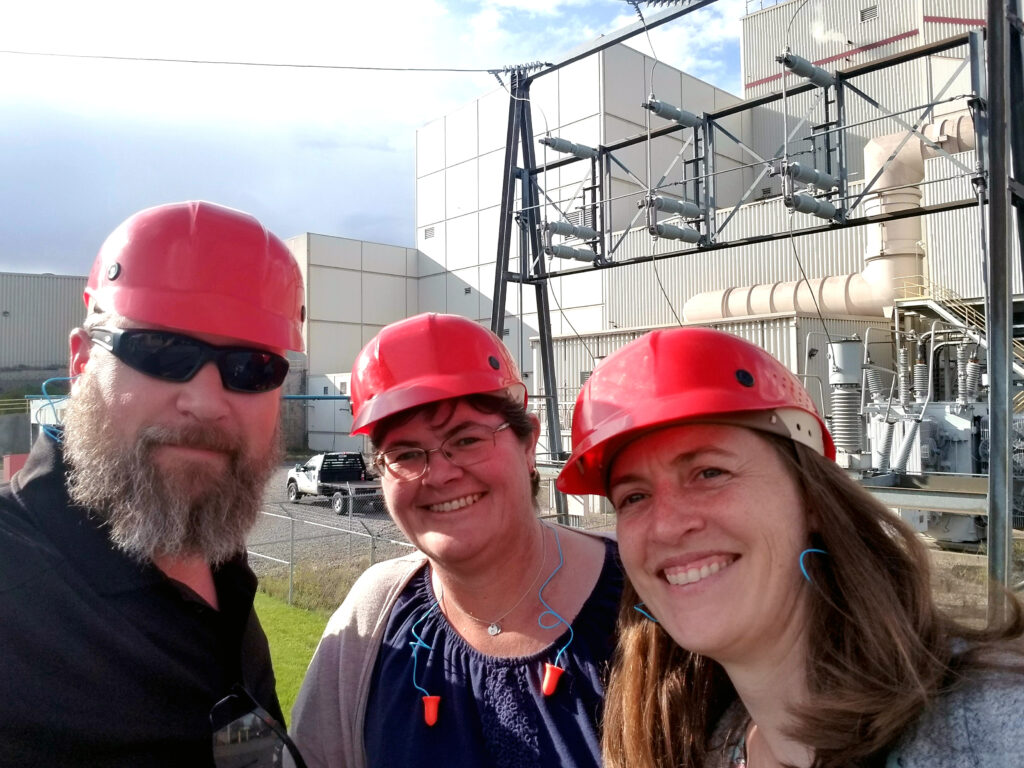
Shulin Chen, a WSU professor in the Department of Biological Systems Engineering, was involved very early in the partnership. Fuchs said Chen’s efforts laid a groundwork for the overall success of the project. Two decades of impactful science has benefited the entire state and Pacific Northwest.
“Having this partnership allowed us to take a relatively small amount of funding and engage many WSU researchers and Extension personnel,” said Georgine Yorgey, a senior research fellow with CSANR and director of the WSU Energy Program. “It created a brain trust, encouraging faculty to be more engaged and think about these problems.”
Digesting waste
Yorgey and Chad Kruger, former CSANR director, both said the two-decade partnership boosted researchers as well as the waste processing industry around the state, allowing for widespread benefits. One primary focus of the partnership was processing organic waste at dairies, which saw huge advancements.
Due to its inherent properties, the dairy waste can be processed together with food wastes to generate electricity or natural gas while recycling nutrients and generating products like animal bedding or soil amendments.
“People involved in the partnership knew they needed to help the industry evolve to address waste and needed to engage the land-grant university,” said Kruger, who was recently named WSU associate vice president for research advancement and strategy. “New ideas infected the marketplace; it created a level of awareness the marketplace could respond to and grow around.”
A direct outcome of the partnership is the development of 25 on-farm anaerobic digesters around the Pacific Northwest, which generate $2.5 million worth of electricity each year. That number was zero in 2006 when the partnership started.
“The state wanted the digesters to come online, and they are probably the single biggest carbon reduction strategy implemented in the state,” Kruger said. “We were able to work with the Department of Ecology to bring them online in a way that kept people safe, helped the environment, and enabled projects to move forward.”
The partnership didn’t build the digesters, but it supported the people building them and provided necessary knowledge.
“I’m thrilled we played a role in that overall success,” Yorgey said.
Biochar advancements
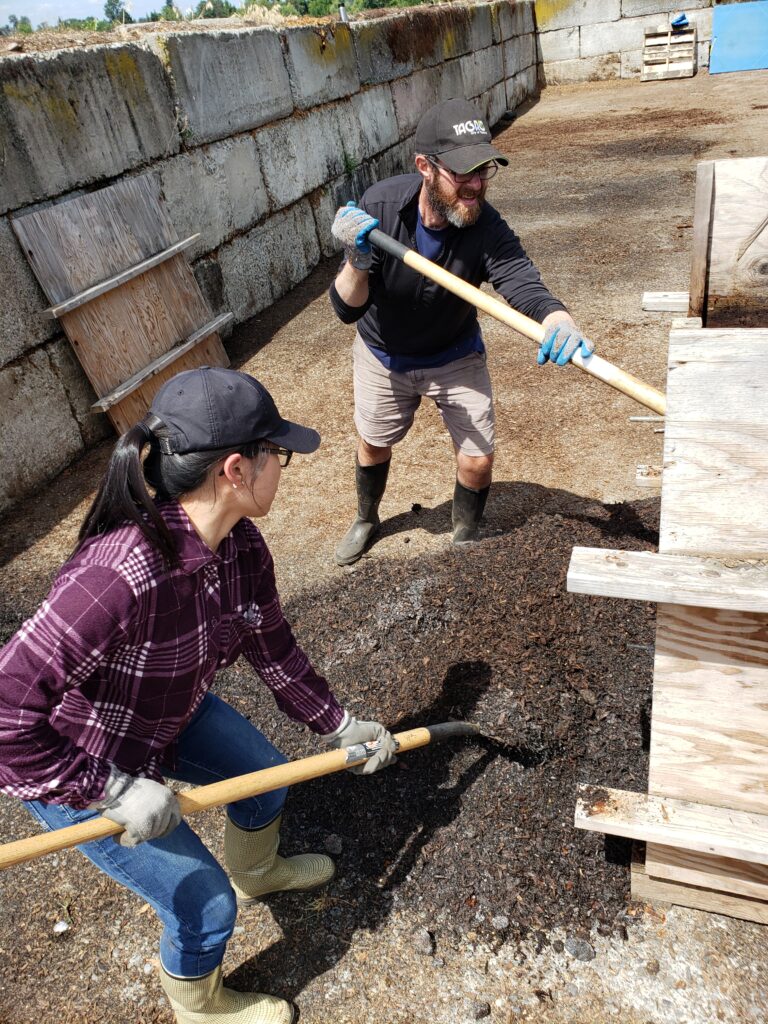
Another concentration for the partnership involved biochar, a carbon produced when biomass waste is heated which is used to sequester carbon. WSU’s biochar involvement in the partnership came when Fuchs reached out to Manuel Garcia-Perez, then early in his career in the Department of Biological Systems Engineering.
“I was fascinated by the topic,” Garcia-Perez said. “Today, we have biochar in soils, concrete, and plastics. WSU is one of the best places in the world for modeling biochar, all because Mark Fuchs reached out and inspired the work we’ve been doing for 20 years.”
Now chair of his department, Garcia-Perez used the relatively small funding from the partnership to do foundational work on the topic. That work led to multi-million dollar, federally funded research projects, bringing more money into the state than had ever been spent to work on a topic benefitting everyone.
“Funding from the partnership allowed me to focus on societal problems,” he said. “I was working as a public servant, doing the best work possible on a complex problem.
“This is what a land-grant should be, working with state agencies and companies to help move the state forward. We were the research arm of the Department of Ecology, fundamentally, and it felt great to be part of this bigger team with a long-term commitment to building something.”
Over the years of the partnership, biochar has grown from a research concept to a small but vibrant industry, with approximately 25 producers of biochar and biochar equipment across the Pacific Northwest, Yorgey said.
Going forward
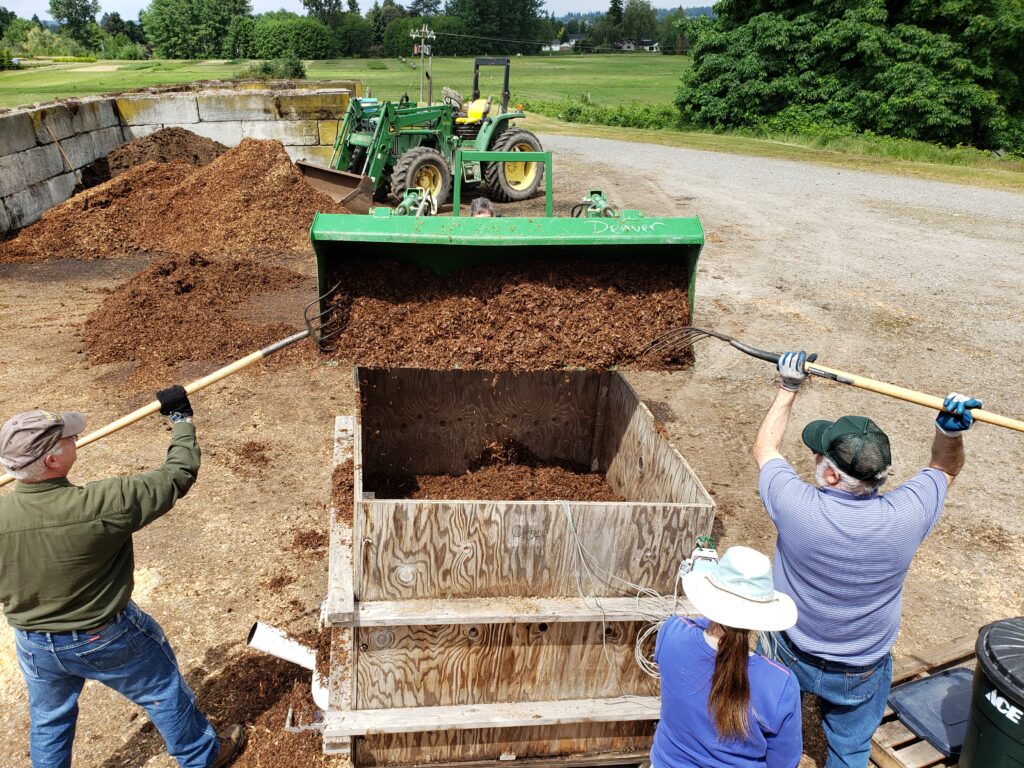
In 2025, funding for the partnership was cut back by over a third, down to $140,000 for the biennium. The partnership may not receive funding beyond the current fiscal year, said Canming Xiao, the partnership’s current contract manager at the Department of Ecology.
“It has been a very impactful and fruitful partnership for Washington,” said Xiao, who earned a PhD from WSU and worked on projects related to the partnership as a student. “We know there is more work to do, and we hope that funding returns.”
Though they are proud of the outcomes already in place, the CSANR team agrees that there’s more to be done.
“Sometimes government can be a problem, a roadblock for the marketplace,” Kruger said. “In this case, the government agency regulating waste made a long-term investment in cutting-edge solutions that successfully helped industry, solved problems, and engaged scientists. Washington is better when we can find ways to get value out of things we throw away. This partnership really delivered for our state.”