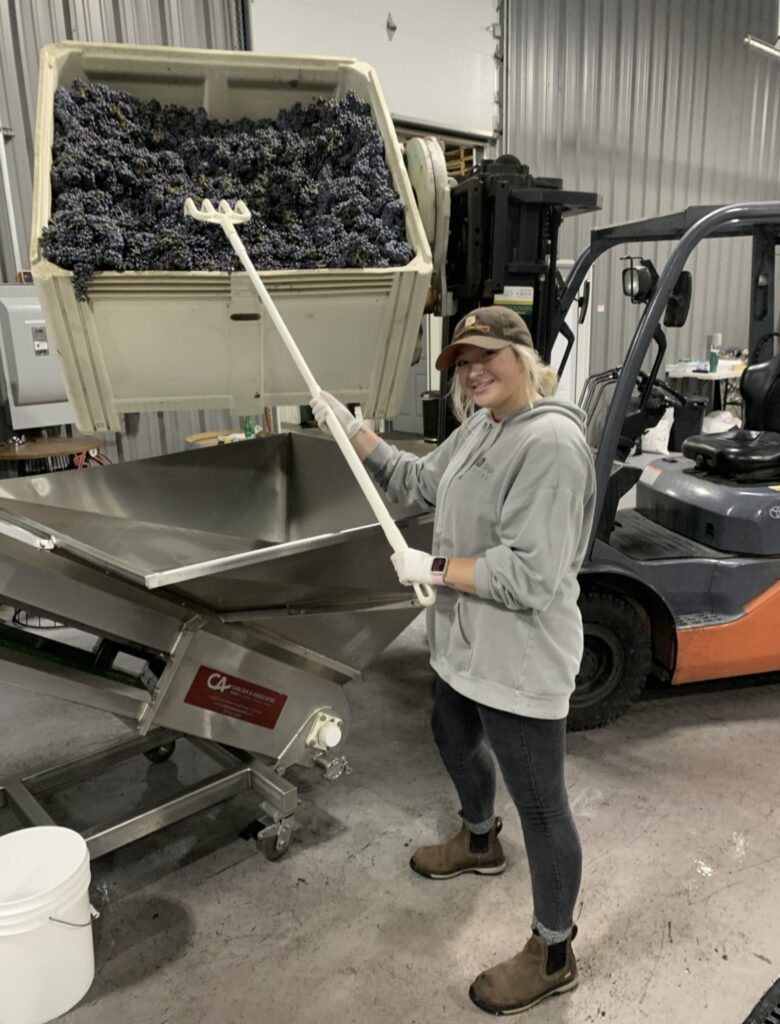
RICHLAND, Wash. — When Elle Jennings set out to craft a pair of wines for her Blended Learning class at Washington State University, she hoped to discover how grapes grown in different types of soil can affect the final product.
“I’d previously only tasted classic Washington Cabernets,” said Jennings, who graduated from WSU in May 2025 with a bachelor’s degree in viticulture and enology. “These wines were completely different from anything I was expecting, but I was pleasantly surprised.”
Jennings partnered with WSU alumnus Kyle Welch of Longship Cellars to create two Cabernet Sauvignon wines — one using grapes grown in sandy soil, the other using grapes grown in basaltic soil. The wines are intended to be purchased together so they can be tasted and evaluated side by side.
“It’s meant to be a sensory learning opportunity for people to bring the bottles into their homes and compare tasting notes with friends and family,” Jennings said.
Jennings’ experiment showed that soil type resulted in a significant difference between the two wines’ aroma and taste.
“The wine made with grapes grown in basalt resembled a classic Cabernet: bigger tannins, more floral on the nose, more structure on the palate, and a little more acidity,” Jennings said. “The wine made from grapes grown in sandy soil was still very good, but completely different than a traditional Cabernet. It hit the palate almost like a Grenache — much lighter with a lot fewer tannins, but still with a great complexity.”
To ensure the experiment was strictly a soil comparison, the two wines were made with the same grape clone. The plants were grown at the same elevation in the same vineyard, using identical practices — the grapes were even picked the same day. Later, after harvest, the wines received identical additives and were aged in the same type of barrels. The sole difference was the soil.
Jennings was involved in the winemaking process from start to finish, helping with everything from berry sampling and grape delivery to punch downs during fermentation.
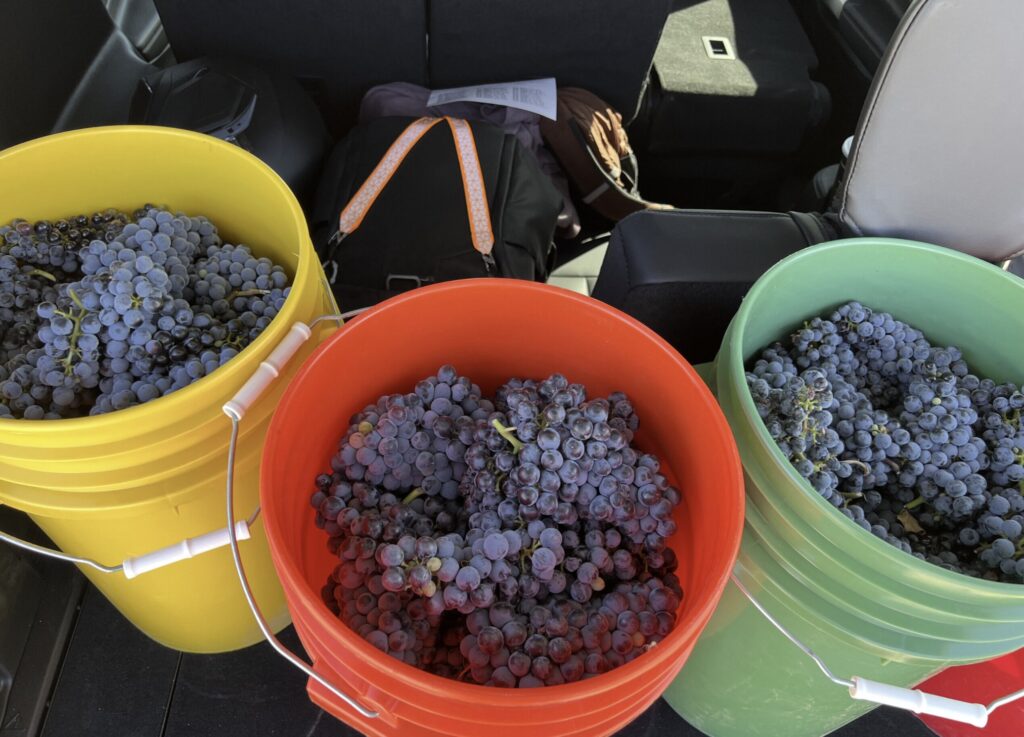
“It was fun showing Elle our style of winemaking — how we process the fruit, the impact of yeast selection, and the importance of fermentation management, from inoculation all the way through bottling,” Welch said.
While the wines aged for a year, Jennings was involved in barrel tasting and chemical analysis. As the project wrapped up, she helped with the bottling process.
“I really did see the wines through from vineyard to bottle, which was an amazing experience,” she said. “I also took sensory analysis classes while working on this project. I connected what I was learning in the classroom to what I was doing in the winery setting, and could bring any questions I had about my project to the classroom.”
Welch said he enjoyed helping Jennings with the project and seeing the results.
“When the fruit was dropped off, the flavors, ripeness, and acids were definitely different, so I knew the wines would end up being different,” Welch said. “It’s cool to see how just one difference in terroir can impact the same fruit from the same vineyard. Tasting the wines side by side, you may not even think they’re from the same vineyard.”
Welch urges wine science students to seek out similar hands-on experiences that will help jumpstart careers in the industry post-graduation.
“I’m proud to have worked with Elle on this project and to see her name on those labels,” he said.
Though Jennings wrapped up the Blended Learning project earlier this year, it has served as a launch pad for her current research as a graduate student.
“Working on those wines is what initially drew me to soil science,” said Jennings, who is pursuing a master’s degree in agriculture at WSU. “That has now translated into my master’s program, where I’m focusing on soil science and studying sustainability in the vineyard and how it relates to vineyard soil health.”
Purchase student-made wines:
You can purchase WSU student-made Blended Learning wines by visiting our website.

Voice of the Vine
Subscribe to the Voice of the Vine newsletter for stories about the latest emerging research from WSU’s Department of Viticulture and Enology, profiles of students, alumni, and researchers working in Washington’s world-class wine industry, info on upcoming events, and much more.