MOUNT VERNON, Wash. — Washington State University graduated its first class of climate stewards this fall.
The pilot Climate Stewards Certificate Program was offered jointly by WSU Extension Skagit and Island Counties and trained 14 community members to take part in practical, science-based responses to climate change in their communities.
“The Climate Stewards Certificate Program builds more resilient communities by equipping members with the knowledge and confidence to understand the science behind climate change, gain an understanding of the impacts, and explore mitigation and adaptation strategies to address climate change at the local level,” said Diane Smith, professor with WSU Skagit County Extension.
Alongside the science of climate change, Smith said the program also created space for students to reflect on the mental-health and emotional impacts of a changing climate on their personal lives and communities.
Over nearly three months, students engaged in online lectures led by Washington state climatologists and local science educators. The curriculum, adapted from the University of California Climate Stewards program and tailored to Washington’s unique challenges, particularly related to forests, energy, water, and agriculture, provided a strong scientific foundation.
“It was interesting to learn about all the ways people in our community are addressing the changing climate,” said participant Sarah Troxell. “I’m excited to implement the concepts I learned in my daily life. Without this program, I wouldn’t have known about the innovative approaches already being used, like at the Mount Vernon Library Commons green building.”
The Mount Vernon Library Commons is the first public building in Washington to be certified as a “Passive House” design. It’s an example of climate-forward building planning that drastically cuts energy use, keeps the building comfortable year-round, and is built from lower-carbon materials.
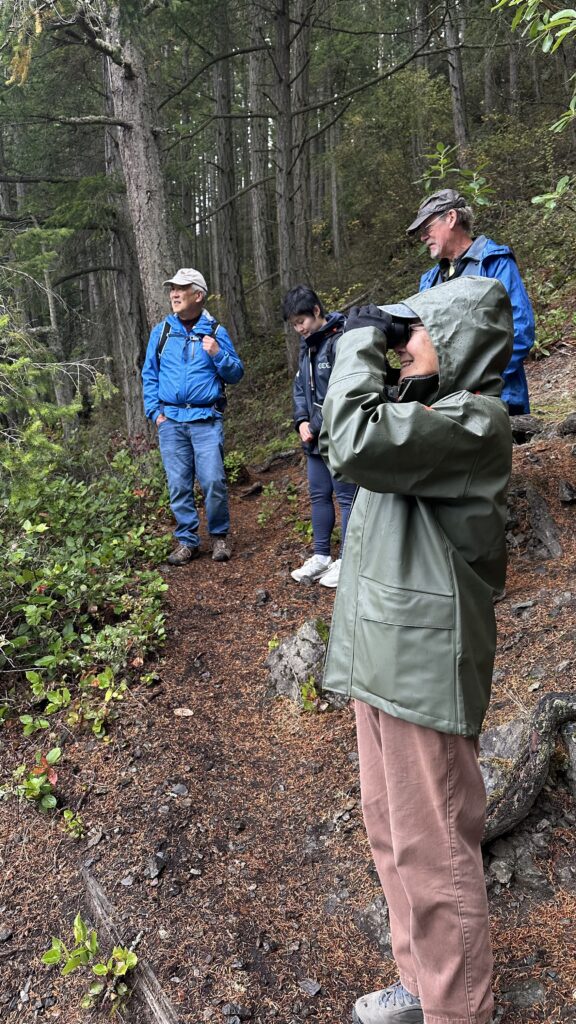
Participants also explored climate science in depth through video, literature, and reflective activities. Guided field experiences, led by local partners, showcased real-world concerns and demonstrated practical solutions for adapting to and mitigating the impacts of the climate crisis. Local site visits included the Padilla Bay Reserve, Deception Pass State Park, and the Skagit Soils composting facility, where they saw firsthand the climate challenges and solutions emerging in the region.
Participant Bruce Lindsay said the program helped him feel more empowered and better positioned to take informed action in his community.
“As a soil scientist, I knew the basics of climate change science, but I learned a lot about Washington state policy and how to build and evaluate community resilience,” he said.
Climate Stewards graduation was held in November, and students presented capstone projects on topics reflecting a range of interests and expertise. From developing innovative educational materials to designing a climate steward memory game for children and adults focused on keystone species, the students’ presentations showed a comprehensive understanding of scientific principles, Smith said.
WSU Extension plans to offer the next Climate Stewards course in spring 2026.
“The dedication shown by this first graduating cohort highlights the strong desire in our communities to learn about proactive climate science and engagement,” said Smith. “The Climate Stewards program provides the tools, connections, and confidence people need to lead in this space.”
More information
For more information about the WSU Climate Stewards Certificate Program, contact: Diane Smith, Professor, Youth and Family, WSU Extension Skagit County; email: diane.smith@wsu.edu; phone: 360-395-2355.