With growing numbers of stylish but thrifty dressers choosing to rent their wardrobes, rather than buy them, apparel rental has become a global market worth over $2 billion.
Students at Washington State University put their knowledge of these savvy consumers to the test in a real-world competition judged by Armoire, a Seattle-based clothing rental and sales company.
Part of a capstone course for merchandising students in WSU’s Department of Apparel, Merchandising, Design, and Textiles (AMDT), the competition challenged five teams of seniors to devise a winning proposal that grows Armoire’s presence in the market.
“This project was especially meaningful because students worked directly with Armoire and gained valuable exposure to some of the most important trends shaping the retail industry today, including circular economy business models and AI-driven innovation,” said Jihyeong Son, AMDT associate professor and capstone course instructor.
Teams met throughout the spring semester with Armoire founder and CEO Ambika Singh and other experienced industry members. Those interactions helped keep proposals in line with the company’s objectives while giving students a chance to share their own concepts.
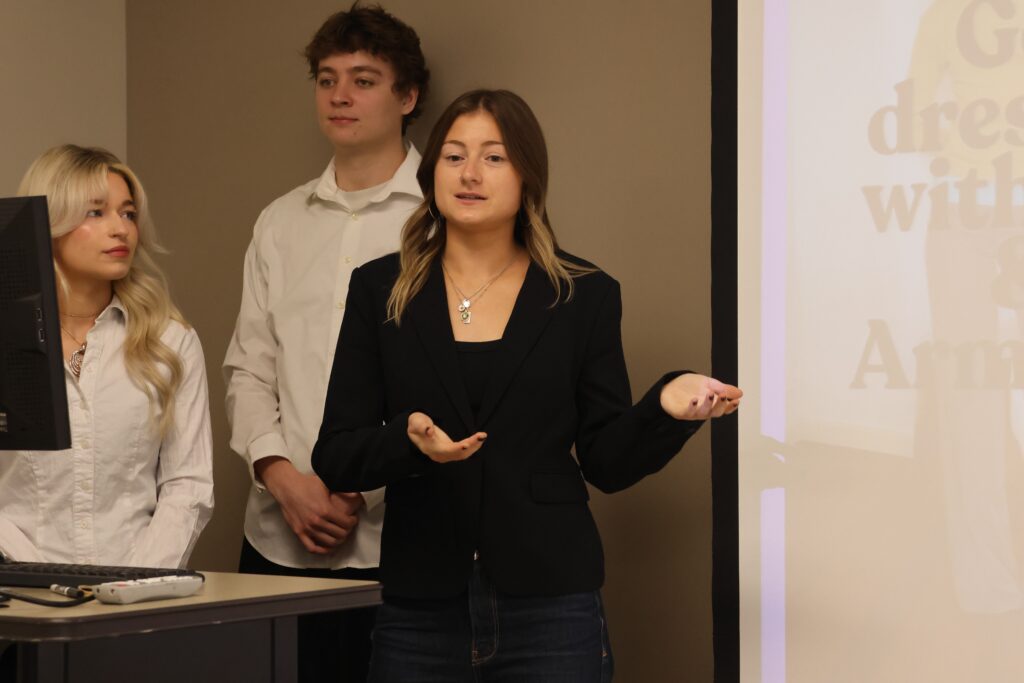
“We felt like our ideas were seen,” said Kiley Hill, member of the first-place team.
Stylish AI
Armoire’s challenge reflected current issues facing the retail industry, such as the need to provide seamless, omni-channel shopping experience and incorporate AI-driven solutions.
“It’s no surprise that the winning team was the group that applied AI to enhance the service experience,” Son said.
Each team conducted market research and analyzed brand strengths, weaknesses, threats, and opportunities. Many groups identified social media influencers as potential ambassadors for their campaigns.
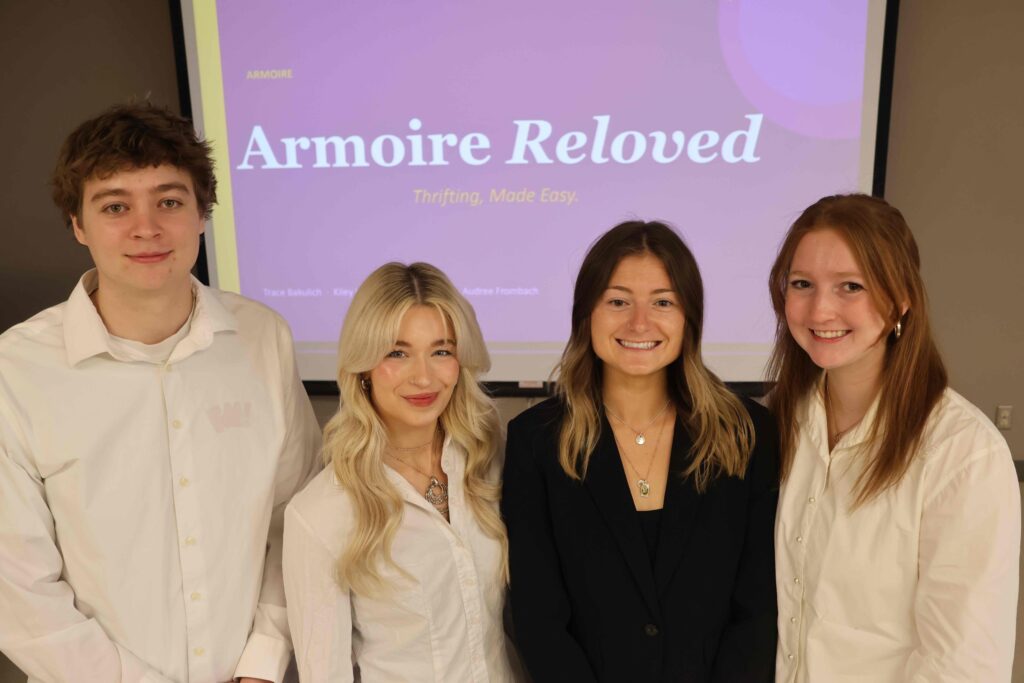
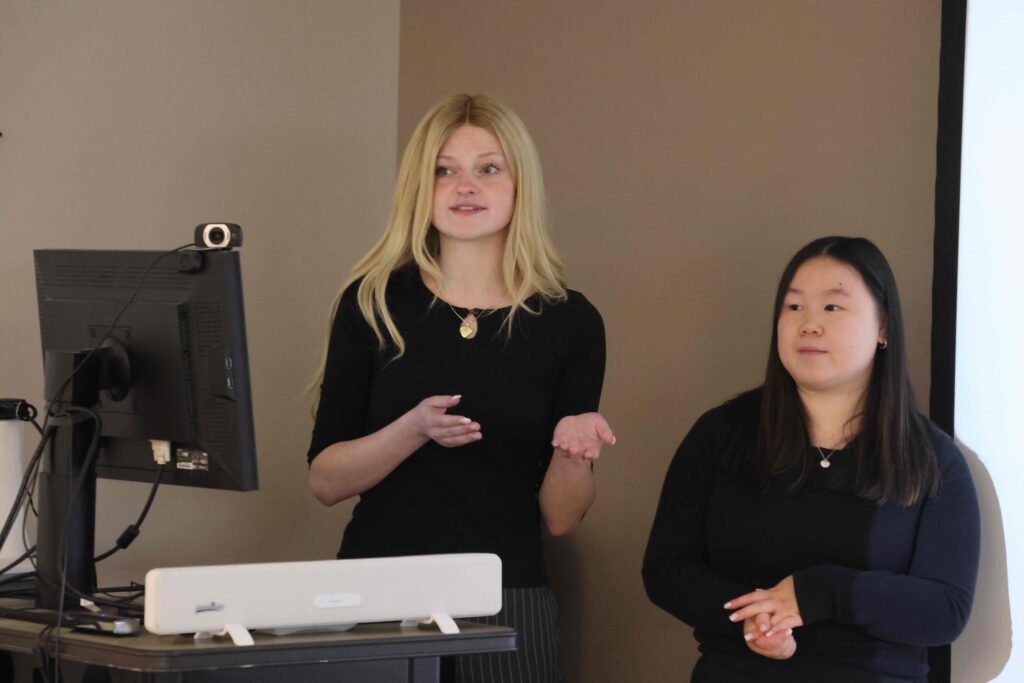
The first-place team of Hill, Trace Bakulich, Aley Matarangas, and Audree Frombach proposed “Armoire Reloved,” an online resale platform offering clothing bundles curated by a personalized AI stylist.
Their chatbot, “AI Amy,” was pictured as an upbeat, stylish woman. Given a prompt, she could respond with the perfect outfit, Hill said.
“We wanted it to feel like you’re talking to a personal assistant, rather than just an AI,” she said. “That’s why we named her and gave Amy her own look.”
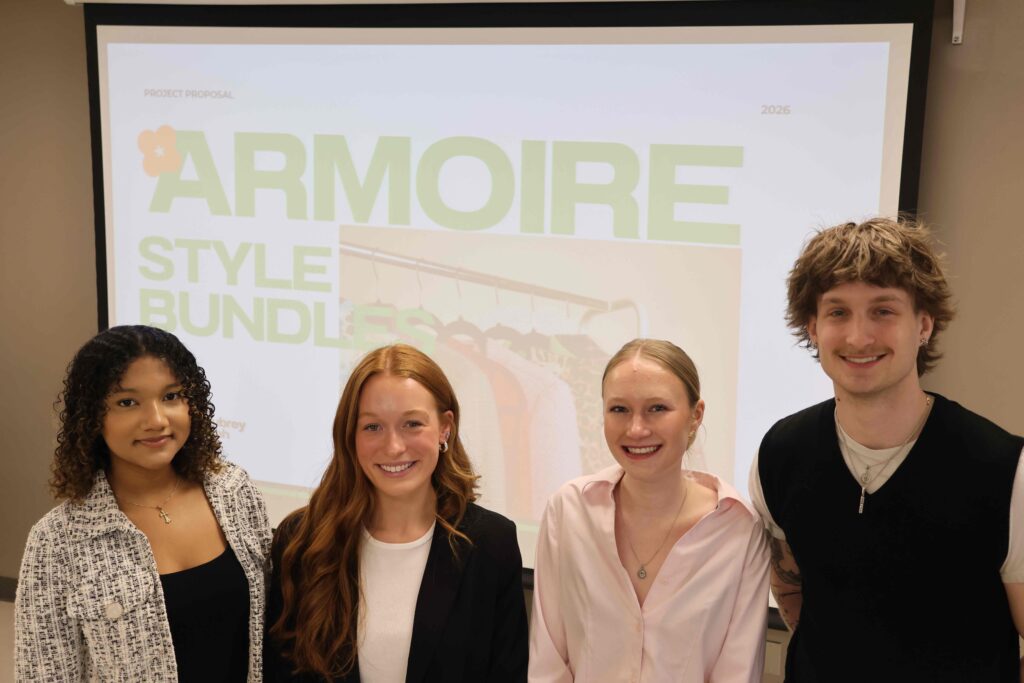
In second place, the team of Emilia Heiser, Aubrey Henneberg, Lailah Stockton, and Skylar Keilbart proposed “Armoire Style Bundles,” an approach aimed at convenient purchase of apparel bundles once their rental lifecycle has ended. The team identified products and price points, as well as cities where the concept could be launched.
Winners received clothing rental subscriptions, while mystery clothing boxes to participants.
Pop-ups and auctions
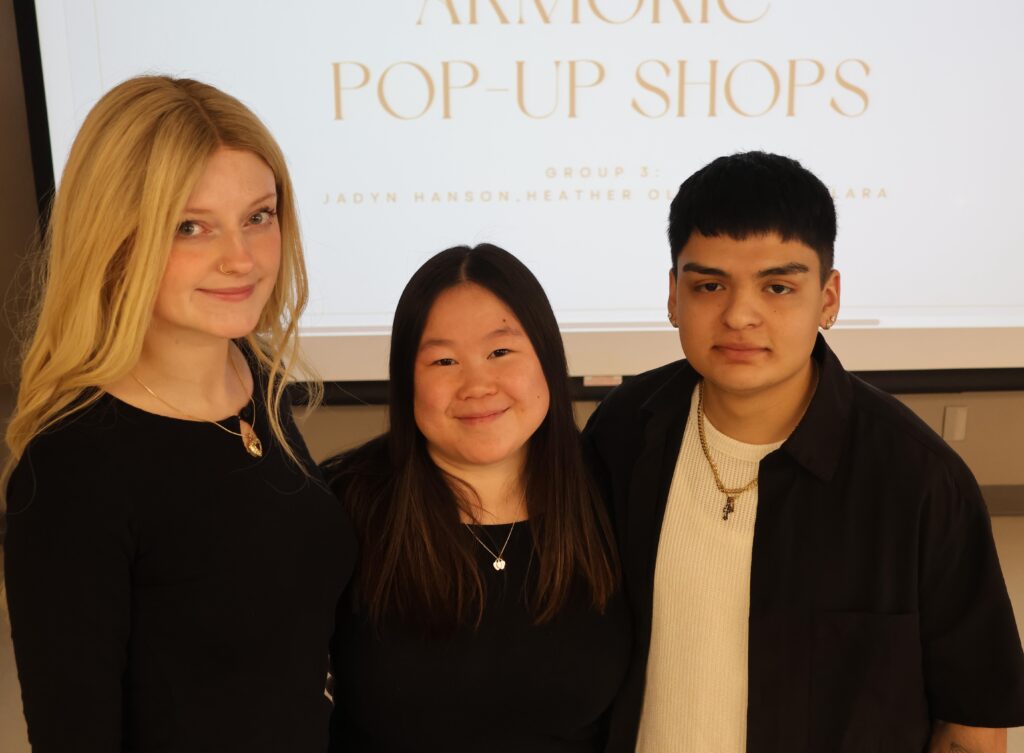
Jadyn Hanson, Heather Olson, and Cesar Lara presented “Armoire Pop-Up Shops”: a retail experience that combines in-person shopping with the company’s rental service. They presented survey data showing that 71% of respondents buy second-hand clothing, while over 70% prefer to shop in person. On average, women age 25-35 spend between $100 and $150 per month on clothing. Team members selected shopping centers in Seattle, Austin, and Boston for their pop-up sites.
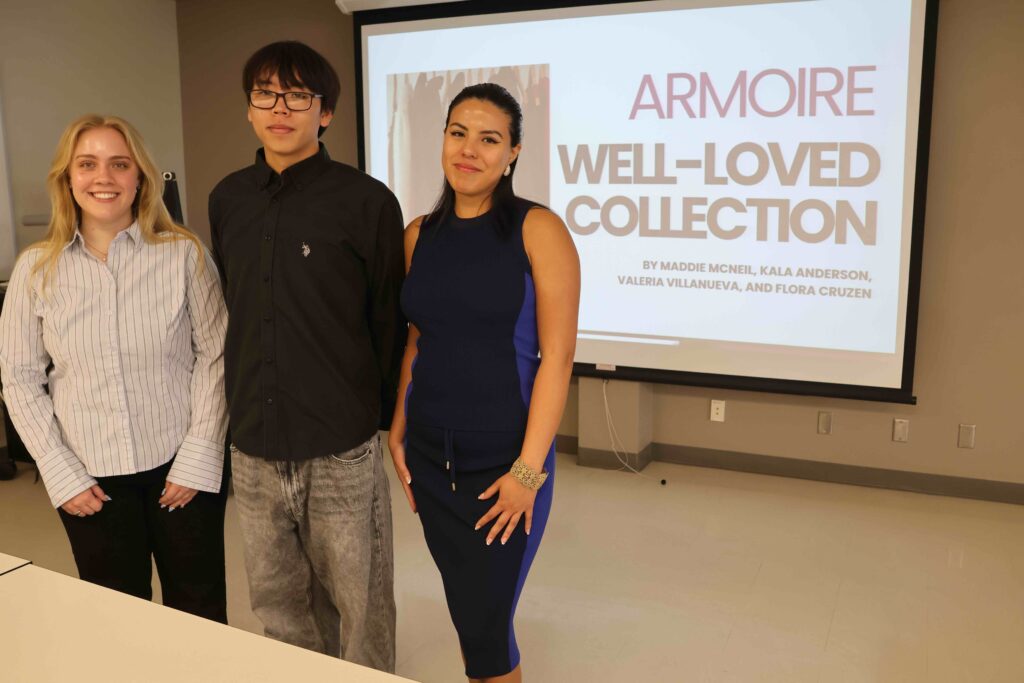
Maddie McNeil, Kala Anderson, Valeria Villaneuva, and Flora Cruzen’ sought to expand Armoire’s reach by adding an auction-style reselling platform. Under their proposal, titled the “Well-Loved Collection,” customers can bid on previously rented items that are popular among the company’s subscriber members.
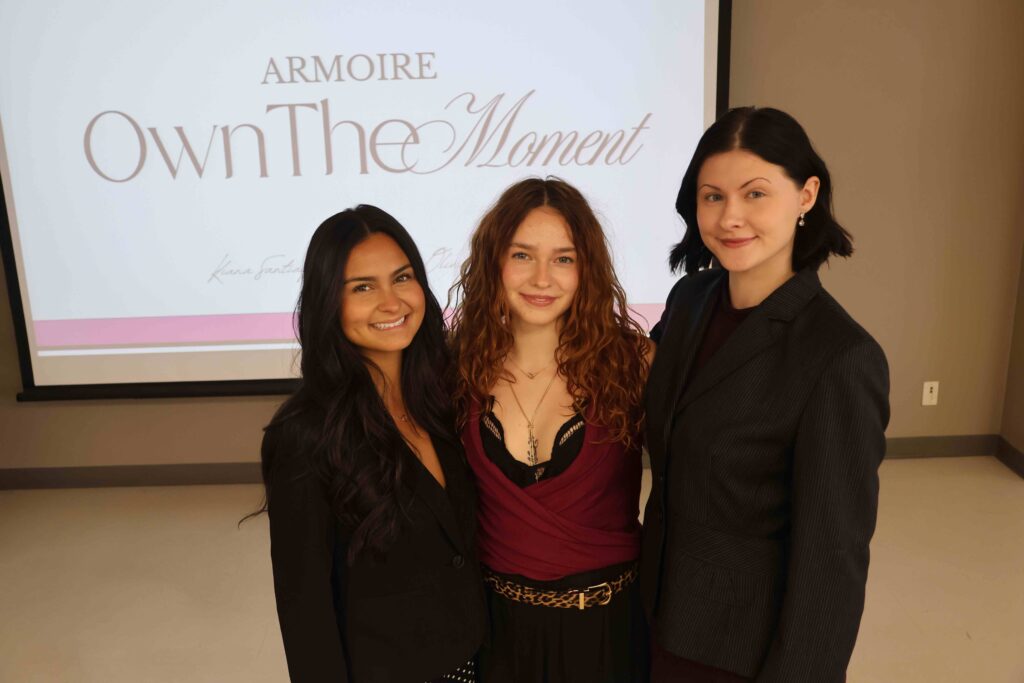
In “Own the Moment,” Kiana Santiago, Kendall Kores, and Olivia Loffer proposed new secondhand categories that appeal to consumers in their 20s and 30s while satisfying current members. They introduced resale-exclusive bags and shoes, which are popular in secondhand markets and are less dependent on sizing.
Career-relevant experience
Hill, who like many of her peers was preparing for interviews after college, saw the real-world challenge as an exciting departure from classroom routine.
“This is a strong example of WSU’s commitment to engaging students through creative, real-world experiences that challenge them to learn, perform, and excel in a competitive environment,” said Raj Khosla, Dean of the College of Agricultural, Human, and Natural Resource Sciences.
“Involvement from partners like Armoire makes a significant impact on student learning,” he added. “Our graduates gain a true sense of what comes next in their careers through immersive, industry-led experiences.”
Learn more about WSU apparel design and merchandising degrees and student experiences at the Apparel, Merchandising, Design, and Textiles website.