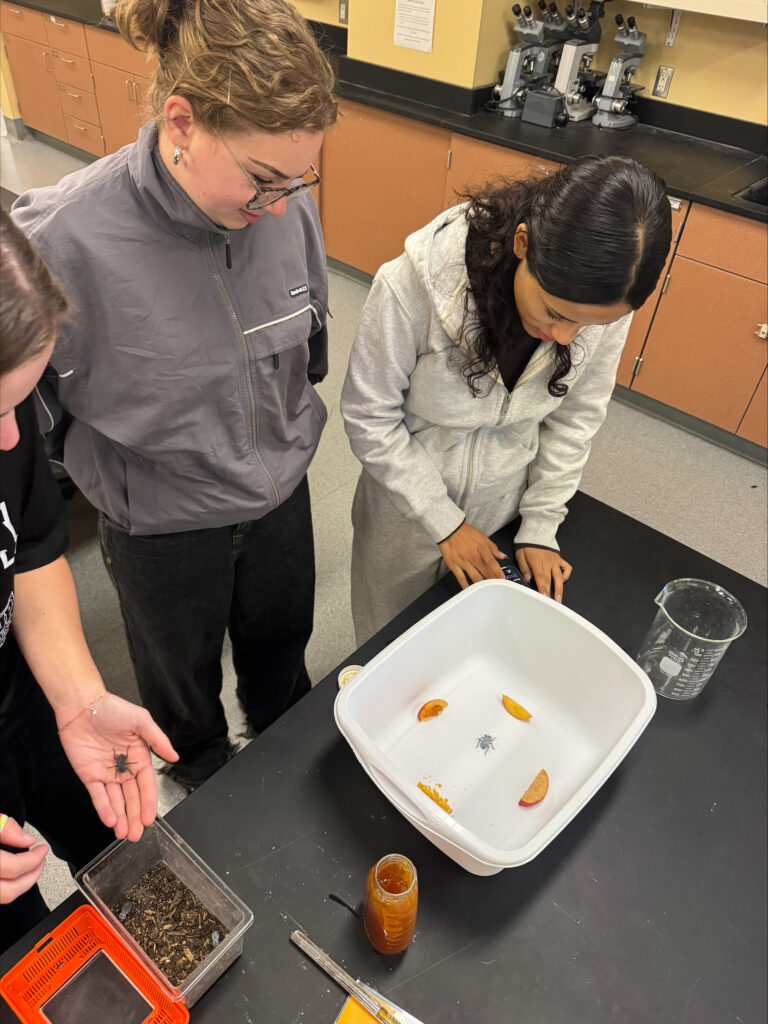
PULLMAN, Wash. — Insects are just as beneficial for the living as they are for the dead.
That’s the premise of Entomology 210: Insects and Death, a new class at Washington State University that explores the scientific method through forensic entomology.
“This field is best known for helping law enforcement and death investigators estimate the time of insect colonization, which can help determine how long someone has been deceased,” said Rae Olsson, a scholarly assistant professor in the Department of Entomology. “Insect development is predictable and well understood for a lot of species, so we can estimate time of death because we know how long it takes for insects to develop through the different stages.”
The class covers everything from the life cycle, collection, and preservation of forensically important insects to estimating the time of colonization and understanding environmental factors that affect body decomposition. Students also visit the M.T. James Entomological Collection and view beetles, black widows, stick bugs, and other insects up close during class.
“I want every student to walk away knowing that evidence collection is the backbone of the scientific process and any sort of legal situation,” Olsson said. “Investigation of criminal cases and investigation into scientific inquiry are very much the same, and I want to show students that forensic entomology is a really cool and interesting application of a scientific practice.”
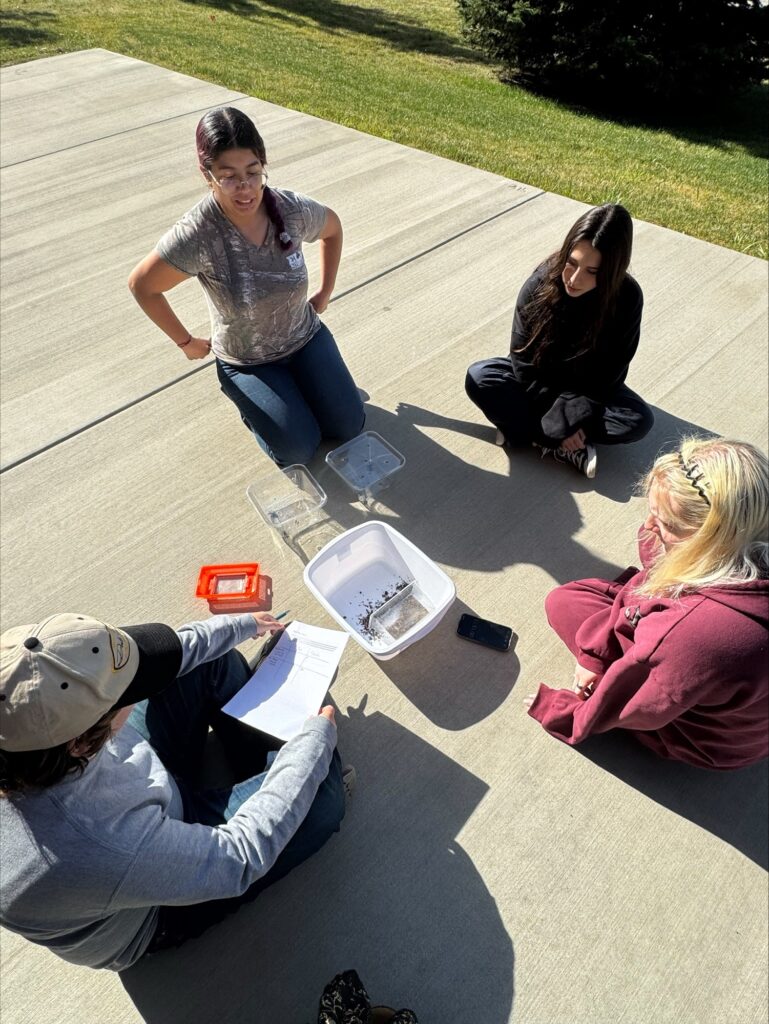
Though Entomology 210 primarily attracts criminal justice majors, many students in other fields also sign up because it’s one of the university’s core science courses.
“This class has a diverse population of students,” Olsson said. “I enjoy learning about their different interests and letting that shape the direction of the course. Each student brings their unique experience into the classroom, and I welcome and invite that.”
Henry Allen, a first-year political science major, has loved bugs since childhood. He said the class feels accessible to students from a variety of backgrounds.
“It’s really interesting, and I’ve been having a lot of fun,” Allen said. “I’ve already made a lot of good friends, and it feels like everyone is there because they want to be.”
Earlier this semester, students worked in groups to identify flies of forensic importance in the Pullman area. Each group hung fly traps in different locations around the WSU campus. The traps contained beef liver, a typical forensic entomology bait designed to attract insects that enjoy feasting on decomposing meat.
Once the students collect enough data, they’ll analyze and compare it with other groups, then draw conclusions about their hypotheses. Olsson hopes to use the findings to publish a study on forensically important flies in the Palouse region.
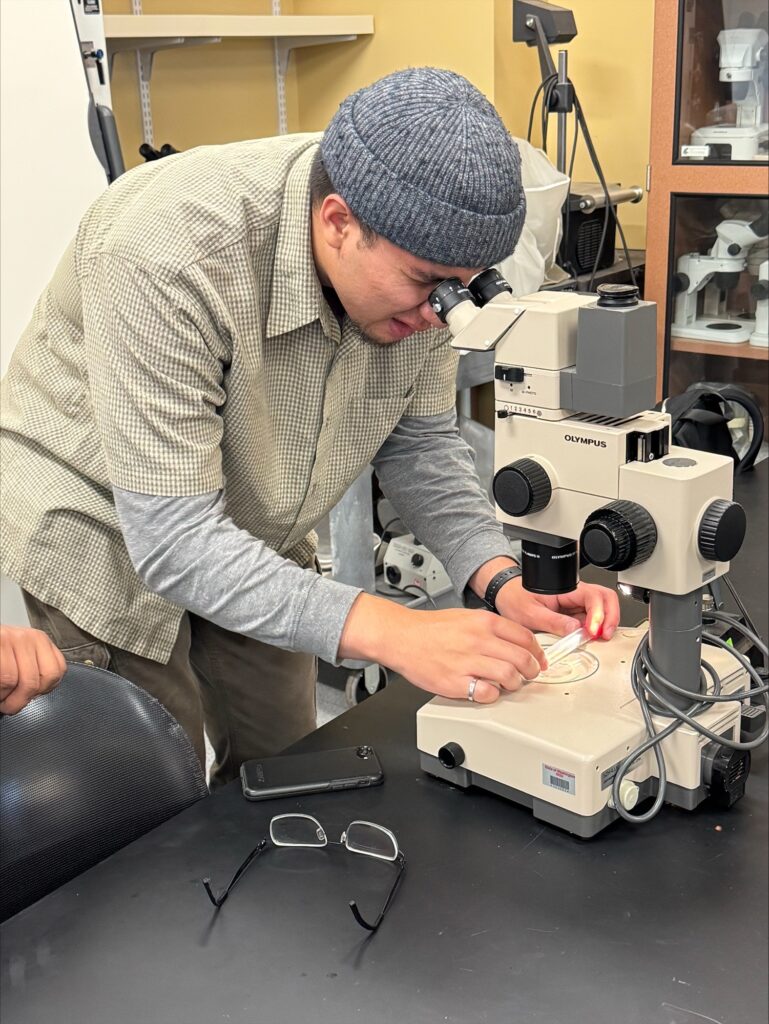
“My group is trying to determine whether or not the number of flies would increase if the trap was placed in a sunny area versus a shady area,” Allen said.
Though he was initially wary of taking a class on an unfamiliar topic, he’s glad he enrolled.
“After a few weeks, it just clicked and I started enjoying it a lot,” Allen said.
Nik Asmundson, a mechanical engineering major, describes a similarly positive experience. His favorite part of the course has been collaborating with classmates on a unique subject.
“I’ve really enjoyed learning about the use of insects in forensic cases,” Asmundson said. “I’d never heard of this field before, and I didn’t really know what to expect, but the class covers a lot of beneficial information. It was super interesting to learn that there are professionals who can determine if a body was moved just by the insects’ position.”
The students are also exploring how climate impacts insect growth rates in decaying corpses.
“The same species might develop at slightly different rates, depending on climatic or geographical region,” Olsson said. “That developmental rate is key to figuring out the time of colonization. I’d like to determine how long it takes the insects of primary forensic importance in this region to develop through their different life stages.”
Entomology 210 ties into Olsson’s work as director of the Forensic Investigation of Entomology in Life and Death (FIELD) Lab, which they launched in August 2026 after earning a Cashup Davis Dean’s Faculty Fellowship.
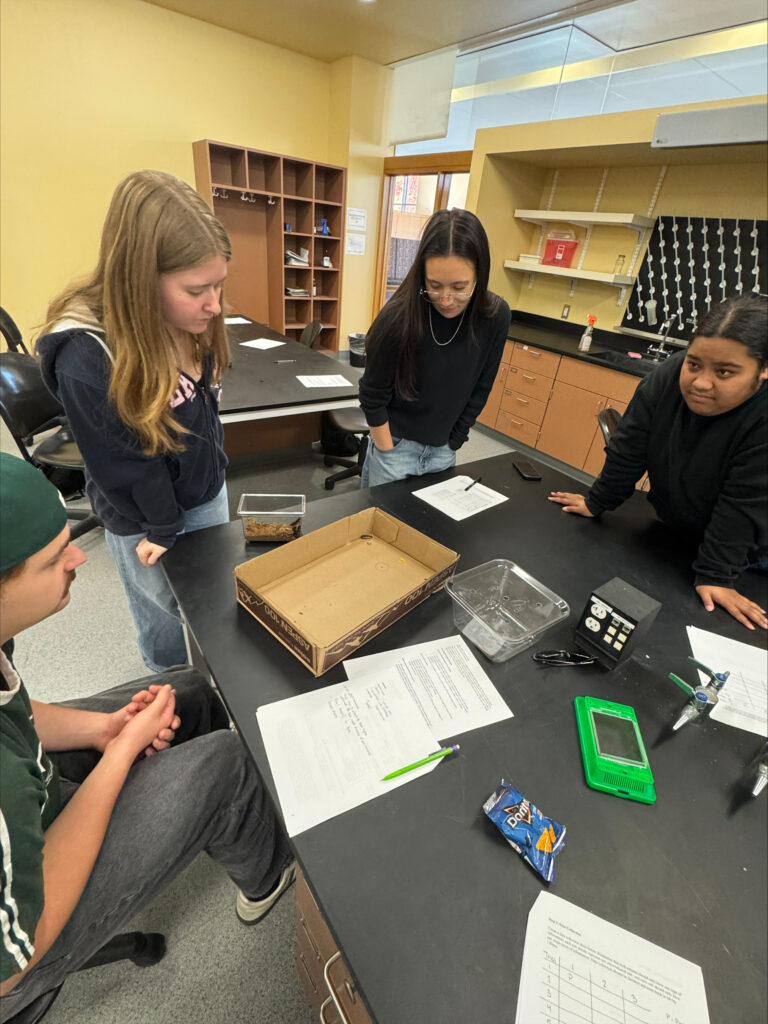
“I am thrilled that Dr. Olsson is using the dean’s faculty fellowship to advance entomological research and teach our students about forensically important insects in our region,” said Raj Khosla, Cashup Davis Family Endowed Dean of the College of Agricultural, Human, and Natural Resource Sciences. “I look forward to seeing the FIELD Lab become a trusted resource for our law enforcement.”
Olsson, whose previous research has mostly focused on pollinators, recently became certified as a technician through the American Board of Forensic Entomology. WSU hadn’t had a resident forensic entomologist since 1996.
“This work is fascinating,” said Olsson, who has already established a partnership with the Washington State Patrol crime lab. “I realized that it’s not enough for me to train undergraduates on the scientific method. The Pacific Northwest needs a forensic entomology lab to support the capacity of our law enforcement and death investigators. Entomology can be one of the most accurate ways to determine when a person died.”
The FIELD Lab is fully operational, though Olsson said they are continuously making improvements.
“The goal is to produce research and teach the next generation of scientists,” they said. “I’m excited and honored to build the forensic capacity of Washington and our region through WSU, which is already a trusted source.”
Media Contacts:
- Rae Olsson; Scholarly Assistant Professor; WSU Department of Entomology; rae.olsson@wsu.edu
- Angela Sams; PR/Comms Coordinator; College of Agricultural, Human, and Natural Resource Sciences Communications; alsams@wsu.edu