After more than 25 years apart, Hanako Matusmoto and Melissa Nissen still feel like sisters.
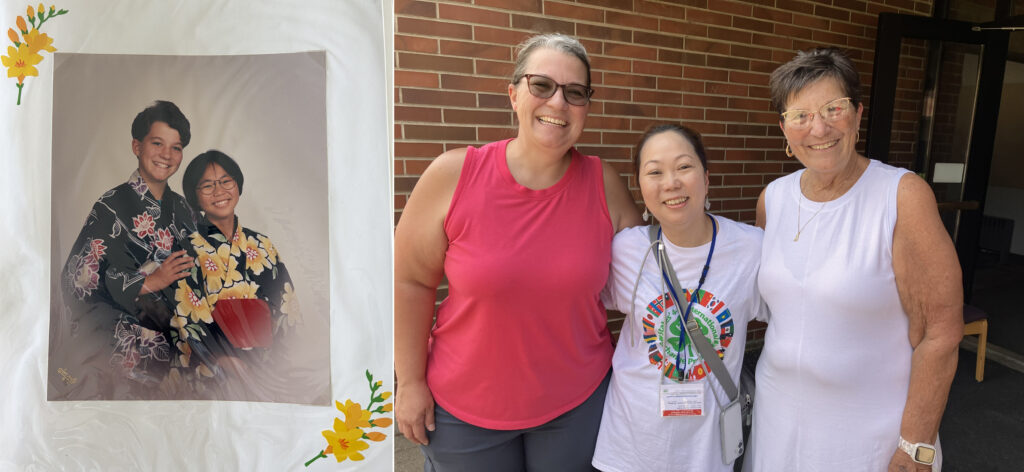
Photo on left courtesy Melissa Nissen. Right photo courtesy Washington State 4-H.
“She’s just a part of our family,” Nissen said. “It was that way when she first came in the ‘90s, it’s that way now, and it always will be.”
Matusmoto, who is from Hyogo, Japan, near Osaka, came to stay with Nissen and her family in 1994 as part of a national 4-H exchange program.
She returned to Washington this summer as a chaperone with the same program.
Matusmoto and Miki Kajita, another chaperone from Japan, came to the U.S. as part of the Labo International Exchange Foundation, a Japan-based organization that works with groups in other countries on youth exchange programs. The goal is to foster peace between nations while helping students learn English.
In the U.S., Labo partners with States’ 4-H International Exchange Programs to arrange hosting for students. Through Washington State 4-H, part of Washington State University Extension, Washington became one of the first states, along with Idaho, to host Labo students in 1972. They have hosted teens every year since, except for a pause during COVID-19.
Matusmoto and Kajita both visited Washington as teenagers. They each lived with host families and learned as much about being “normal Americans” as possible in their short visits.
This summer, both women stayed with members of their original host families while assisting current teens living with host families as part of the 4-H exchange program.
“It is so comfortable being back and staying with my ‘host sister,’” said Matusmoto, who was 14 when she first visited. “When I was chosen to be a chaperone, I asked if I could stay with Melissa and her family. I am so happy; it’s like home.”
Nissen was also a teen when Matusmoto first stayed with her family. Nissen participated in the same exchange program the following year, staying with Matusmoto and her family. Matusmoto returned to visit Nissen and her family shortly after the initial visit, but they hadn’t seen each other in person since then. Decades later, they both have families of their own, but their relationship hasn’t changed.
“She moved right in, and it was like she hadn’t left,” said Nissen, who owns a bakery in West Richland, Washington. “We’ve met up with all my family, and they remember her and enjoy being around her. It’s been a fantastic and unexpected reunion.”
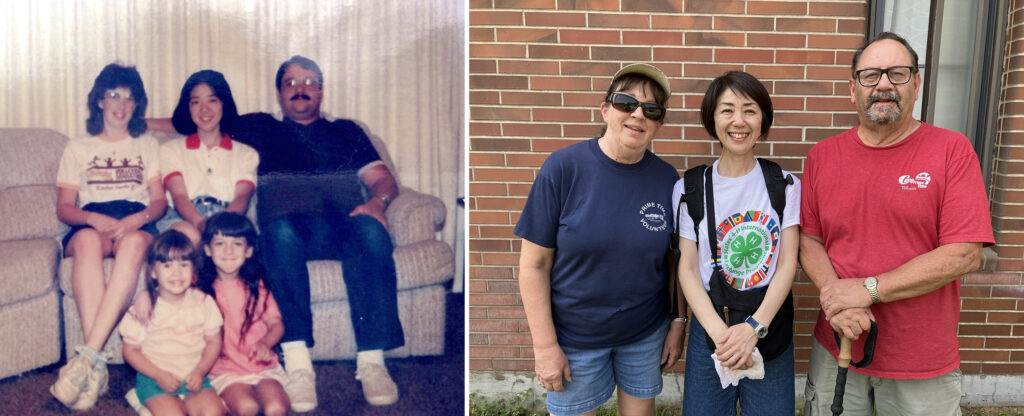
Photo on left courtesy Shumaker family. Right photo courtesy Washington State 4-H.
Kajita, who first came to the U.S. as a 16-year-old in 1988, remembers visiting the Oregon coast, riding horses, and eating ice cream regularly.
“American people are more open. They hug and say, ‘I love you,’” said Kajita, who is from Aichi, Japan. “I like that openness. I think it is very good for students in Japan to come here and experience this.”
“The hosts and visiting youths both learn so much,” said Carolyn Russo, a WSU Extension coordinator who manages the exchange program. “You can see the nervousness when they first come, but after three and a half weeks with host families, there are often tears when they get dropped back off. There is serious, deep bonding that happens.”
The Japanese students are between the ages of 12 and 18. One rule is that there is no contact with home while they are visiting; American youths follow the same guidelines when they go to Japan.
“Most students know five or six years in advance that they are going,” Russo said. “So they are prepared and know about that rule. It helps them become fully immersed with their host families. They can contact chaperones if issues arise.”
Labo programs start very young; Matusmoto and Kajita were both two years old when their families started them in it. Both said their parents wanted them to understand more about other countries and learn English.
“We used picture books,” Matusmoto recalls. “I grew up with the Labo program, enjoying stories from Japan and around the world and taking part in many different activities. When I had children of my own, I wanted them to grow up in Labo too, so I became a Labo tutor. And now here I am, back in America with my original host family.”
Kajita had a similar experience.
“I am so happy that our kids get to see more of the world,” Kajita said. “I want them to experience things that are different from what they know.”
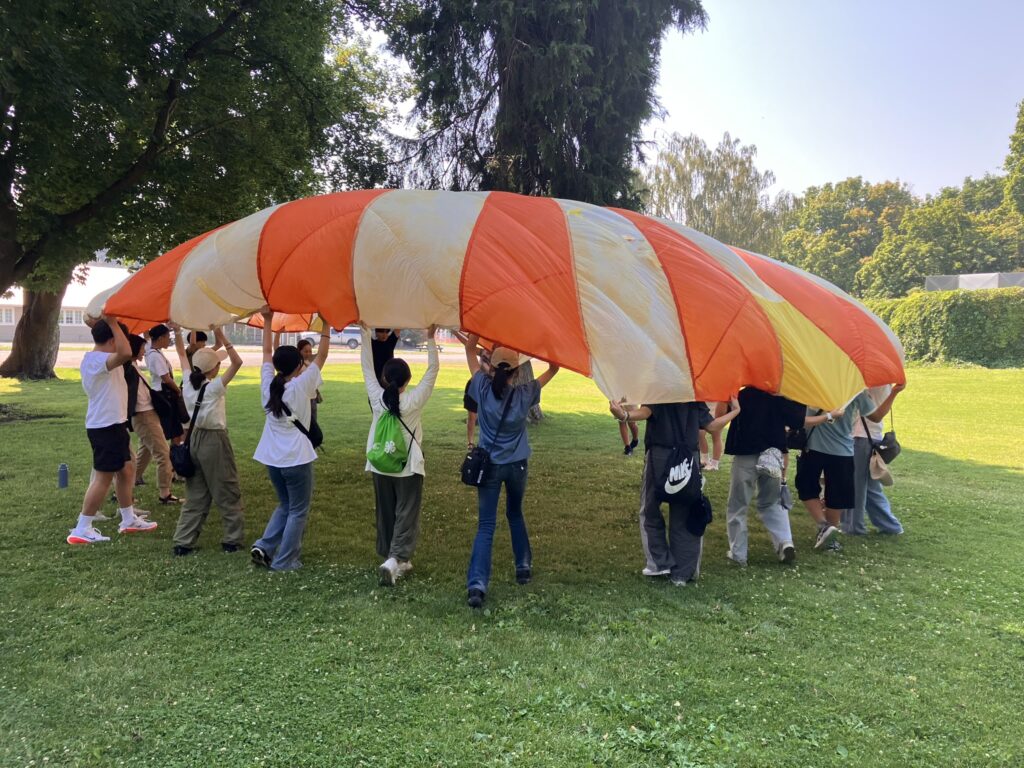
Photo courtesy Washington State 4-H.
She also rejoined Labo after her first daughter was born and stayed in contact with her host family, even sending them photos of her children as they grew up.
“When we picked her up, that spark was there again right away,” said Terry Shumaker, Kajita’s “American mom.” “We were so excited to spend time with her again. She’s my Japanese daughter!”
Labo and 4-H are always looking for host families. There is no requirement to be a 4-H member, but they do ask that host families have a teenager in the house to ease the transition.
“The Japanese youths are often more comfortable talking with someone their own age and may be shy around parents,” Russo said. “Host families often talk about how much they learned from the visiting teens. It’s a true cultural exchange that benefits everyone.”
The Japanese students fly into SeaTac Airport and are bussed to Ellensburg, Washington, where they spend two days acclimating to the time difference and learning about local culture. Then the host families pick them up and the adventure begins.
“Families can make their own plans,” Russo said. “Some go camping or on trips, but some just live their normal lives with another child in the house. Chaperones talk with the students during the stay to make sure everything is going well, but it’s very unstructured. The program focuses on cultural immersion, not sightseeing or tourism.”
Each year, Washington State 4-H hosts around 15 youths. This year, that number was a bit larger because the organization also partnered with Korean 4-H and hosted a few Korean youths.
“Reunions like these illustrate the extraordinary impact of youth exchange programs,” said Raj Khosla, Cashup Davis Family Endowed Dean of WSU’s College of Agricultural, Human, and Natural Resource Sciences. “What begins as a few weeks of cultural immersion can develop into lifelong friendships and extended families that span continents. We are proud of Washington 4-H and WSU Extension’s role in creating these transformative experiences.”
Washington State 4-H is always looking for interested host families.
“It is very important for families to accept Labo delegates into their homes if they have teens,” Matusmoto said. “It’s only one month but it can impact the rest of their lives. I am happy that I am one of those examples and can be involved.”