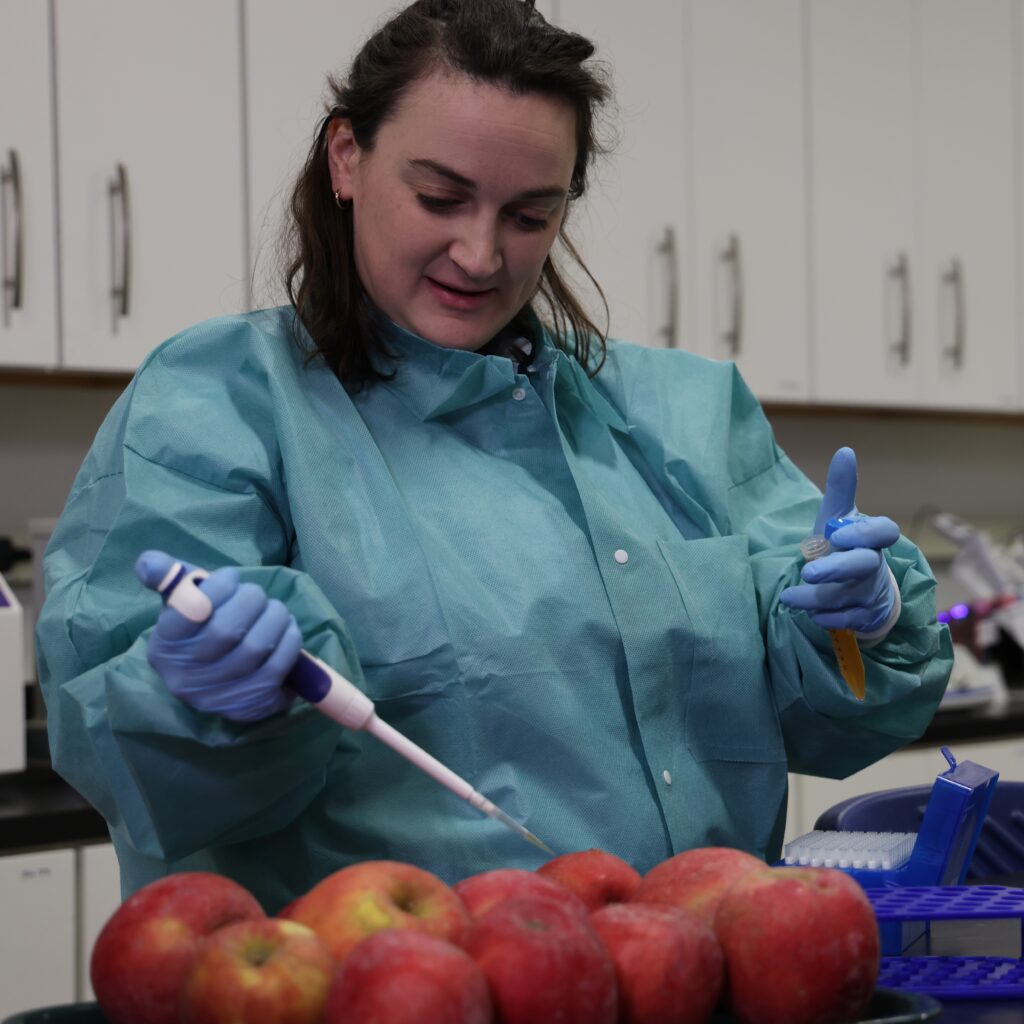
Thanks to the work of Washington State University food scientist Claire Murphy, consumers nationwide can safely enjoy some of the state’s most popular and delicious crops.
Murphy, an expert based at WSU’s Irrigated Agriculture Research and Extension Center in Prosser, studies how to prevent illness-causing pathogens from getting a toehold on Northwest tree fruit, blueberries, onions, and other major crops, long before they make it to consumers’ plates. Working closely with produce growers and packers, she delivers data and practical knowledge.
“By identifying where risks exist in the system and finding practices to mitigate them, we help the industry effectively focus its time and resources on prevention,” Murphy said.
As long as people want to enjoy fresh produce, there will always be a need for food safety. Bacteria are everywhere, around and inside us. While most are harmless or even beneficial, under the right conditions, harmful bacteria can multiply in as little as 15 minutes.
A major part of Murphy’s mission is tagging potential hazard points in a crop’s journey from field row and orchard through the packing house to shipment. To do so, she dives into the data that packers and growers routinely gather on the variables under which their produce is grown, stored, or packaged.
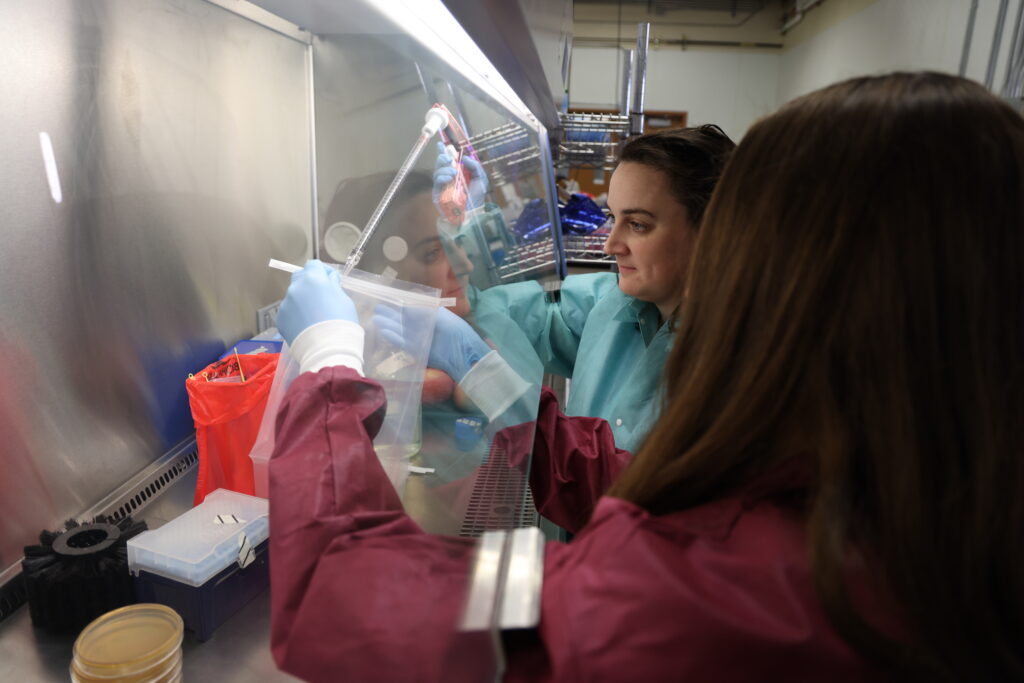
In her lab, Murphy securely studies reduction strategies for pathogens that can cause human illness, such as Listeria monocytogenesand pathogenic E. coli. In the field, she tests for surrogate microorganisms — not illness-causing bacteria, but ones that mimic the behavior of dangerous pathogens — and offers guidance on risk reduction. One orchard experiment involved placing a benign bacteria sample in irrigation water and testing how it might survive when sprayed onto trees.
“We use safe surrogate bacteria in our field studies because we do not want to knowingly introduce a risk, and testing real pathogens in food or the environment could trigger a recall,” Murphy said.
She sees herself as an advisor who helps producers ensure their fresh fruits and veggies are safe. Murphy answers questions, offers technical assistance, and holds an average of two training sessions per month, helping agricultural workforce members understand food safety principles, best practices, and regulatory compliance requirements.
“I want them to bring their ideas and challenges to me,” she said. “My role is to help them understand which choices can reduce the risk of an outbreak or recall.”
Murphy’s program also trains the next generation of food safety scientists. WSU graduate students learn fundamentals and advanced techniques while working directly with growers and packers to translate research into practical food safety solutions.
“The program has given us great guidance on how to handle real-life issues,” said Murphy lab member Miriam Ruiz. “I’ve spoken to growers and fruit packers about their actions, alternatives, and solutions.”
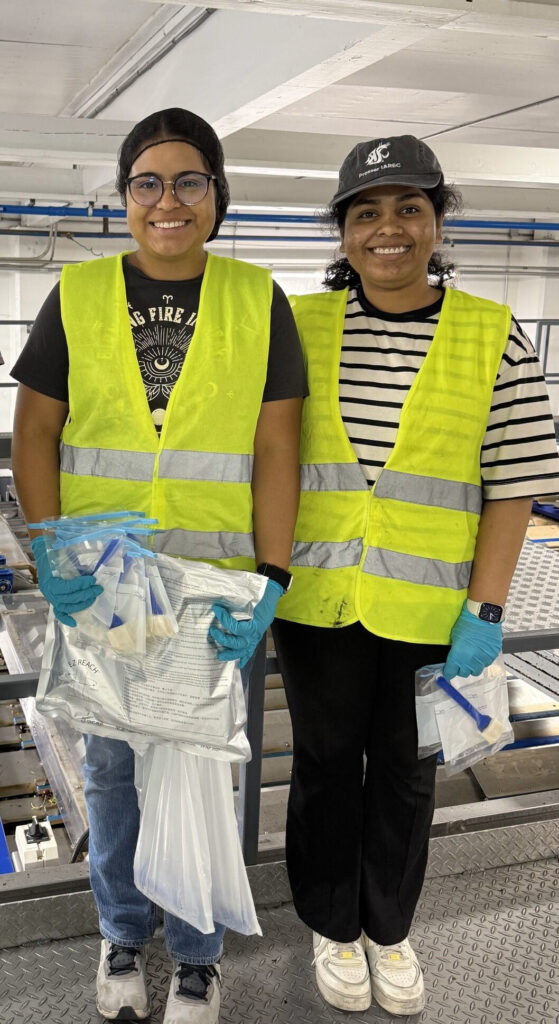
A master’s student in the School of Food Science, she studies pathogens that can live on the surface of fruit, examining how long they survive in storage and experimenting with ultraviolet light to reduce the threat.
Ruiz, who is bilingual, shares best practices in English and Spanish with tree fruit industry members. After graduating this May, she aims to continue impacting the industry.
“Every good practice matters for safety, quality, and the company’s reputation,” Ruiz said. “I know why food safety is important, and I want to use my skills to reach people of all backgrounds.”
As agriculture evolves, and new crops and practices come to Washington, Murphy and her team are ready to address emerging food safety concerns to protect the state’s agricultural economy and food supply.
“I want to make sure that Washington’s fresh produce can be enjoyed safely and confidently,” she said.