Rangelands come alive through new WSU-led art exhibit
Looking at many land-cover maps of North America, forests appear green. Croplands are a bright yellow. Cities magenta. But rangelands are often rendered in muted-gray crosshatch or faded beige, as though it’s the space left over.
Between Spokane and Ritzville, Ellensburg to the Columbia River, the regions of Washington state where drivers settle into cruise control are easily overlooked. Often termed “fly-over” or “drive-through” country, it’s anything but to the multitude of plant and animal species where it’s simply home on the range.
Shrink to the size of the burrowing owl or American badger, and the sagebrush-steppe grows to a forest, while the blooming lupine and arrowleaf balsamroot decorate the ground in a patchwork mosaic of colors as bold as any map’s shading.
“Map makers depict rangelands using a non-color,” said Tipton “Tip” Hudson, WSU Extension range and livestock faculty. “Oftentimes, the people who operate on rangelands are marginalized, and the land itself is marginalized based on the sorts of things most people think we get out of them.”
Now, Hudson and fellow WSU Extension colleague Stephen Bramwell, both WSU Extension rangeland and grazing management specialists, are bringing rangelands to life through a newly created art exhibit that is drawing crowds across the western U.S. and beyond.
“Despite their scale, rangelands are easy to overlook, especially when compared with well-known biomes like forest or wetland,” Bramwell said. “We needed to preach beyond the choir and teach the importance of rangelands to the broader public.”
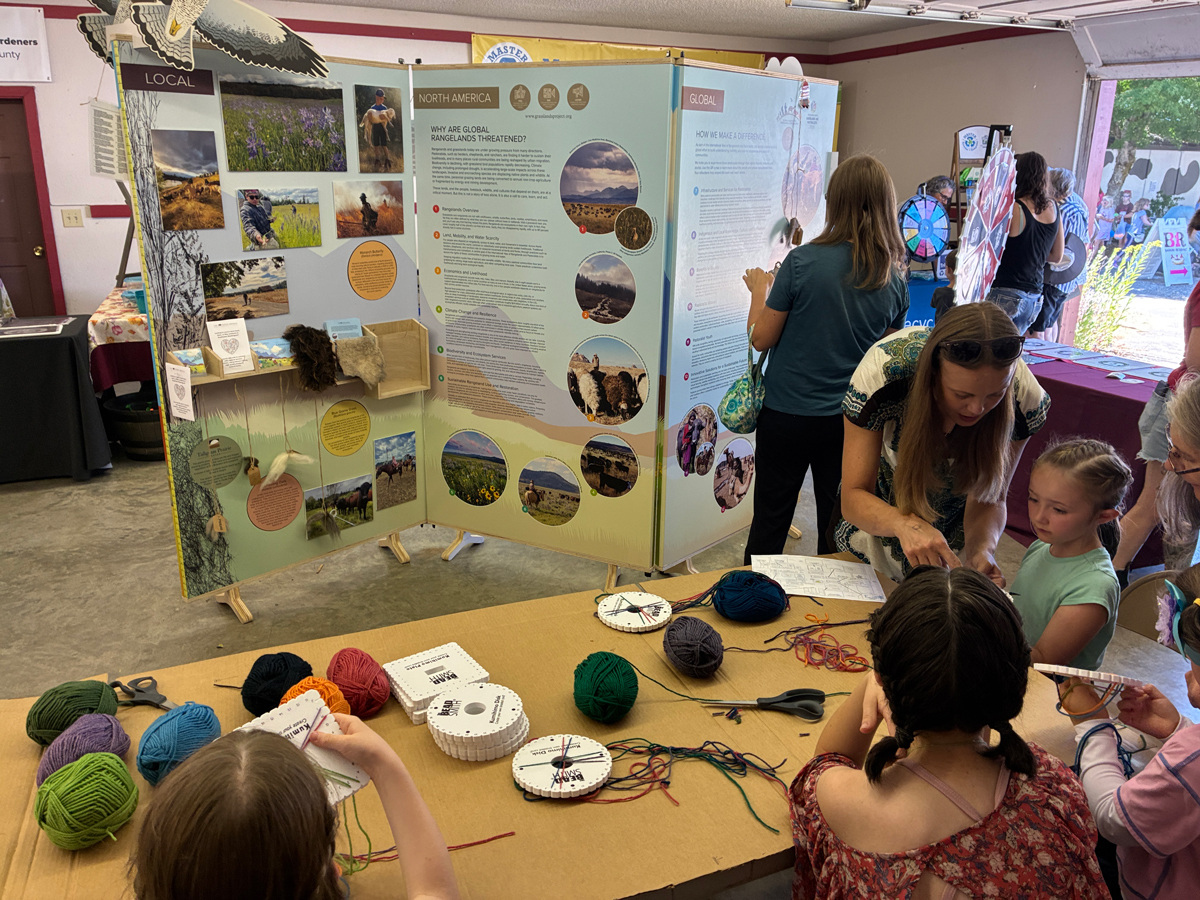
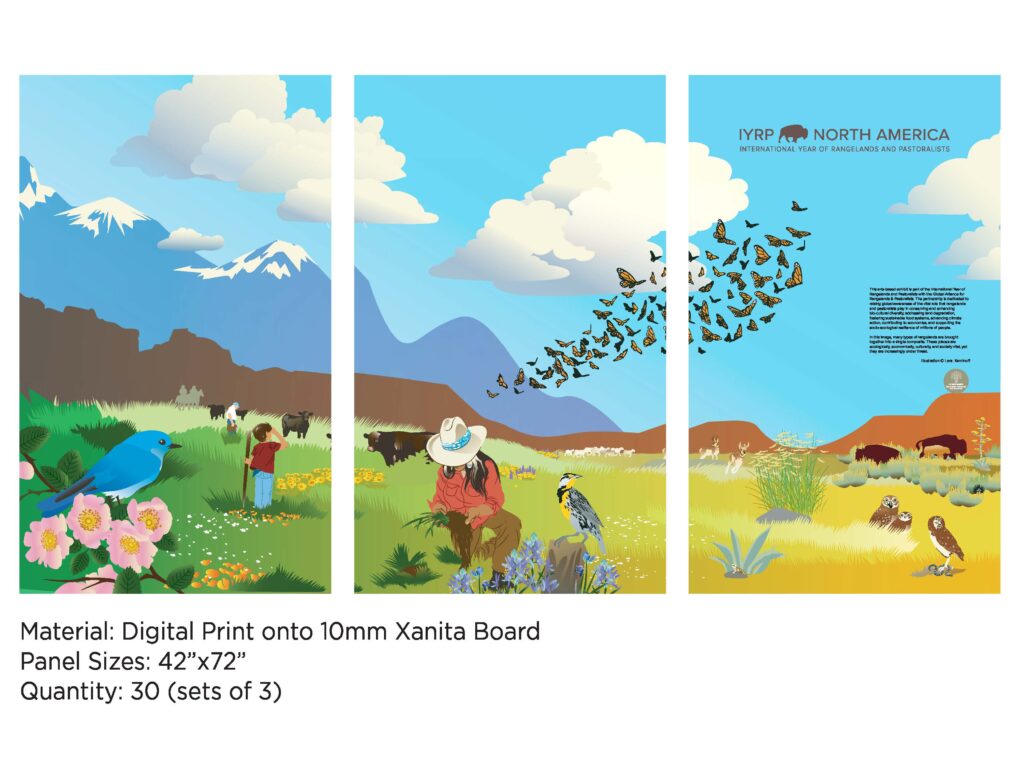
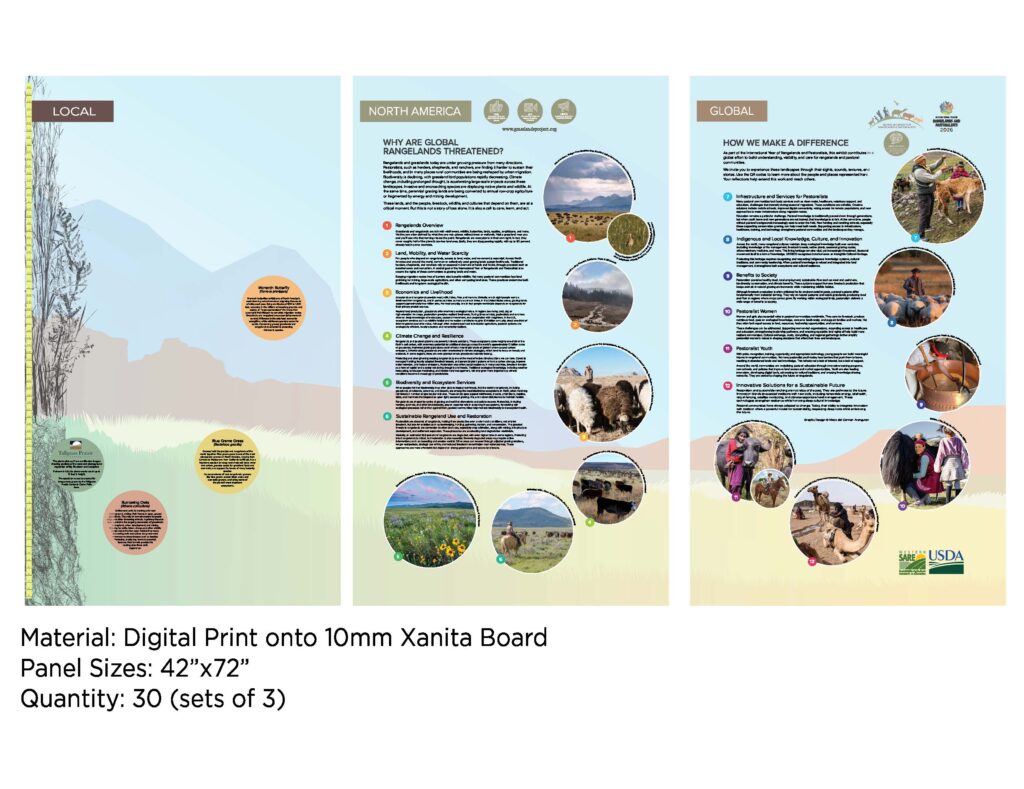
Funded by a Western Sustainable Agriculture Research and Education Stories grant, the free-standing, six-foot art panel depicts wildlife, people, and various grass types from east to west across North America. More than a display, the art is creating opportunities for immersive events that connect audiences with the landscapes, wildlife, livelihoods, and significance of rangelands.
Bramwell leads the effort nationally and said that he was inspired by the United Nations-designated International Year of Rangelands and Pastoralists, celebrated in 2026. Thirty-five identical art panels in 13 states, plus three in Mexico and two in Canada, are drawing audiences and even making TV appearances.
About 50 additional collaborators, including an illustrator, graphic designer, consulting arts team, and evaluation specialist, helped envision and create the art. Additional partners who helped bring the exhibit to life included the World Wildlife Fund, Indigenous Kinship Circle, and Native American Rangeland Partnership.
“For many in Washington state and internationally, pastoralism is a livelihood,” Bramwell said. “It’s an ancient way of life where practices have been handed down.”
Yet many Americans are unaware of rangeland’s ecological and economic importance.
In terms of biological diversity, U.S. rangelands rival tropical rainforests. While grasslands cover nearly half of Earth’s surface and store one-third of the world’s carbon, they also sustain the one in eight people globally who work as ranchers or pastoralists, producing over a quarter of the world’s protein through livestock grazing.
To reach audiences beyond the usual ranchers who contact them for Extension support, Bramwell and Hudson chose this unique educational approach with a focus on the public and younger audiences.
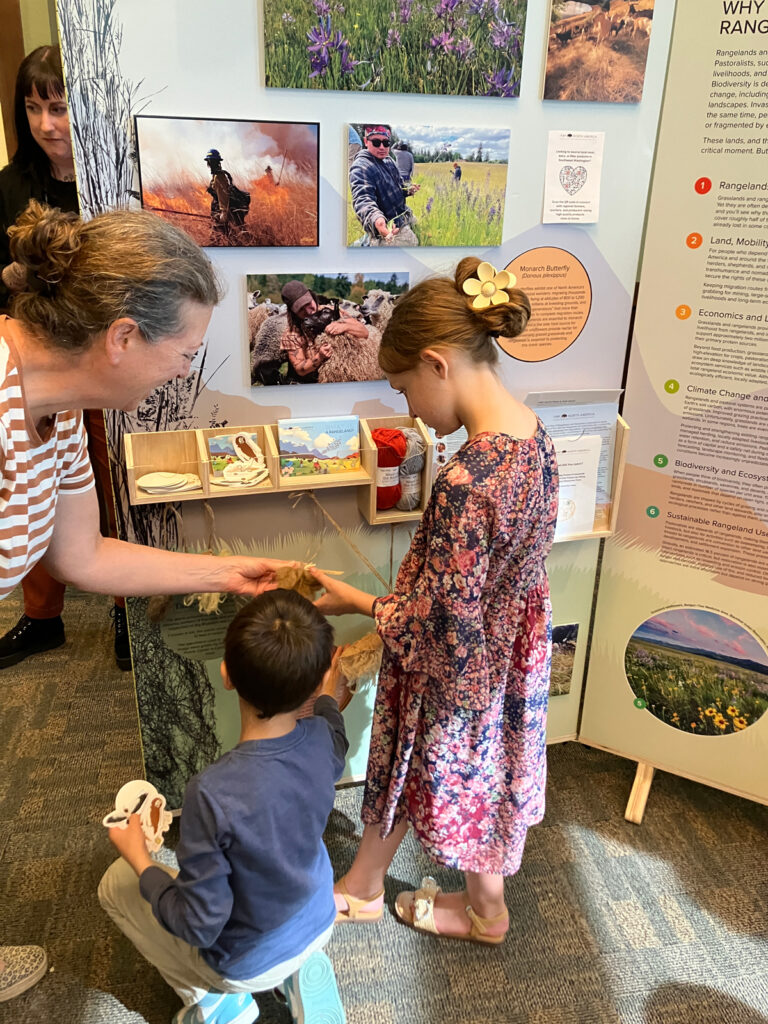
“When I hosted the art exhibit at the Chehalis Public Library, children were pointing at everything and asking great questions about the display,” said Bramwell. “Rangelands are important to our food supply, to native plants and wildlife, so I think it’s especially important for youth to learn about them.”
Showcasing the art in Chehalis gave Bramwell an opportunity to introduce people to the products, animals, and plants found on western Washington prairies. Visitors wove bracelets from locally produced wool and created sunprints using rangeland plants. A local rancher even brought a lamb into the library for youth to hold.
While hosting the art pieces in Olympia, Washington, Thurston County commissioners adopted a formal proclamation recognizing the International Year of Rangelands and Pastoralists.
“If we have the ability to grow food and fiber in these places where we can maintain the full suite of ecosystem services like wildlife habitat, clean air, clean water, aesthetics, recreational opportunities, and cultural values, why would we not want to do that?” Hudson said. “I feel like we even have some civilizational obligation to do that and to do it well.”
Despite their importance, it is estimated that 60% to 80% of North American rangelands have been degraded or converted to other uses since the ’70s. The present-day steep decline in bird and insect populations coincides with the rangeland contractions.
Hudson and Bramwell hope that their unique approach to outreach will make a difference.
“We say rangeland is valuable now, but once it’s gone, then we say it’s priceless,” Hudson said. “We hope this art makes rangelands and those who depend on them more meaningful to people — that it encourages them to pay attention to something that they haven’t paid attention to before.”