Federal funding to bolster WSU aquatics research
Salmon play a key role in Washington, both economically and culturally. However, environmental- and human-derived stressors are having major negative impacts on this vital natural resource.
To give salmon and other essential fish a boost, Washington State University is expanding its research infrastructure thanks to $50 million in new federal funding.
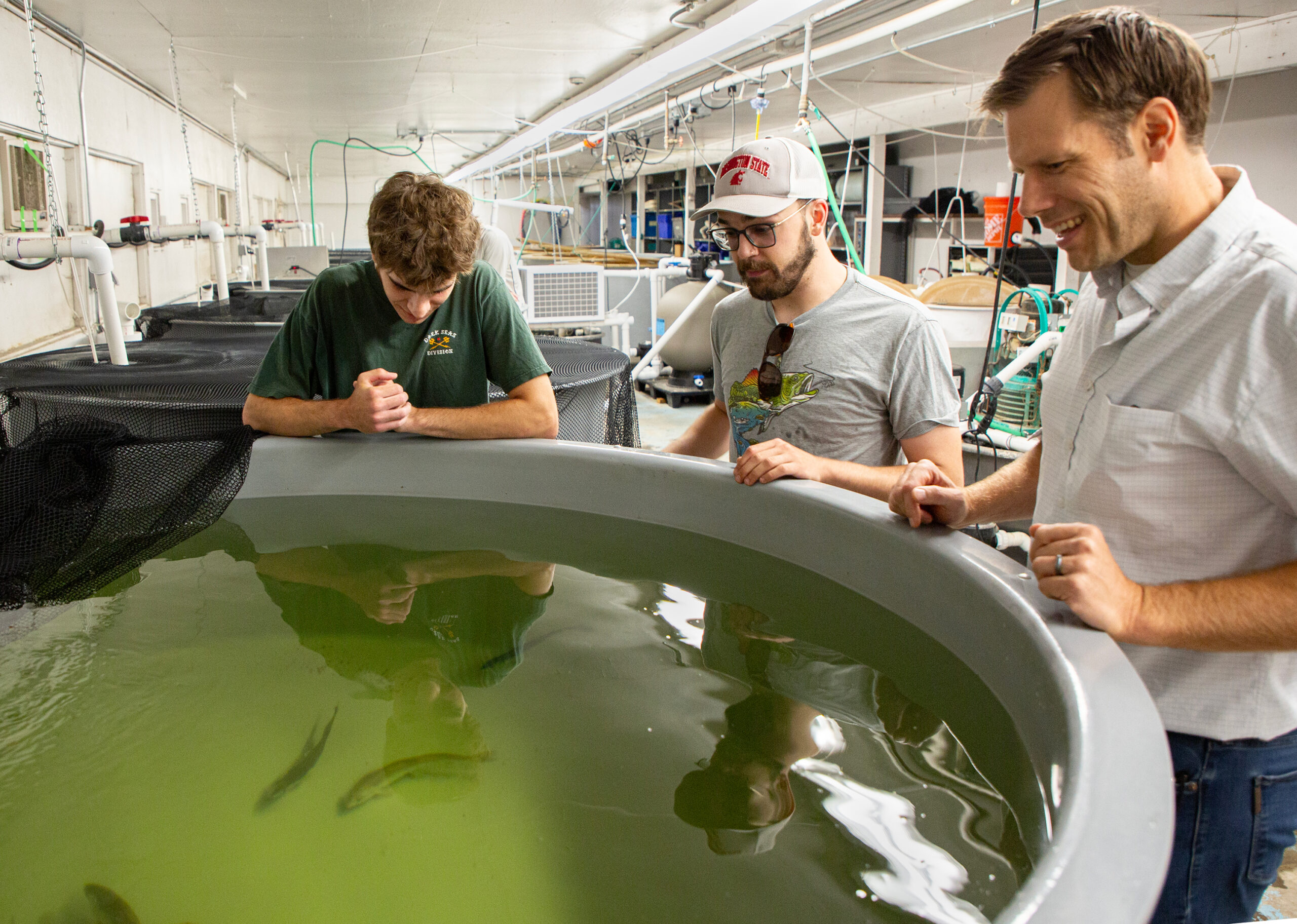
WSU scientists will work to identify ways to protect wild salmon, provide fish for sustainable harvest opportunities, and ensure these species thrive for decades to come. The Program for Aquatic Excellence will include statewide research into fish diseases, toxicology, biology, culture, and genetics.
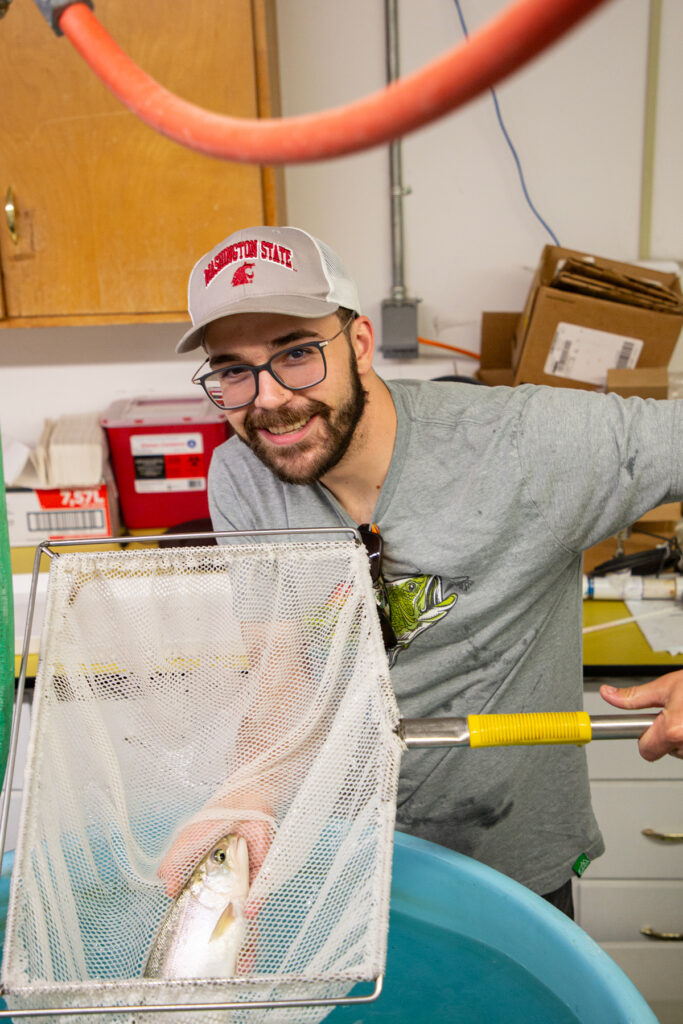
WSU will establish two research centers, one in Puyallup, one in Pullman, update existing facilities, and improve infrastructure with the funding.
“We are thrilled about this investment,” said Jenifer McIntyre, an associate professor in WSU’s School of the Environment and an aquatic toxicology scientist. “We desperately need more and better facilities; we’re already out of the space necessary to do the work we’re being asked to do.”
One of the new centers will be at the WSU Puyallup Research and Extension Center, where McIntyre is based. The funding will allow for additional physical assets, like more tanks to raise and study fish, and a better way to procure clean water needed for those studies.
Current water lines are more than 80 years old and bring in water contaminated with iron and lead that is costly to clean up before it can be used in research. The funding will support the creation of new lines.
“Our research has regional and international significance,” McIntyre said. “The new facilities not only mean we can do more work, but more work with higher quality results.”
McIntyre studies materials that are toxic to fish, especially salmon, and where they come from. She led the research team that discovered that a chemical used in road tires is killing coho salmon in roadway-impacted streams.
“Our research is already making a big impact in the region,” she said. “Once we get these upgrades, we’ll expand our capacity and be able to simultaneously address more questions more quickly.”
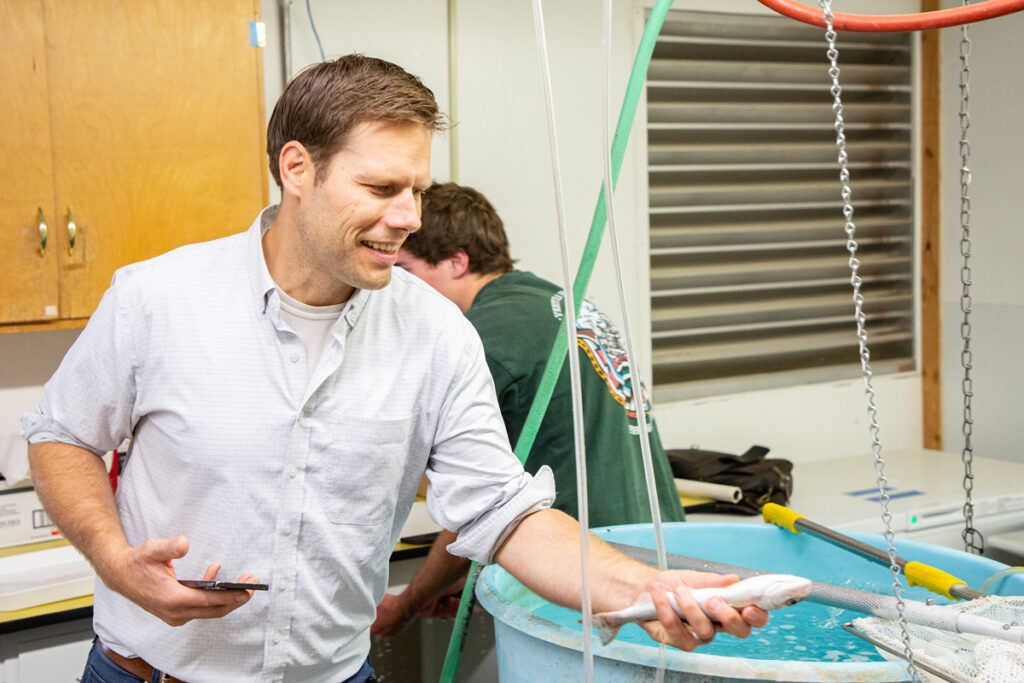
Michael Phelps, an associate professor in WSU’s Department of Animal Sciences, and Thomas Waltzek, associate professor and Ed McLeary distinguished professor in aquatic animal health in the WSU College of Veterinary Medicine, are co-leading the program with McIntyre. A geneticist by training, Phelps is working to better understand the salmon life cycle and identify better ways of culturing salmon.
Much of his research happens on the WSU Pullman campus, though he will work extensively at the Puyallup center as well. Both of WSU’s current salmon hatcheries due for an upgrade are renovated former chicken coops.
“Our overall theme is getting fish out of those coops,” Phelps said. “With the new facilities, Jen can do her elite toxicology research, and I can rear quality fish for my studies. Hopefully, the result will be safer and more abundant fish down the line.”
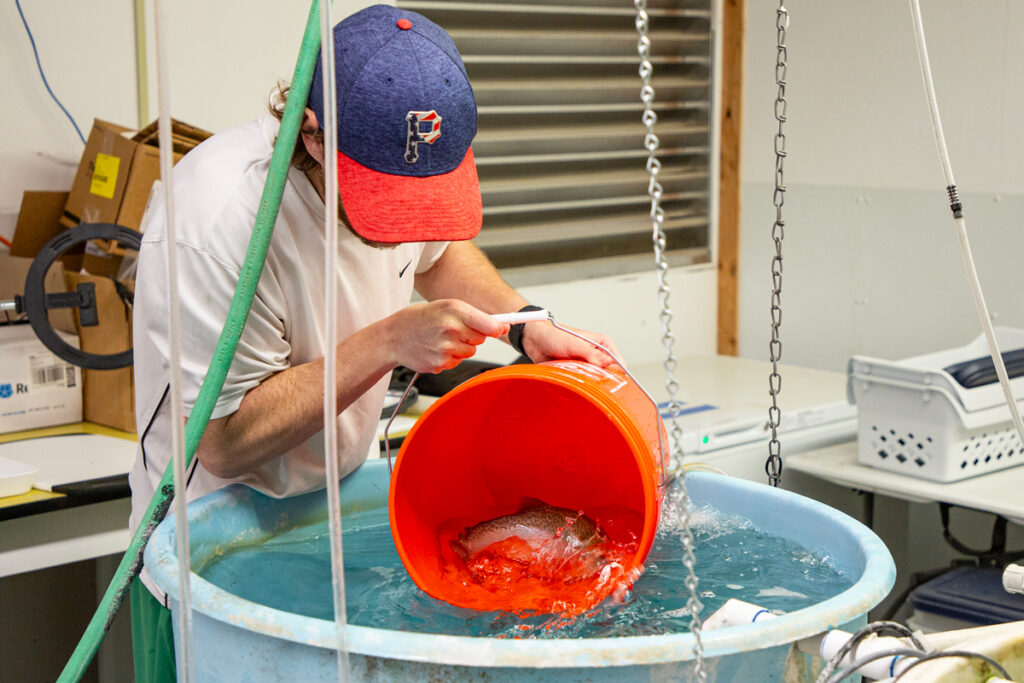
Phelps’ research requires space to study large numbers of salmon as he works to make it safer to culture fish for human consumption, whether through improved hatchery practices or salmon aquaculture.
“This new program is amazing because we know the potential of our work,” Phelps said. “There are great scientists and students dedicated to making an impact and saving wild salmon. We want our children to have the same access to salmon that our parents had. We also want to ensure salmon are here in 50 years in healthy numbers.”