A great doorway into the industry: First group completes new WSU brewing certificate
From casual home brewers to those with years of industry experience, the inaugural cohort of Washington State University’s online Brewing Certificate attracted a variety of students from different backgrounds and locations.
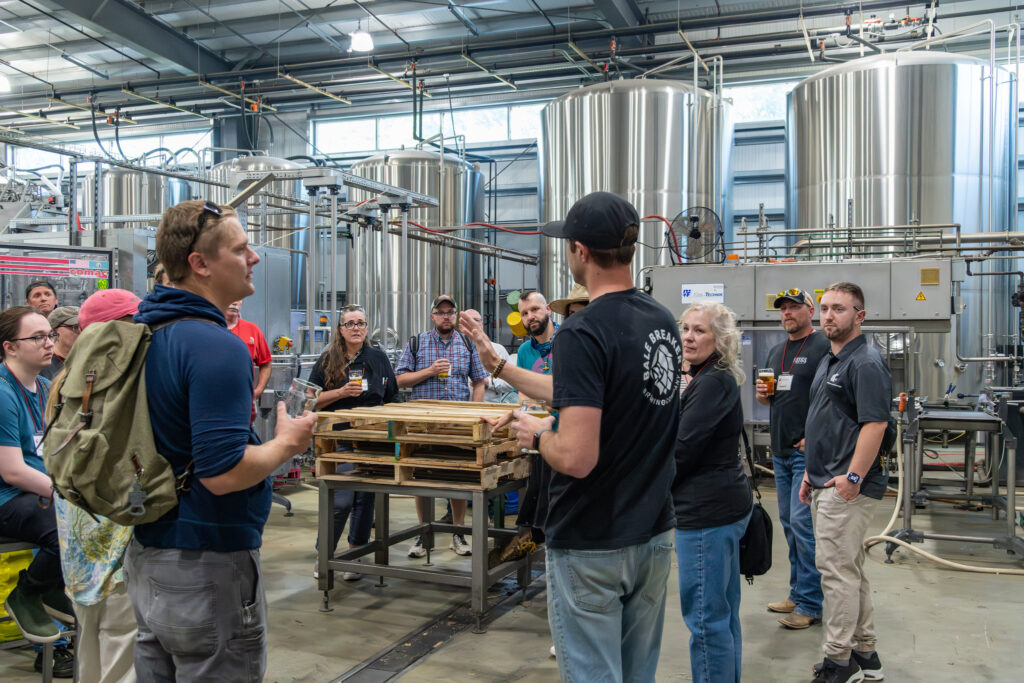
Offered through WSU’s Department of Viticulture and Enology (V&E), the year-long course launched last summer. Industry professionals taught lessons on topics ranging from the chemistry of hops and heat transfer to fermentation processes and food safety compliance. The course is designed with flexibility in mind, allowing students to work through modules and quizzes at their own pace while interacting with other participants via an online discussion board.
“I am incredibly excited for our department to get this new certificate off the ground and make it available to students,” said V&E Department Chair Jean Dodson Peterson. “Seeing the first cohort complete the program is an important milestone, and I am proud of the access to industry expertise, flexibility, and hands-on learning opportunities it provides.”
Stéphanos Hanefeld, one of the cohort’s 22 students, has worked in the beer industry for nearly a decade and hopes to eventually open his own brewery. He said the program offered a chance to keep one foot in the industry while he decides what’s next.
“It helped round out what I’ve been doing daily for the last 10 years in a more formal, technical manner,” said Hanefeld, who lives in Kirkland, Washington. “It was a good way to stay abreast of the latest industry knowledge while reassessing and reevaluating what I want my brewery to look like.”
For more casual home brewers like retired Washington State Magazine editor Larry Clark, the curriculum helped clarify why certain batches of beer haven’t always turned out as expected.
“I think most home brewers will say that it can be very hit and miss,” said Clark, who has been brewing beer at his home in Pullman, Washington, for roughly 12 years. “There’s so much to know about the process, and this class seemed like the perfect opportunity to expand my knowledge. I now understand why things have gone wrong in the past.”
Brandon Ghiassi, who previously completed WSU’s Viticulture Certificate, enjoys making mead at his home in Albuquerque, New Mexico. He said the brewing course taught him about the equipment and modifications required for a craft brewing set-up.
“This program provides the foundational knowledge for breaking into the brewing scene,” Ghiassi said. “I enrolled because I wanted to combine my existing viticulture knowledge with brewing knowledge to make the best products I can.”
He is currently working on a hybrid, beer-style mead that’s similar to a lager, with plans to begin selling his product by early 2027. He hopes the brewing course will help him further refine his processes and grow his business.
“Mead falls somewhere in the middle of beer and wine,” Ghiassi said. “I’m trying to create a product that will attract beer drinkers.”
Though the brewing course materials include many technical topics, the modules are designed to be accessible to those without an extensive science background.
“I learned about some chemistry-related processes I had never thought to ask about, but I know they’re important and will make me a better brewer,” Hanefeld said. “Understanding the process at a more structural level has been very informative.”
Clark agrees.
“The instructors were excellent at explaining why these complex scientific concepts matter in the context of brewing beer,” he said.
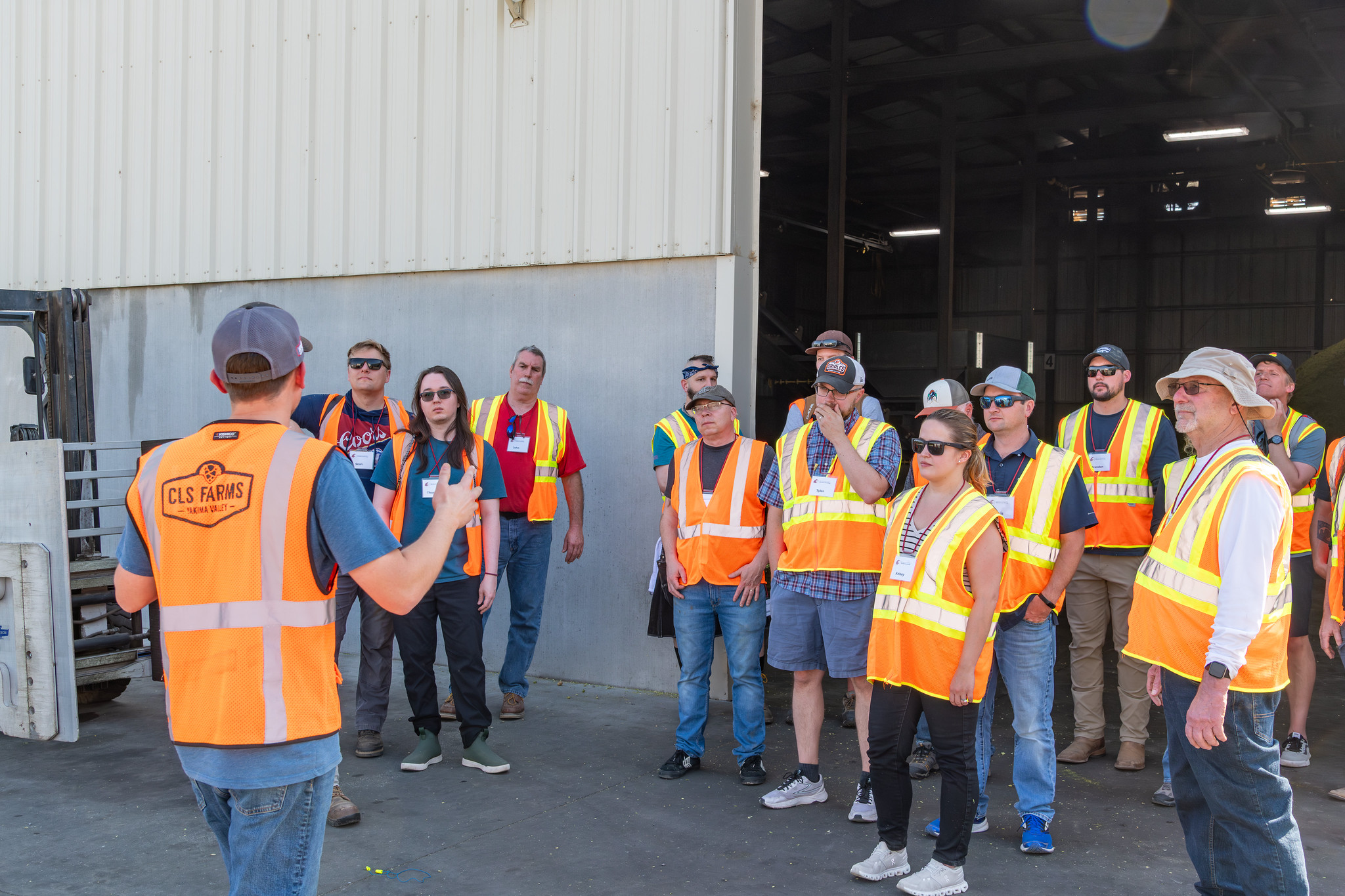
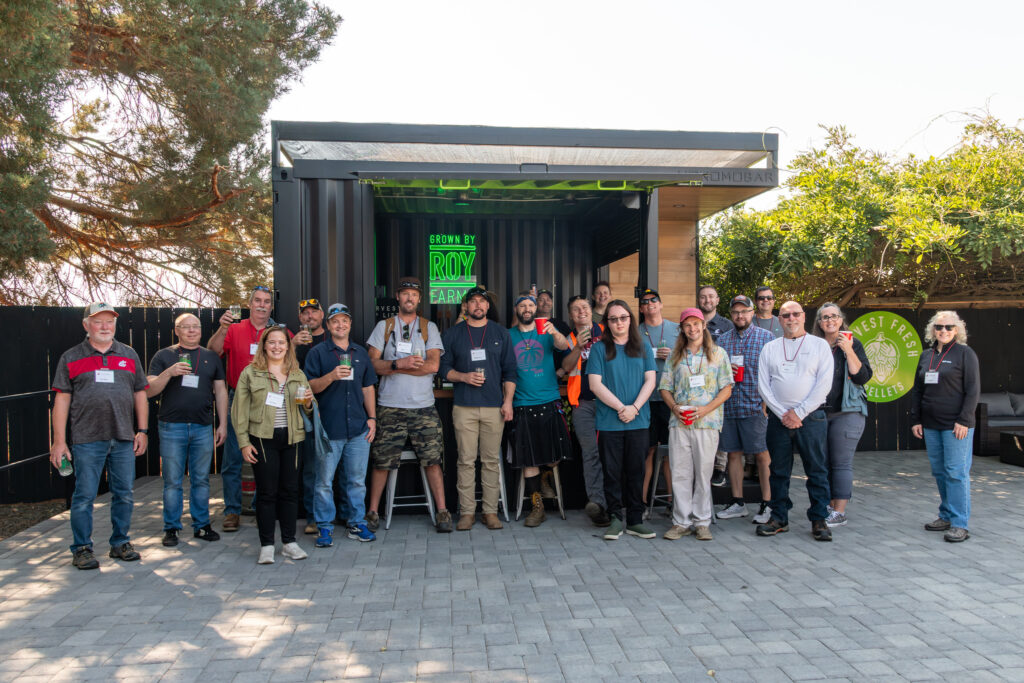
The students had a chance to see those concepts in action at two in-person workshops. The group first met in the fall for a two-day hop camp in Yakima, Washington, where they toured three hop farms and a hop processing facility.
“It was really eye-opening to see all the work that goes into harvesting and evaluating hops,” Clark said. “The best part of our visit was that all the senses were involved. It was also fun to absorb that knowledge out in the field rather than just online.”
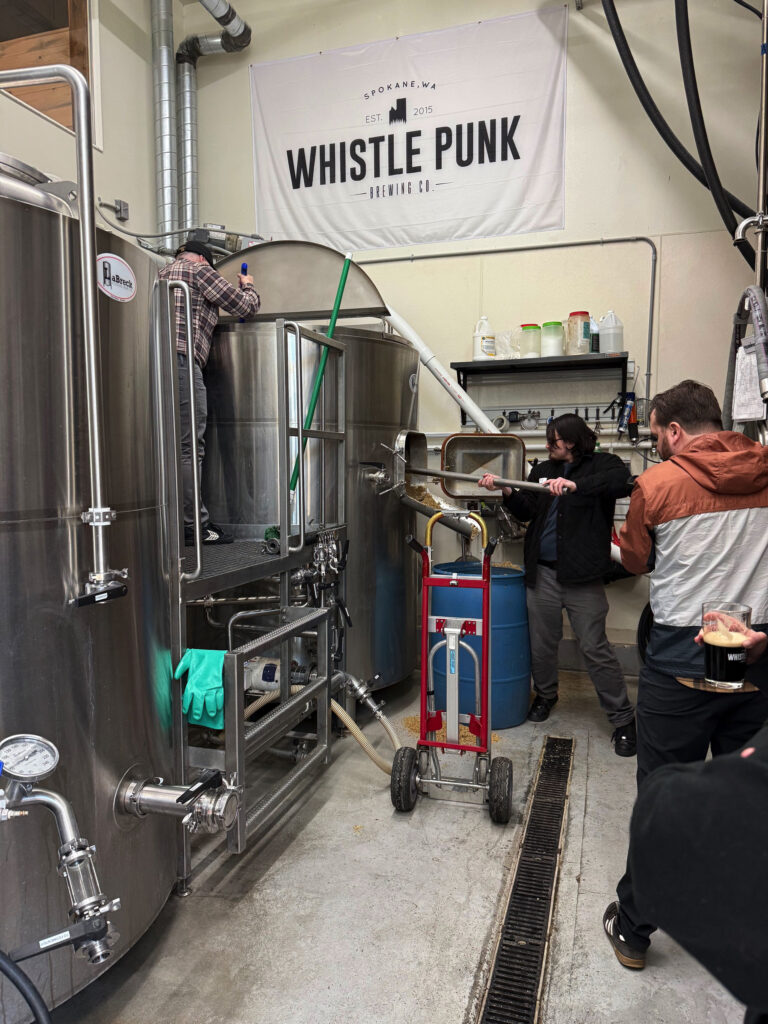
The group gathered again in the spring for a two-day malt camp in Spokane, Washington, where they observed the malting process at a facility and visited a farm to see test plots of different barley varieties.
“The brew camps were a highlight of the program,” Ghiassi said. “We networked with industry members and our classmates while getting our hands dirty. It was nice to see the entire process at a commercial scale, then taste the product.”
Hanefeld encourages anyone who is even remotely interested in brewing to enroll in the course.
“This certificate is a great doorway into the industry for those who have always been a little curious, or people looking to stay involved while pursuing other interests,” he said. “Everything I learned was very valuable, and I’m proud to be part of the first cohort.”
For Clark, the course has already provided tangible benefits.
“Last Christmas, I brewed a delicious Irish stout using some of the techniques I learned,” he said. “My father-in-law, whom I’m always trying to impress, said it tasted like a professional had made it. The beer didn’t last long, which is always a good sign!”
More Information
Are you interested in joining a future brewing cohort? Learn more at our website.