Seeds of tomorrow: WSU-based USDA gene bank preserves legacy that could save the world
Inside a vault half-buried in a hillside on Washington State University’s Pullman campus, scientists with the U.S. Department of Agriculture and their WSU partners are preserving a genetic legacy that could feed our future.
Seeds from more than 100,000 unique populations representing 4,290 plant species — well-known Pacific Northwest crops, thousands of different beans, rare native plants, even a few weeds — rest at 39 degrees Fahrenheit and 20% humidity. But they won’t wait for doomsday: The seeds constantly move from cold storage at WSU to research labs and breeding programs around the world, where their genes help scientists breed better crops and secure our food supply from disease and disaster.
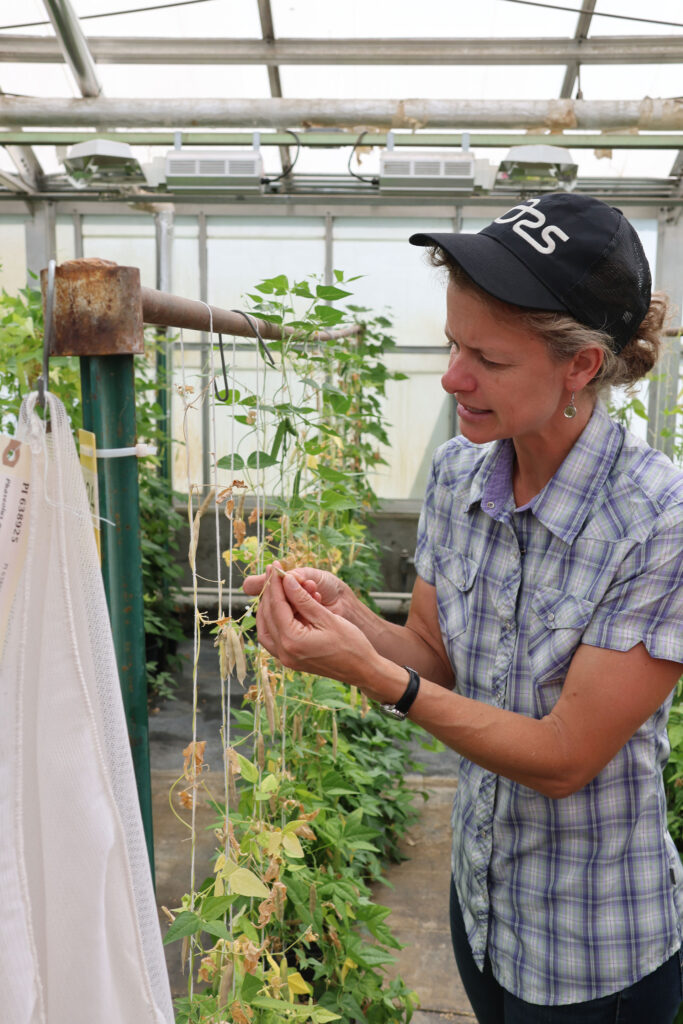
“Every day, we save the world,” said Marilyn Warburton, research leader for the USDA Agricultural Research Service’s Western Regional Plant Introduction Station at Pullman. “We’re not a backup — we’re a working collection.”
Part of the USDA National Plant Germplasm System, the seed bank houses cool-season food legumes like peas, lentils, and chickpeas; forage legumes such as alfalfas and clovers; forage, turf, and rangeland grasses; and a horticultural collection of over 1,432 food, forage, medicinal, and restoration species. It is also home to the national collection of beans, embracing everything from common beans (more than 10,000 populations of pintos, black beans, snap beans, and others) to wild vines from South America whose pods shatter when ripe.
These genetic resources are carefully screened, allowing scientists to seek specific genes for desired traits.
“New diseases may evolve, new pests arrive,” Warburton said. “Growers may want a crop with better resistance, more nutrition, more protein, or brighter color. The genes they’re looking for are probably in our collection.”
Preserved in jars and pouches organized in row upon row of metal drawers, seeds can last for years, even decades, in the bank’s cold, dry environment. Eventually, though, time takes its toll. Technicians routinely test-grow seeds to confirm viability, while the unit’s supporting farmers continually replenish the vaults with fresh seeds grown in nearby greenhouses, a small farm at Pullman, the WSU Irrigated Agriculture Research and Extension Center in Prosser, Washington, and a 100-acre farm at Central Ferry, Washington, along the Snake River.
Much of the hard work of tending, harvesting, and, especially, weeding is done by hand, since an herbicide that protects one seed crop might kill another.
“Some of the species we grow are not crops — there are no chemicals designed for them,” Warburton said. “Some of our accessions are actual weeds.”
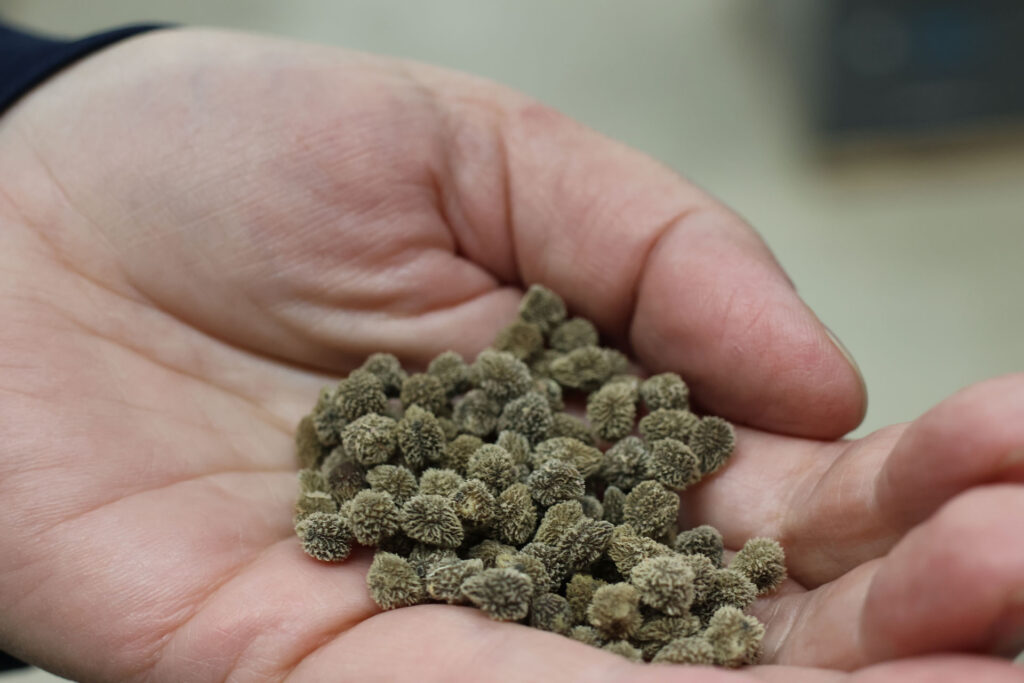
Seeds of prickly lettuce, for instance, are grown in case future breeders need to draw on its hardy genetics.
“You never know what you might need, and you never know what species it’s going to be in,” Warburton said.
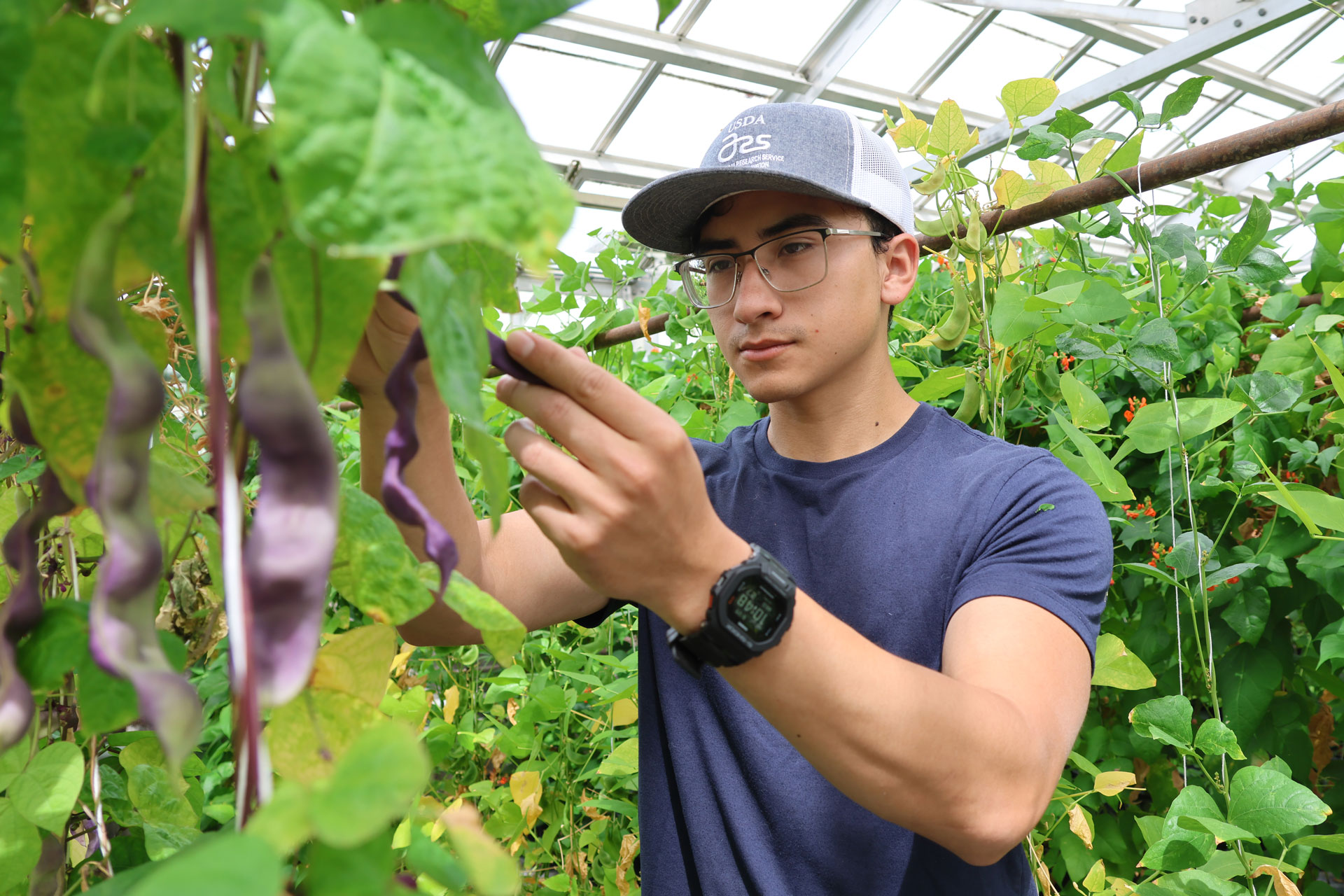
Sarah Dohle, beans collection curator, raises a triple crop of 350 populations annually. Her greenhouses are alive with vines and bushes of scarlet runner beans, tepary beans, butter beans, and their wild relatives.
“Some are wild beans,” she said. “If you leave them too long, they’ll shatter and throw their seeds.”
Dohle sees her work as contributing to crop diversity, sustainable agriculture, and food independence.
“We have all this genetic abundance, but we need to get it into people’s diets, so farmers have options to grow diverse crops suited to their region,” she said. “That requires new products and markets.”
The seed bank’s genetic resources can help bring those new foods to life.
“There’s so much precious material in this building,” said collection manager Lisa Taylor, the USDA technician who oversees the input and output of seeds.
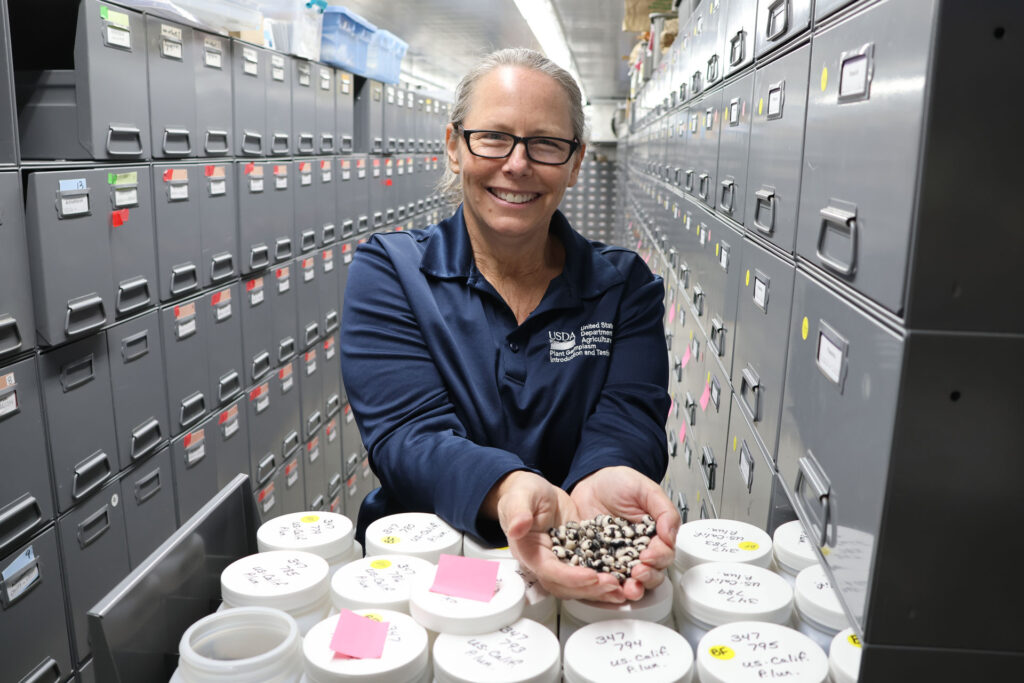
“At any given moment, we’re putting new seeds away and filling orders for tens of thousands of seed packets, year-round,” Taylor said.
Accurately tracking thousands of seed samples on the move is a demanding job. Staff and students are trained to double-check farm row stakes, container labels, and QR codes to ensure each variety is tracked from farm to barn to vault and then out to research programs.
With so many seeds coming and going, “we have to be able to find them easily and put them away accurately and quickly,” Taylor said. “It’s not done by robots or in any mechanized way.”
Seasonal harvest and cleaning of seed crops is another big job. With many species needing unique machines to separate seed from chaff, the unit maintains a menagerie of equipment, some of it hand built.
In greenhouses, farms, and fields, WSU students are a vital part of the unit. Hailing from a range of WSU programs — this summer, employees included agricultural education, forestry, ecology, microbiology, engineering, computer science, and psychology majors — students learn the rudiments of farming and gain research fundamentals that they can apply to future careers.
“We deeply appreciate the fact that we’re co-located at WSU,” Taylor said. “We benefit from the efforts of our student employees, and they learn firsthand about our great mission.”
“Everything here affects every aspect of agriculture,” said Nora Gutzwiler, an ag education major and student employee. “I’m lucky that I get to see the variety that goes into our food system.”
Community members who tour the vault are often surprised by the extent of the operation, as well as the return on investment of public resources that it represents, Warburton commented.
“Nearly every first-time visitor tells us, ‘I had no idea that all of this was here,'” she said. “The Pullman Plant Introduction Station has quietly gone about its business of maintaining the genetic treasures stored in this little-known gene bank for many years, but its foundational importance should be better understood.”