New scholarship sustains the purposeful legacy of animal science educator P.L. Senger
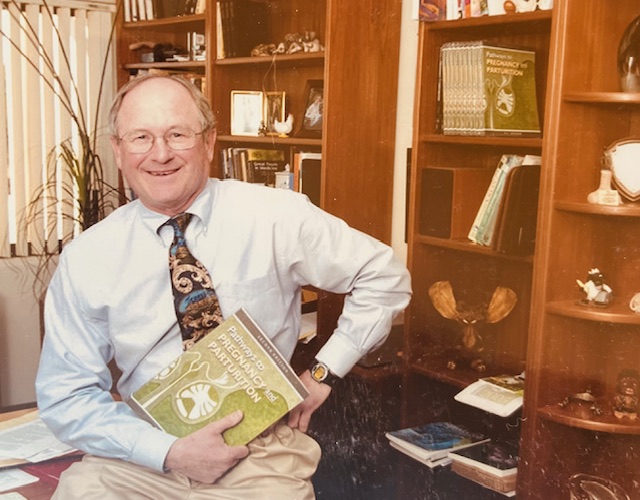
During his lifetime, Professor Phillip Senger’s contagious enthusiasm and lively approach to teaching inspired generations of aspiring animal scientists and veterinarians at Washington State University.
Following his passing earlier this year, Senger’s legacy lives on through a new scholarship established by his three daughters, Amy Heggem, Molly Wolniewicz, and Sally Senger.
“Being an educator was a huge part of our dad’s life,” Wolniewicz said. “He’d be over the moon to know he was making a continued impact.”
The Dr. P.L. Senger Memorial Scholarship will support students pursuing a degree in animal sciences at WSU.
Senger taught and studied animal reproduction in WSU’s Department of Animal Sciences for over 20 years and was a respected collaborator with colleagues in the College of Veterinary Medicine. He died at age 80 in June.
His textbook, “Pathways to Pregnancy and Parturition,” became the standard resource in animal reproduction classrooms at hundreds of universities and colleges around the world. Teaching, family and fellow scientists agree, was his greatest gift.
“Phil was one of the most dynamic and engaging teachers that I’ve ever experienced,” said Jon Oatley, WSU Regents Professor in the College of Veterinary Medicine. “He dedicated himself to the art of instruction and was brilliant at it.”
Born in 1944 in Nappanee, Indiana, Senger grew up in a dairy family. Seeing a calf being born on his grandparents’ Iowa dairy farm as a child may have sparked his interest in animal health and reproduction.
Senger earned his undergraduate degree in zoology at North Carolina State University, then received advanced degrees in reproductive physiology at Virginia Polytechnic Institute and State University, where his major professor, Dick Saacke, had a profound influence.
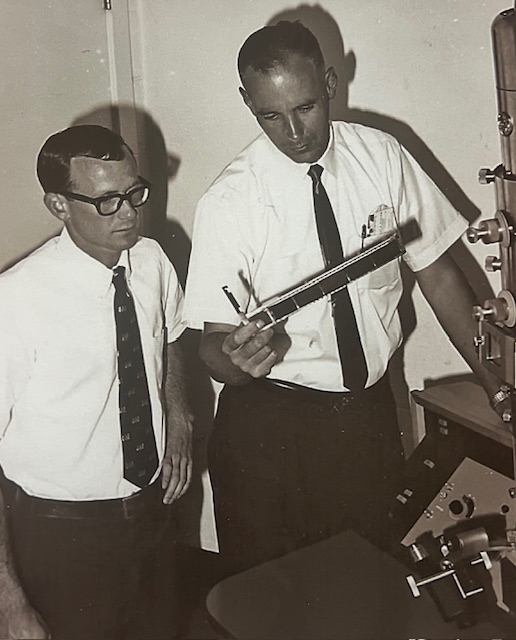
Senger joined the WSU faculty in 1974 and then left a few years later to serve as a dairy physiology professor at Pennsylvania State University. In 1984 he returned to WSU, where he taught for over two decades before retiring to found an educational business, Current Conceptions.
Regents Professor Oatley worked as a teacher’s assistant to Senger during his graduate education. He never forgot how his mentor transformed lectures and exams into engaging conversations and skill-building encounters.
“He was ahead of his time in coming up with ways to test and apply fundamental knowledge to real-life situations,” Oatley said. “He explained how biological processes actually work, and his examples showed why that knowledge matters.”
“Phil was always trying to improve the learning of students,” said Jerry Reeves, professor emeritus in the Department of Animal Sciences. “He thought final exams should be a teaching tool, not just an evaluation of the student’s knowledge of the subject.”
Reeves co-taught courses with Senger during his 37-year career and recalled how his teaching partner implemented one-hour oral final exams in which four undergraduate or graduate students had to solve real-world problems in front of two instructors. To succeed, students had to come prepared.
Senger’s very high expectations weren’t always popular, and rumors about the challenge of his classes and exams terrified some students. But his daughters have kept a stack of correspondence from those who experienced Senger’s courses on animal reproduction, which mingled practical challenges with humor and relevance.
“His students told us it ended up being the best class they ever took,” Wolniewicz said. “Dad was a purposeful disruptor. He wanted to change how lectures and labs were delivered.”
Sally Senger agreed, recalling how her father made students believe they were capable of more than they knew.
“That’s what made him unforgettable, not just the facts he taught, but the confidence he sparked,” she said.
Through his book and his teaching, Senger influenced nearly every student who entered the WSU veterinary program during his time in Pullman, said Ahmed Tibary, professor emeritus in the WSU College of Veterinary Medicine. Many chose veterinary medicine because of him.
“His desire to communicate what he knew, build on it, and encourage students to learn and apply their knowledge definitely influenced my own career,” Tibary said. “Because of Phil, I stayed at WSU. He encouraged me and mentored me.”
Fellow Emeritus Professor Mike Griswold remembers Senger as a witty, funny storyteller and good friend. Like Tibary, Griswold benefited from Senger’s efforts to draw colleagues with similar interests together.
“Dad was the ultimate connector,” Wolniewicz said. “It was a rare weekend or holiday without a graduate student at our dinner table. In his university career, and in later years in his senior community, he always brought people together.”
“He had a curiosity for learning that was passed to us as well as his students,” Heggem added. “Dad never saw any limits to what we could do.”
Establishing the memorial scholarship was the easiest decision Senger’s daughters made during the hard days following his passing. His colleagues also see it as especially appropriate.
“A scholarship in Phil’s name is brilliant,” Oatley said. “Any student who gets this scholarship should embrace his legacy and what it means to the educational mission of this university.”
To support the Dr. P.L. Senger Memorial Scholarship, make a gift at the WSU Foundation website.