Benefiting the people of Washington every day, the four WSU Research and Extension Centers (REC) elevate our state through groundbreaking discovery. Each REC features its own unique campus, area of expertise, and diverse team of faculty and students.
These snapshots in time of projects at each center reveal just a sliver of the whole picture.

Irrigated Agriculture REC, Prosser
Washington wines are famously delicious, and the state is second only to California in national production. Wine grapes are under threat from powdery mildew, a fungus that can render the fruit unusable. Researchers at Prosser study the most effective timing for fungicide sprays. With each spray costing growers up to $2 million, every spray not administered is a boon to their bottom line and the environment.
Tree Fruit REC, Wenatchee
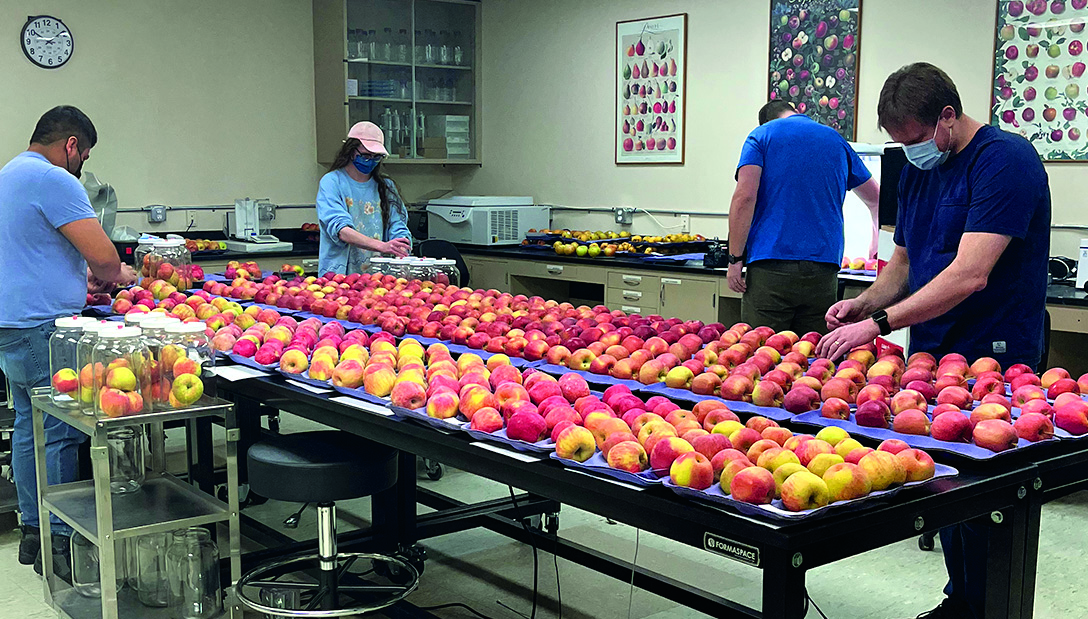
Hold a perfect piece of fruit at the grocery store and it’s hard to imagine it was picked a year ago. WSU tree fruit researchers partner with USDA’s Agricultural Research Service to study techniques that ensure quality fruit stores well for long periods of time.
Northwestern Washington REC, Mount Vernon
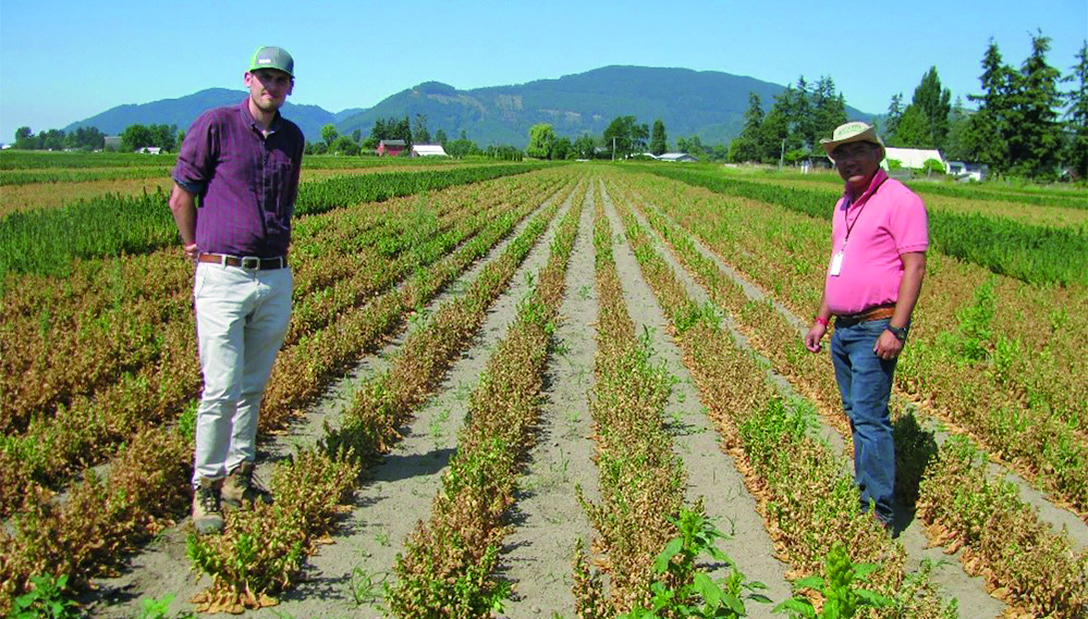
How do you measure risk? It’s a question that WSU researchers in Mount Vernon are addressing in Fusarium wilt, a tough soilborne fungal disease that can affect up to $20 million worth of spinach seed crops in Washington. Scientists with the Vegetable Seed Pathology Program have tested 602 spinach fields in western Washington to advise growers on how to avoid high-risk planting sites.
Puyallup REC
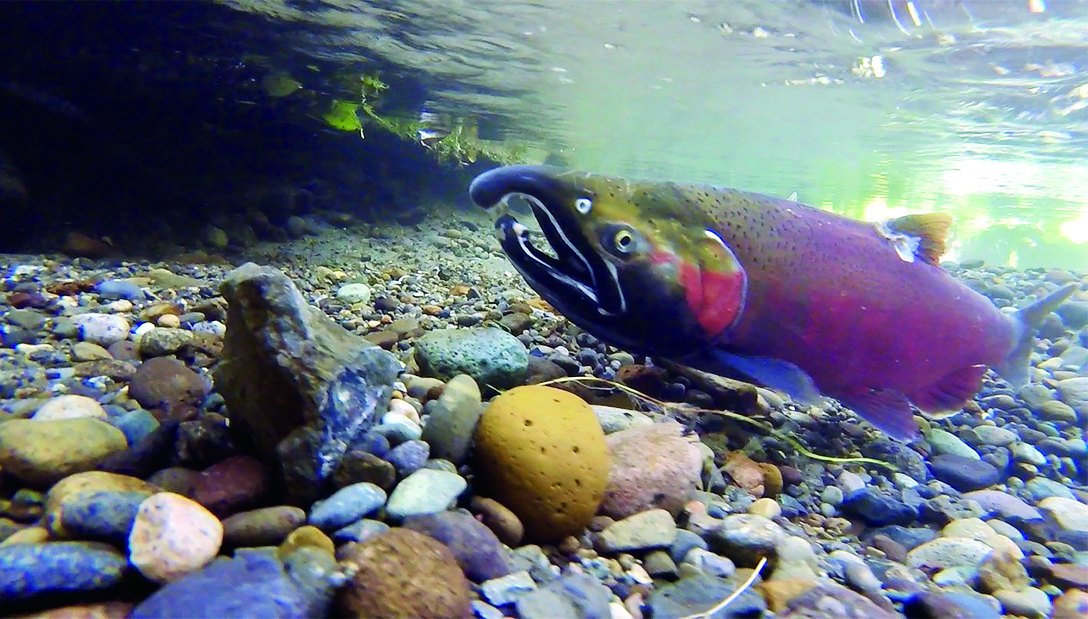
Salmon are an iconic species to the Pacific Northwest. When the Ecotoxicology Program lab discovered that an extremely deadly compound to fish is released from tires and washes into adjacent waterways during rainstorms, the Washington Stormwater Center, also based at Puyallup, began finding gaps in information to start identifying solutions.