Lab experience helps students advance science and their careers
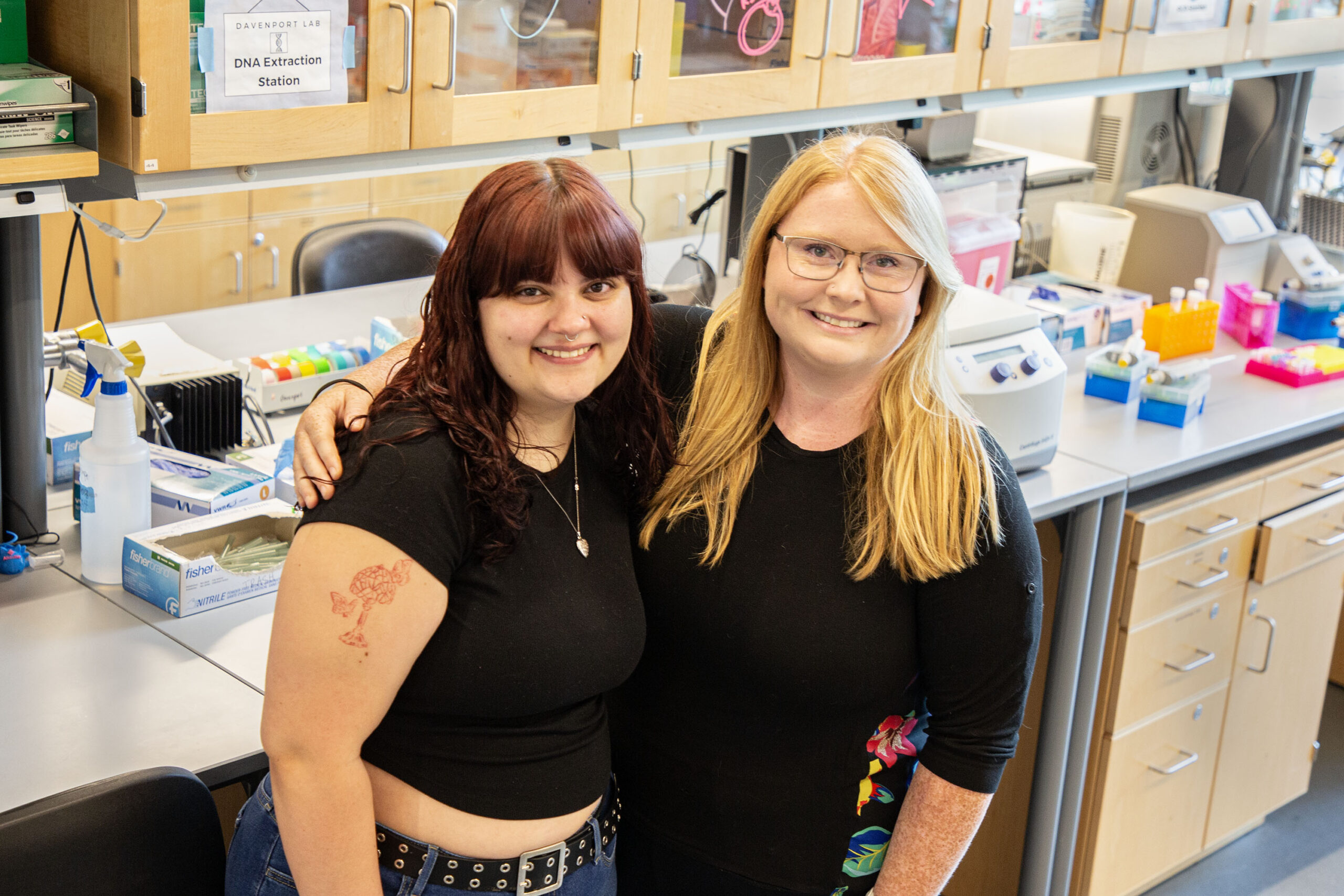
Jocelynn Brown and Avery Lyons started at WSU during the same semester, intent on becoming veterinarians. Both were animal sciences majors from the start and qualified for the college’s Ignite program, which funds first-year students to work in research labs.
The only problem? Neither student was interested in research.
“I didn’t really want to join Ignite because I didn’t know if I would enjoy it,” said Brown, who is now in her senior year. “My mom told me to do it because it might look good on my resume.”
“My mom also pushed me, even though I was hesitant because I didn’t know anything about research,” agreed Lyons, who is now enrolled in the WSU College of Veterinary Medicine after earning an animal sciences degree last spring. “Lo and behold, she was right. I loved it.”
Both students joined the Ignite program in the lab of Kimberly Davenport, an assistant professor in WSU’s Department of Animal Sciences. Davenport said she loves working with undergraduate students.
“I was lucky enough to be involved in research projects as an undergraduate,” said Davenport, a Moscow, Idaho, native who attended the University of Idaho. “It changed everything for me. The discovery process is so cool! I had a lot of failure, but when I succeeded, it was the best feeling.”
Like many of her students, Davenport started college with the goal of being a vet, but once the research bug bit, she was hooked.
“I came in with little knowledge of research,” she said. “But for me, and it’s something I see with students in my lab now, those light bulb moments can change lives.”
Davenport’s science background is in molecular genetics and reproductive biology. She and her students are involved in a wide range of scientific projects related to those topics, mostly involving farm animals.
One of her primary research areas is the placenta of mammals and how it can impact the survival of offspring.
“The placenta is so temporary; it develops from the embryo, serves its function, then goes away,” she said. “But there is likely a genetic component for cattle pregnancy loss, and the placenta may play a significant role in that. We’re looking at how parents each contribute genetic and epigenetic information to placental formation.”
Early results show that a father’s genes may play a major part in placental development. If Davenport’s team can find out which genes increase risk of pregnancy loss from poor placental development, that could lead to better breeding options.
She is leading undergraduate students in important work on that study and others.
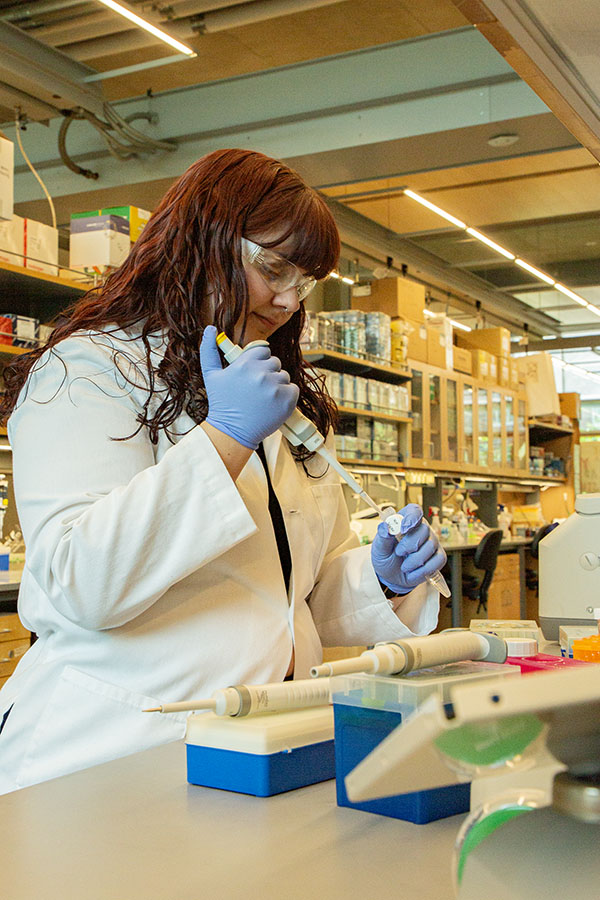
“I have undergraduates working on comparing cell types from uteruses and placentas across different species, among other projects,” Davenport said. “They perform laboratory work, analyze data, and publish findings. One undergraduate-led study found a lot of similarity between sheep and cows placental development after an embryo implants in the uterus.”
This past summer, Davenport took four students, including Lyons and Brown, to a national conference where they presented their research and competed in an undergraduate student poster competition.
“Seeing these young scientists learn and develop directly from their work in our lab is the best feeling,” Davenport said.
Almost every undergraduate student starts with zero research knowledge, however, which is often a major hurdle.
“Working with undergraduates can be challenging because the learning curve is so steep,” Davenport said. “It can take more time than working with a graduate student or a research assistant. But I love to see that light pop on.”
Many students stay involved in her lab beyond the Ignite experience. Both Brown and Lyons spent every year of their undergraduate experience working in the lab, which Davenport said has been called the “giggle lab” because of the positive vibes her team gives off. Brown and Lyons advanced to the point where they helped train new students.
“I was really scared the first time I had to teach a new student,” said Brown, who is from Surprise, Arizona. “I thought, What if I don’t do it right?’ But it helped build confidence in my own skills and it’s so nice to know that Kim trusts us enough to handle that.
“It was also surprising to see how different people learn in different ways, so I adapted how I taught them based on that,” she continued. “That will be a useful skill after I graduate.”
Brown continues to work in the lab as she prepares to graduate in the spring, and Lyons still visits the lab even though she’s now working toward her DVM degree. Both say their time working with Davenport has made a lasting impact.
Brown switched her trajectory from becoming a vet to pursuing a career in research. She hopes to start work on her master’s degree in animal science next fall at WSU.
Lyons, a native of San Diego, didn’t change her overall plans but she knows that having research experience will make her a better vet.
“Having this opportunity opened my eyes to so many possibilities,” Lyons said. “I came into college more narrow-minded than I’m leaving it. This experience broadened my worldview and changed the course of my life.”