TikTok teacher: Viral videos help economist reach and inform students, society
Every day or two, Chris Clarke fires up his webcam and dispenses no-nonsense economics lessons to thousands of viewers on the social media platform TikTok.
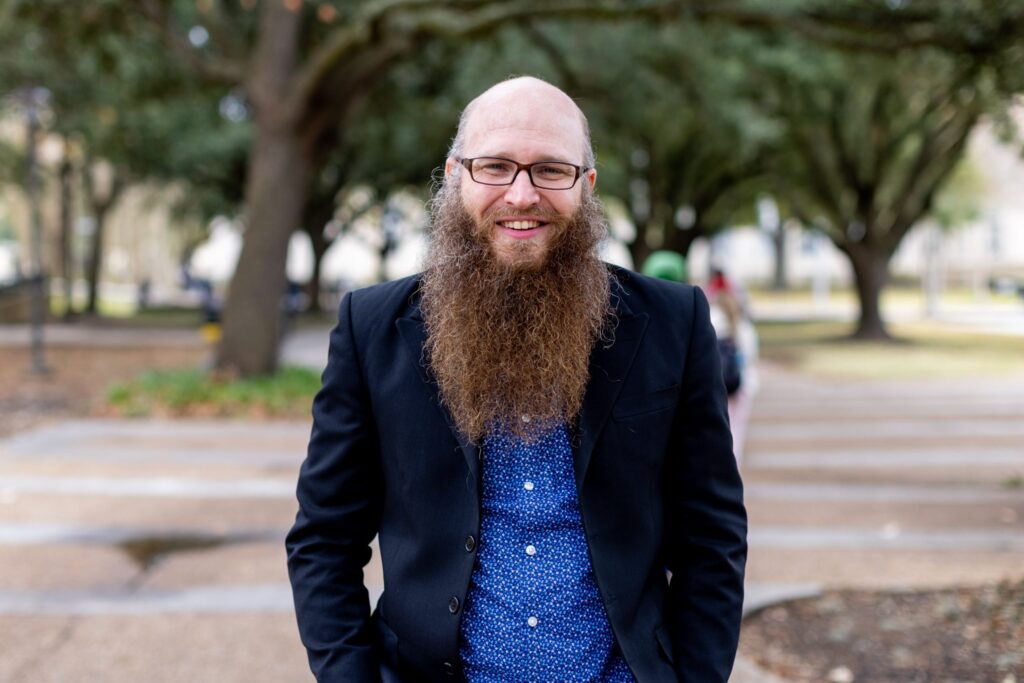
An assistant professor in the School of Economic Sciences, Clarke is a prolific creator on the globally popular video-sharing app, reaching an audience of more than 70,000 followers with passionate, fact-based posts.
He is a debunker of myths and misinformation who spends hours digging into reports and academic papers to explain tariffs, taxes, home prices, homelessness, and how today’s economy compares to the Great Depression. Clarke is also a teacher who enjoys the conversations sparked by TikTok both within and well beyond his Pullman classroom.
“Everybody participates in the economy, so everybody has an opinion about the economy,” he said. “My goal is to increase knowledge of truth and what’s real to help people make better decisions. That matters in a democratic society.”
A CAHNRS alumnus, Clarke grew up in Las Vegas and taught at the University of Nevada, Las Vegas and the University of Houston before returning to Pullman. His TikTok presence began during the Texas freeze in the winter of 2021 with an initial video that asked, “Why is there a stock market?”
Since then, Clarke has published more than 700 videos on TikTok and YouTube. Along with his growing TikTok following, he reaches thousands more on Instagram, Threads, and X, formerly known as Twitter. He has also posted more than 50 high-quality instructional videos on YouTube for his WSU economics students.
With trillions of transactions made annually by billions of people around the world, it’s tough for the average person to make sense of it all.
“We rely on shortcuts, but some shortcuts are better than others,” Clarke said. “It requires some statistical and data literacy to start making comparisons.”
Fortunately, economic data is plentiful, free, and available on the internet. Choosing topics that may interest a wide audience, often suggested by his followers, Clarke dives into audits, budgets, scholarly blogs, and other sources to inform first himself, then others.
“Memes and reports are two very different things,” he said. “I look at a whole swathe of the information ecosystem to see what’s out there.”
The economic roller-coaster ride experienced globally over the past four years has generated plenty of fodder for social media users.
“People needed a narrative to describe what happened,” said Clarke. “One that acknowledges the pain that exists but also recognizes the progress we’ve made.”
Some of Clarke’s more popular posts contain an element of confrontation. A counterpoint to popular TikTok personality The Older Millennial’s take on taxes drew more than 400,000 views.
“If you have a strong foil, that contention can go viral,” Clarke said.
Conflict, however, has never been his goal.
“You teach people by meeting them where they are and recognizing their humanity and intelligence,” he said. “Other people know things I don’t, and when I am at my best, I go in to learn from them and see where they are coming from. When I disagree, I try to be as respectful as possible.”
Along with defining facts, Clarke makes a point of suggesting how daunting societal problems can be solved. His explanation of how humanity addressed the ozone hole crisis is his most popular post ever, sitting at more than 2.4 million views.
In the classroom, Clarke helps students in three large undergraduate courses understand what’s happening now in our economy and why they should care. For many, future success depends on an ability to navigate economic realities.
TikTok brings a new, fun way to interact with students, and Clarke said it has made him a better educator who’s able to easily explain current topics and meet students in their own digital space. Some take his courses because they found him on social media, while others love his relevancy.
“Being on social media keeps you fresh,” Clarke said. “That’s where the edge of cultural creativity and economic discussions are, and you can bring that into the classroom. You become more informed and that helps your students be more informed.”
Chris Clarke makes as many as five new social media videos every week. Find them on his TikTok channel and YouTube playlist.