The many lives of Ensminger Pavilion
A testament to learning and gathering, the M.E. and Audrey H. Ensminger Agricultural Pavilion has evolved over 90 years to meet the needs of the Cougar community. Today, members of the public can rent the building for parties and events, helping maintain this useful and unique resource.
Originally built in 1933 as WSU’s Livestock Judging Pavilion, the structure was the oldest Pullman campus building still used for its original purpose before renovation.
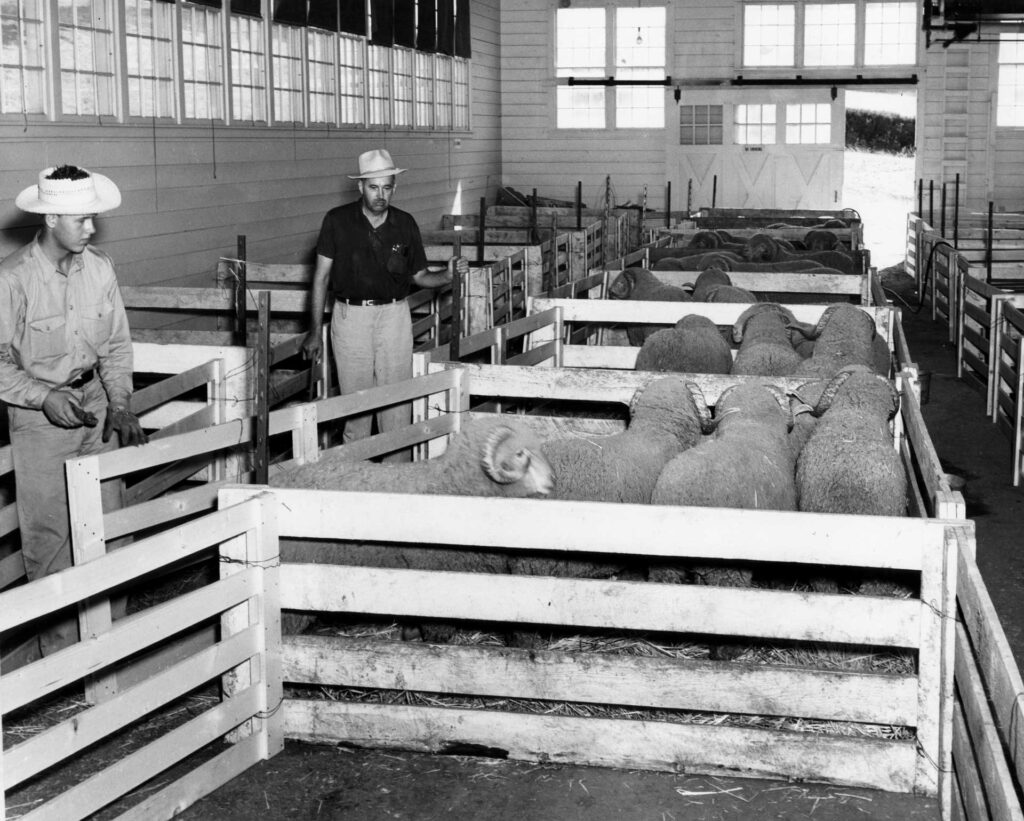
“It was perfect — as handy as a pocket on a shirt,” said retired Animal Sciences Professor Everett Martin. Long and spacious with plenty of light, the pavilion was a short walk from Clark Hall, the animal sciences headquarters. Martin’s students could get hands-on training without a five-mile trek to the university barns.
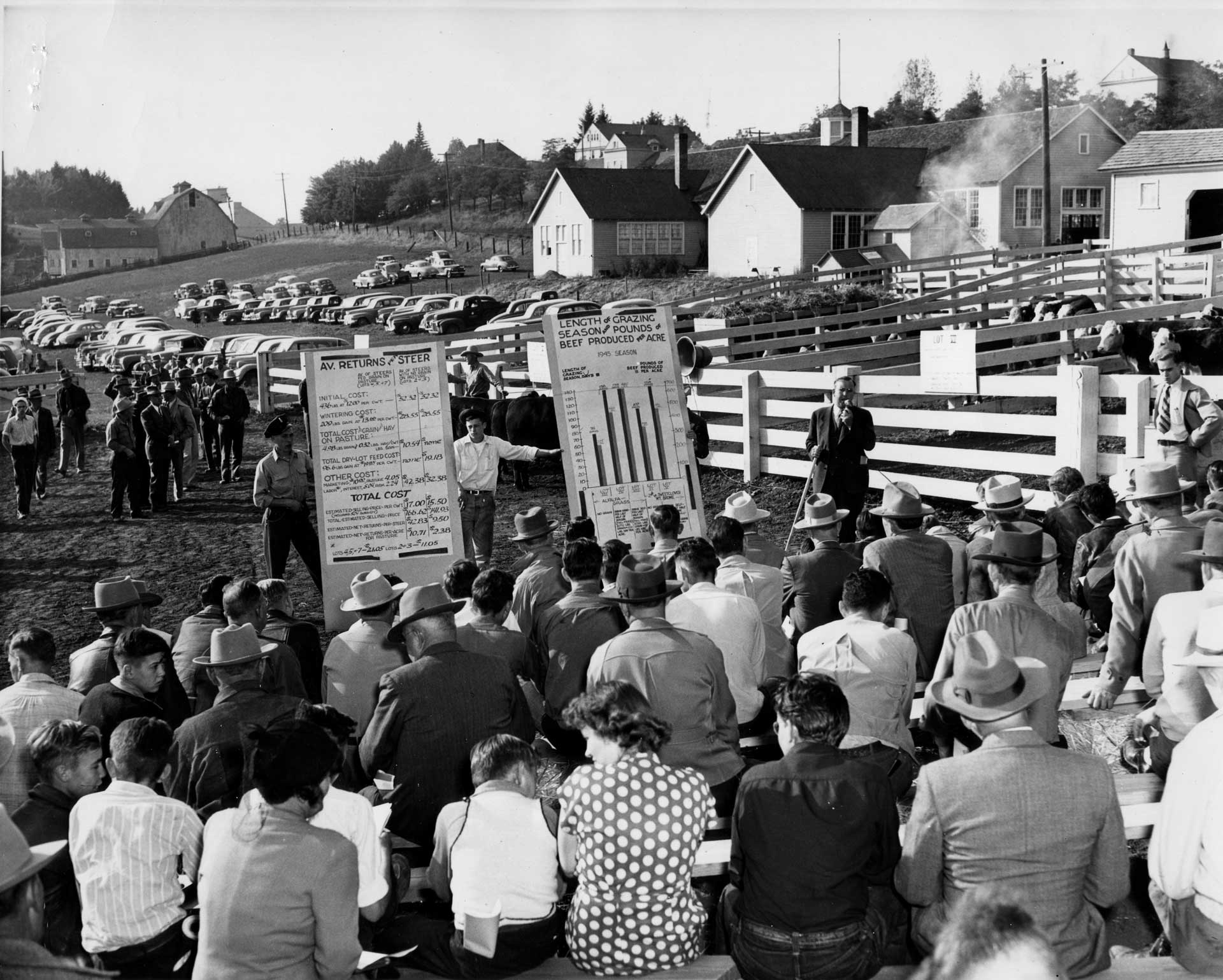
For seven decades, thousands of animal sciences students took classes and meat science labs in the pavilion, learning how to judge the quality of cattle, pigs, and sheep. Over the years, the WSU Marching Band practiced on its dirt floor, archaeology students performed excavation techniques, and the student Horticulture Club sold plants on Mom’s Weekend from the pavilion’s wooden bleachers.
The pavilion has also served the people of Washington. Ag Days and Livestock Feeders’ Days brought in up to 800 people, and Land-Grant Day dances and auctions were held every autumn. Animal Sciences professor and building namesake M.E. Ensminger hosted purebred livestock and horse sales, and crooner Bing Crosby once attended a livestock judging event in the early 1950s when his sons studied at WSU.
Martin was still using the pavilion for his program in 2000. That’s why, when the university began discussing the pavilion’s demolition, he rallied support as students launched STOP, the “Save the Old Pavilion” campaign.
“Official word was that the vision for the area did not include the old barn,” Martin remarked.
Not being one to give up, he got in contact with a historical architecture professor, who wrote to WSU President V. Lane Rawlins on the significance of the pavilion. It was the last of the architectural buildings from the university’s early days still being used in connection with agriculture.
Letters were written by students and faculty, the then-chair of the university’s historic preservation committee weighed in, and then-Regent Peter Goldmark and then-State Rep. Mark Schoesler also expressed interest, according to Martin.
News articles and sales of mementos made from the building’s fine-grained Douglas fir bleachers helped drum up funds, and a $250,000 donation in 2002 from Audrey Ensminger, M.E.’s widow, enabled a major renovation and transformation from dirt floor building to wood-paneled events center.
The building is named for both Ensmingers, who left a legacy of teaching, service, and impact at WSU. M.E. led the animal sciences department from 1941 to 1962 and helped make it a standout program; he enabled the construction of the Cattle Feeding Laboratory and Hilltop Stables. Audrey held degrees from the University of Manitoba and WSU and was often credited by her husband for her support in scholarly and publishing work. The couple were described as an enduring team.
Martin noted the building’s cupola as a point of interest. Students would ascend to the attic, emerge from a louvre in the cupola, and fly a U.S. flag from a wooden spire. Martin recalled that the flag was flown whenever M.E. Ensminger visited the pavilion.
The spire is now gone, as is the building’s original, handmade weathervane, which was topped by a repurposed brass toilet float. A new crimson metal vane was installed in 2015.
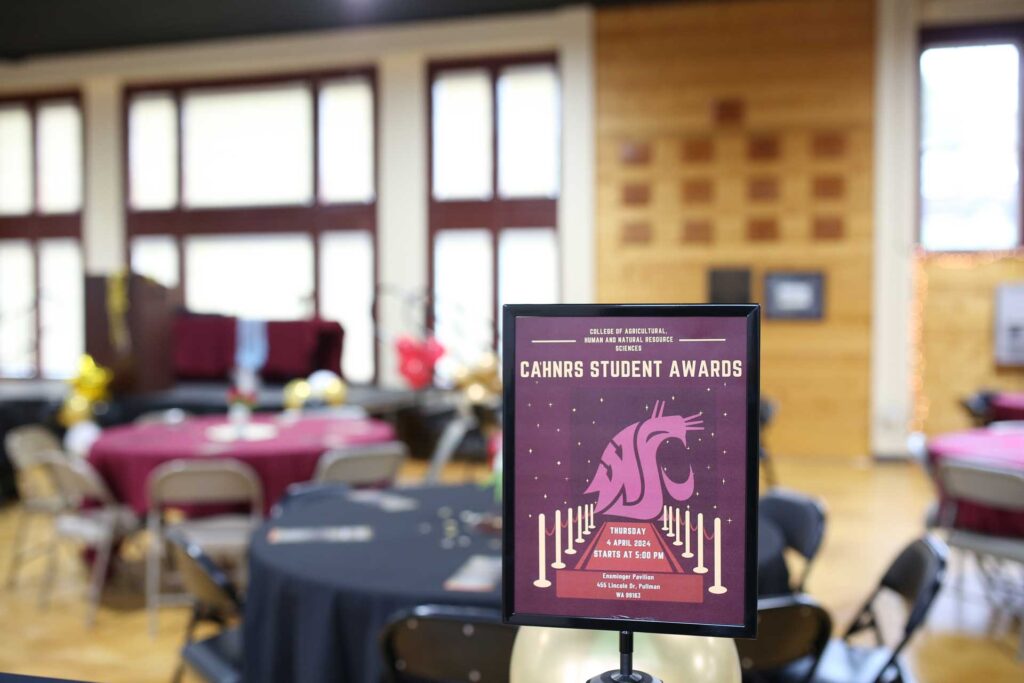
Today, Ensminger Pavilion remains an important gathering place for the WSU community, hosting career events, award ceremonies, FFA and 4-H visits, and more. The building is available to the public for weddings, retirements, reunions, and other events requiring a large space.
For Martin, who learned to reuse, repair, and respect things as an Oklahoma farm boy, age doesn’t rule out usefulness. He is proud of his efforts to preserve the pavilion for future generations.
“I like to think I was the stimulus,” Martin said.
Rent the Pavilion
Please consider Ensminger Pavilion for your next event. Your support maintains a living legacy that has and continues to be experienced by thousands of Cougs.
Long and spacious with rows of windows, Ensminger Pavilion is heated, with on-site restrooms and room for up to 400 seats. Round and rectangular tables are available for set-up, as are chairs and wheeled whiteboards. Plentiful nearby parking is free on evenings and weekends.
To learn about rentals and book Ensminger Pavilion, visit the Ensminger FAQ page.